Info
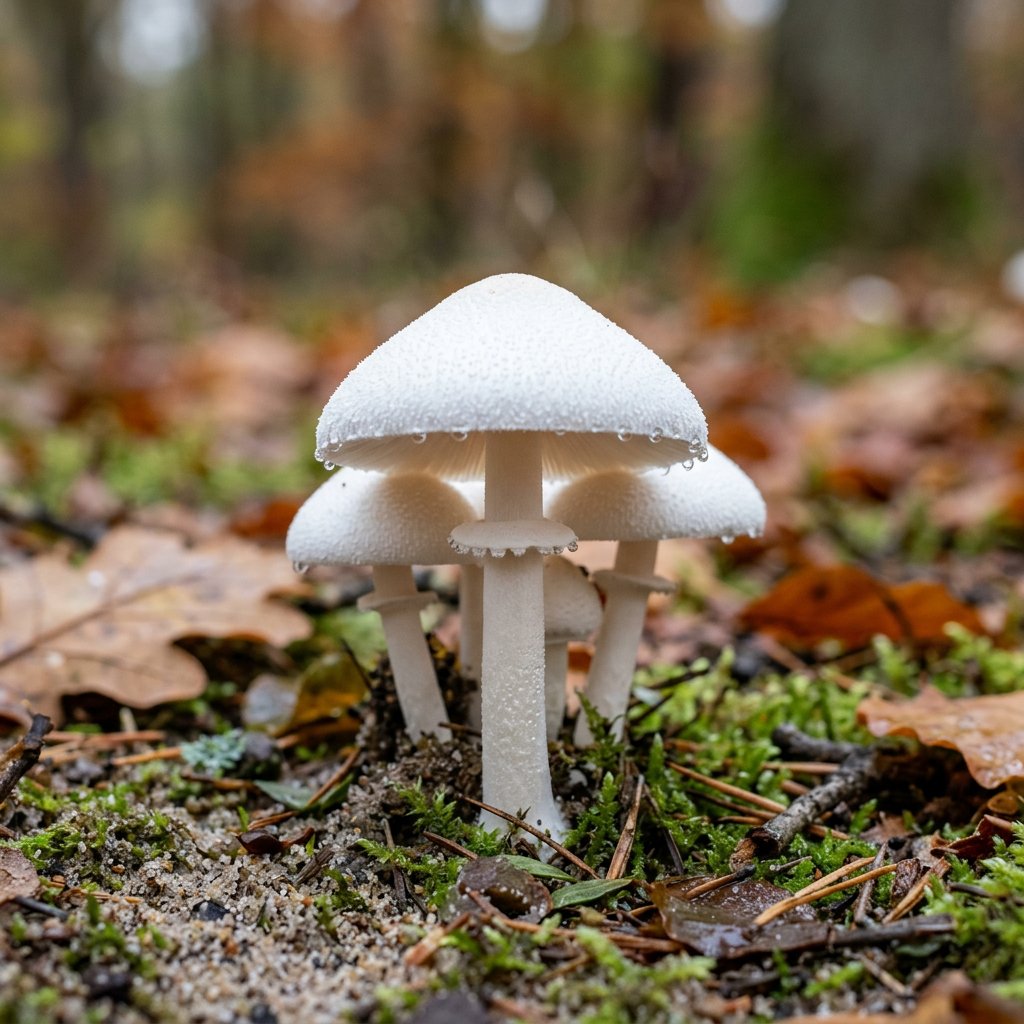
This elegant, snow-white mushroom looks like a misplaced pearl nestled in the grass. Often called the "White Dapperling," its species name erminea refers to the white winter coat of the ermine (weasel), reflecting its pristine, silky texture. While it looks innocent and delicate, this fungus belongs to a family of deceptive beauties that should never be underestimated.
🔍 How to Identify
- 🍄 The Cap: Pure white and silky, it starts as a bell shape before flattening out. The surface is often covered in fine, pressed-down fibers that give it a "furry" or satiny sheen.
- ⚪ The Gills: The gills are crowded and "free," meaning they do not actually touch the stem. They remain white throughout the mushroom's life.
- 💍 The Stem & Ring: Slender and hollow, the stem features a fragile, white, skirt-like ring. However, this ring is very delicate and often falls off or disappears as the mushroom matures.
🌲 Habitat & Ecology
- 🏖️ Coastal & Grassy Sites: Unlike many mushrooms that hide in deep forests, Lepiota erminea prefers open spaces. You are most likely to spot it in coastal dunes, sandy grasslands, or old, unmanaged meadows.
- 🍂 The Recycler: It is a saprobic species, meaning it lives by breaking down dead organic matter in the soil. It plays a vital role in cleaning up the "duff" (dead grass and plant debris) in its environment.
⚠️ Safety & Toxicity
- 🚫 WARNING: Potentially Deadly. This mushroom belongs to a genus known for containing amatoxins—the same lethal chemicals found in the notorious Death Cap.
- 🛑 Assessment: Never consume this mushroom. Because many small white Lepiota species are look-alikes and contain life-threatening toxins, they are considered some of the most dangerous fungi for foragers.
- 🐾 Pets & Kids: Due to its bright white color, it may attract curious toddlers or dogs. Ingestion is a medical emergency; ensure it is removed from play areas.
✨ Fun Fact
- 👑 Royal Texture: The name "Ermine" was chosen by 19th-century mycologists because the mushroom's fleecy, white texture reminded them of the luxurious white fur capes historically worn by European royalty and high-ranking judges.
More Details







