Info
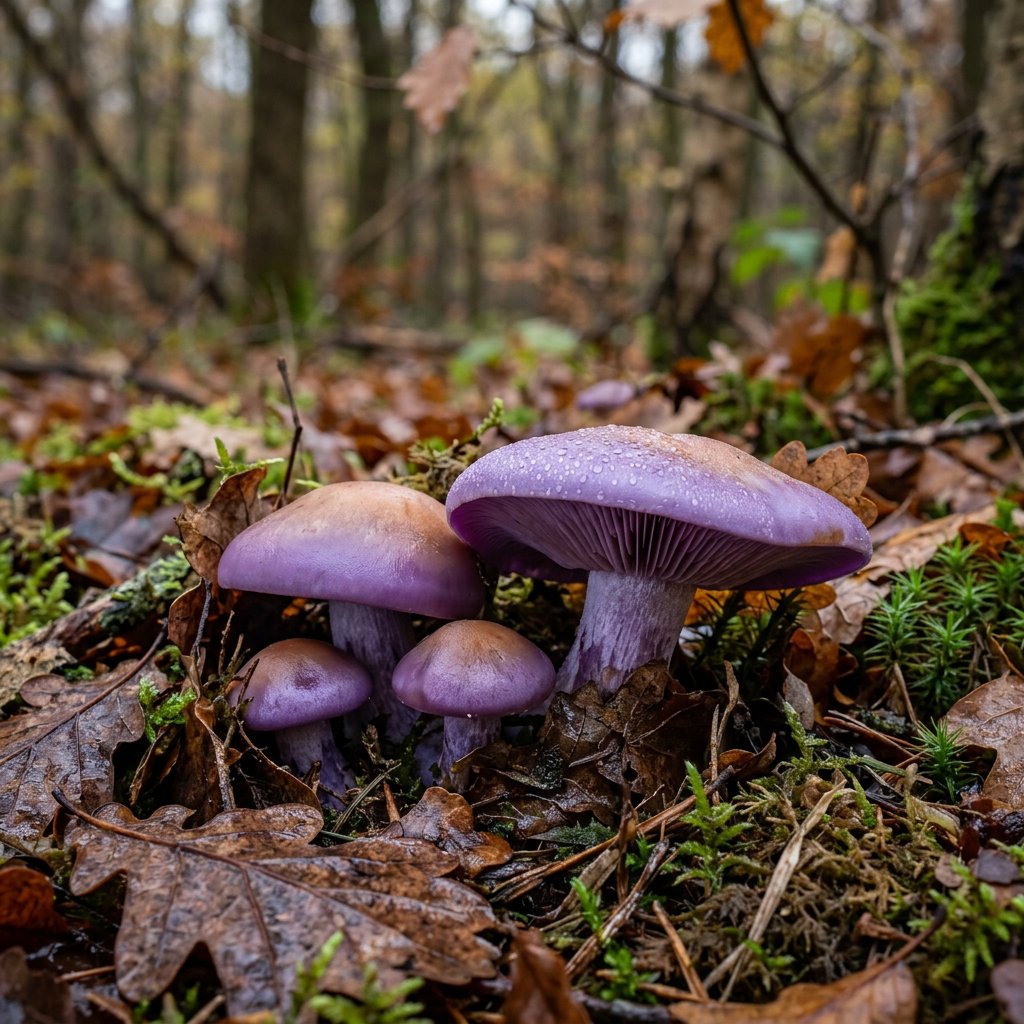
Known as the Wood Blewit, the Lepista nuda is a stunning splash of violet in the damp autumn woods. Often looking like it was plucked straight from a fantasy novel, this mushroom is a favorite among foragers for its late-season appearance and fruity fragrance, which many describe as smelling like frozen orange juice or floral perfume.
🔍 How to Identify
- 🎨 The Cap: Smooth and moist, the cap starts as a deep lilac-purple before fading to a brownish-buff as it matures. It begins convex and gradually flattens out, sometimes developing a wavy edge.
- 💜 The Gills: The gills are crowded and a vibrant, beautiful purple. Crucially, they are "sinuate," meaning they curve slightly before attaching to the stem.
- 🍄 The Stem: Thick, solid, and fibrous, the stem is decorated with tiny silvery-white streaks against a purple background, often appearing slightly swollen at the base.
🌲 Habitat & Ecology
- 🍂 The Decomposer: Unlike many forest mushrooms that partner with trees, the Wood Blewit is "saprobic," meaning it eats decaying organic matter. You’ll find it hiding under thick layers of leaf litter, garden mulch, or compost heaps.
- ❄️ Frost Fighter: This is a "cool weather" mushroom. It often waits until the first frosts of autumn or early winter to fruit, appearing in large groups or enchanting "fairy rings" when most other fungi have disappeared for the season.
⚠️ Safety & Toxicity
- 🛑 WARNING: Never eat this mushroom raw. Lepista nuda contains hemolysins (compounds that destroy red blood cells) which are only neutralized by thorough cooking.
- 🕵️ The Deadly Double: Beginners must beware of the Cortinarius (Webcap) family, which can also be purple. Always perform a spore print: Wood Blewits have pinkish-buff spores, while dangerous Webcaps have rusty-brown spores.
- 🤢 Indigestion: Even when cooked, some individuals are sensitive to Blewits and may experience mild stomach upset. Always try a small amount first.
✨ Fun Fact
The Wood Blewit is a bit of a forest "cleaner." It has been found to produce compounds that actively kill certain bacteria and even tiny soil-dwelling worms (nematodes) to supplement its diet, making it a surprisingly predatory member of the fungi kingdom!
More Details
| Hymenium Type | Lamella |
| Stipe Character | Bare Stipe |
| Spore Print Color | Pink |
| Mushroom Cap Shape | Convex Mushroom Cap |
| Hymenium Attachment | Emarginate Hymenium Attachment |
| Mushroom Ecological Type | Saprobiont |







