Info
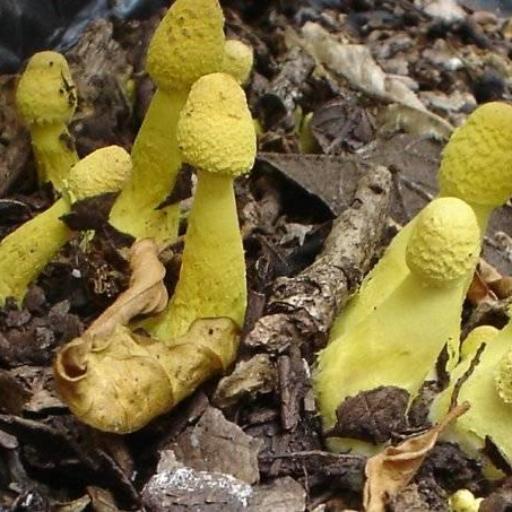
Commonly known as the Flowerpot Parasol or Plantpot Dapperling, this vibrant, lemon-yellow mushroom is perhaps the most famous "uninvited guest" in the world of indoor gardening. While its neon hue might look like something from a fantasy novel, it is a tropical native that has traveled the globe in bags of commercial potting soil. Seeing these pops of sunshine in your monstera or fern usually means your soil is rich in organic matter and staying consistently moist.
🔍 How to Identify
- 🍄 The Cap: Bright sulfur-yellow to lemon-yellow. It starts as an oval or "bullet" shape and expands into a bell-shaped parasol with a small bump (umbo) at the center. The surface is often covered in tiny, powdery scales.
- 🟡 The Gills: The gills are thin, crowded, and pale yellow. Crucially, they are "free," meaning they do not bridge the gap to touch the stem directly.
- 💍 The Stem & Ring: The stem is slender and fragile, often bruising a slightly darker yellow when handled. It features a delicate, thin ring (annulus) about halfway up, though this can sometimes fall off as the mushroom ages.
🌲 Habitat & Ecology
- 🪴 The Potting Mix Specialist: Unlike many wild mushrooms, this species is most commonly found indoors. It thrives on the sterilized peat and woody bits found in potting soil, feeding on dead organic matter rather than the living plant.
- ☁️ Humidity Lover: It typically appears in late summer or in homes where the humidity is high and the soil is kept damp. If you see them, it’s a sign that your microclimate is mimicking a tropical rainforest.
- 🤝 Plant Relationship: It is a saprobe, meaning it’s a decomposer. It doesn't harm your houseplants; in fact, it helps break down complex organic materials into simpler nutrients that the plant can eventually use.
⚠️ Safety & Toxicity
- 🚫 WARNING: Toxic if ingested. Do not eat this mushroom. While it is beautiful to look at, it contains toxins that cause significant gastrointestinal distress (vomiting, cramps, and diarrhea) in humans.
- 🐾 Pets & Children: Because of its bright, "candy-like" color, it can be attractive to curious toddlers or pets. If you have "nibblers" at home, it is best to pluck the mushrooms and dispose of them as soon as they appear.
- 🧤 Handling: It is generally safe to touch, though washing your hands after removal is recommended to avoid accidental ingestion of spores or residue.
✨ Fun Fact
Despite its worldwide presence in living rooms from New York to London, Leucocoprinus birnbaumii is actually a tropical species. It has "conquered" the world by hitchhiking as microscopic mycelium inside bags of commercial mulch and soil produced in warmer climates!
More Details
| Hymenium Type | Lamella |
| Stipe Character | Ring Stipe |
| Spore Print Color | White |
| Mushroom Cap Shape | Ovate Mushroom Cap |
| Hymenium Attachment | Free Hymenium Attachment |
| Mushroom Ecological Type | Saprobiont |







