Info
Often overlooked by the casual hiker, Lophiostoma belongs to the "micro-fungi" world, looking more like tiny architecture than a traditional mushroom. These fungi are the "hidden recyclers" of the forest, often called "Crested-mouth" fungi because of their unique, slit-like openings. They are essential for breaking down tough woody debris, turning old branches back into rich soil.
🔍 How to Identify
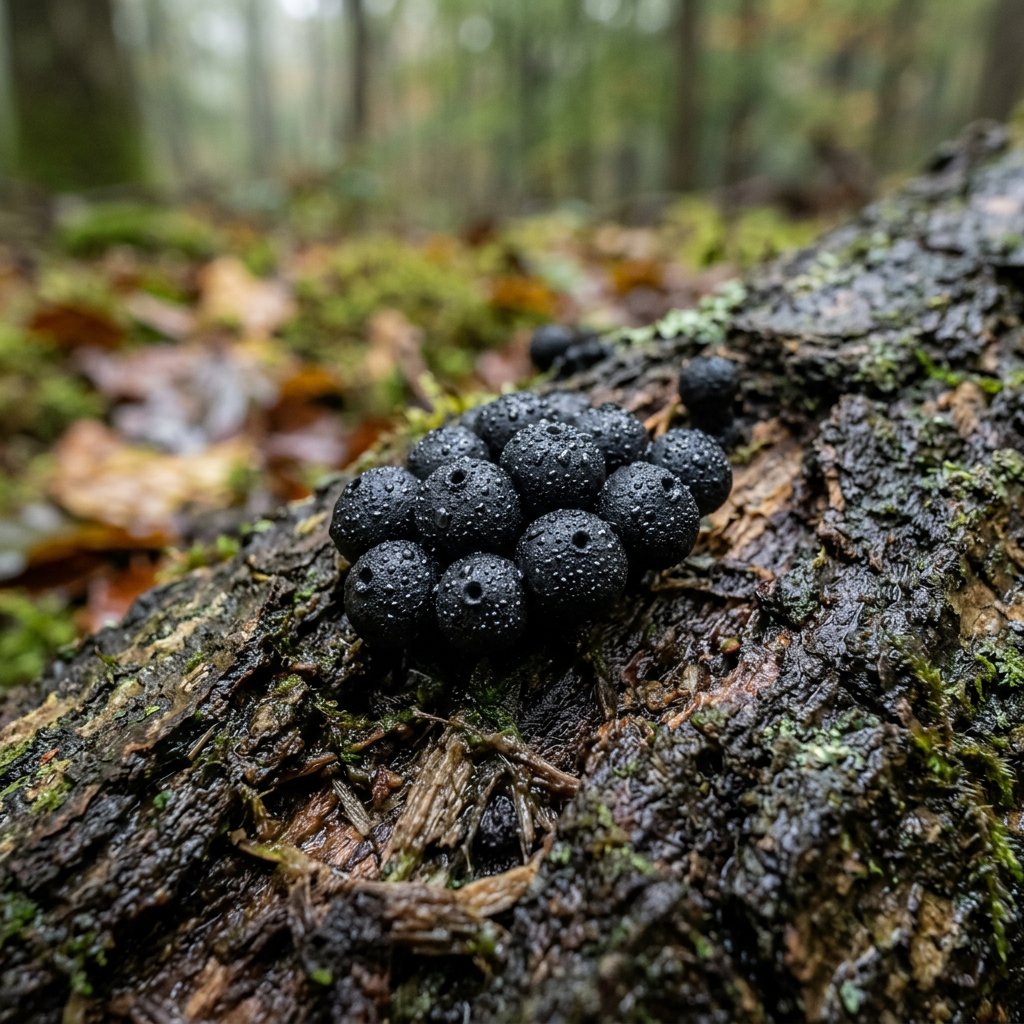
- 👄 The Mouth: The most defining feature is the ostiole (opening), which is laterally compressed into a prominent, crest-like slit rather than a round hole.
- 🌑 The Body: The fruiting bodies (perithecia) are tiny, black, carbon-like bumps that are often partially buried within the wood.
- 🪵 The Texture: They feel hard and crusty to the touch, resembling tiny bits of charcoal or black peppercorns embedded in a branch.
🌲 Habitat & Ecology
- 🍂 Woodland Cleaners: You will find these almost exclusively on dead, decaying wood—especially twigs and branches of deciduous trees like Oak or Willow that have lost their bark.
- 💧 Moisture Lovers: While they look dry and carbonized, they become active and release spores during periods of high humidity or after heavy rainfall.
⚠️ Safety & Toxicity
- 🚫 WARNING: Non-Edible. Lophiostoma species are not considered edible mushrooms.
- 🔬 Hard as Nails: Due to their microscopic size and hard, woody consistency, they have no culinary value and are strictly of interest to scientists and hobbyist mycologists.
- 🐾 Pet Safety: While not known to be highly toxic if touched, they should not be ingested by pets or children.
✨ Fun Fact
The name Lophiostoma comes from the Greek words lophos (meaning "crest" or "ridge") and stoma (meaning "mouth"), perfectly describing the tiny, ridge-like "lips" through which they puff out their microscopic spores!
More Details







