Info
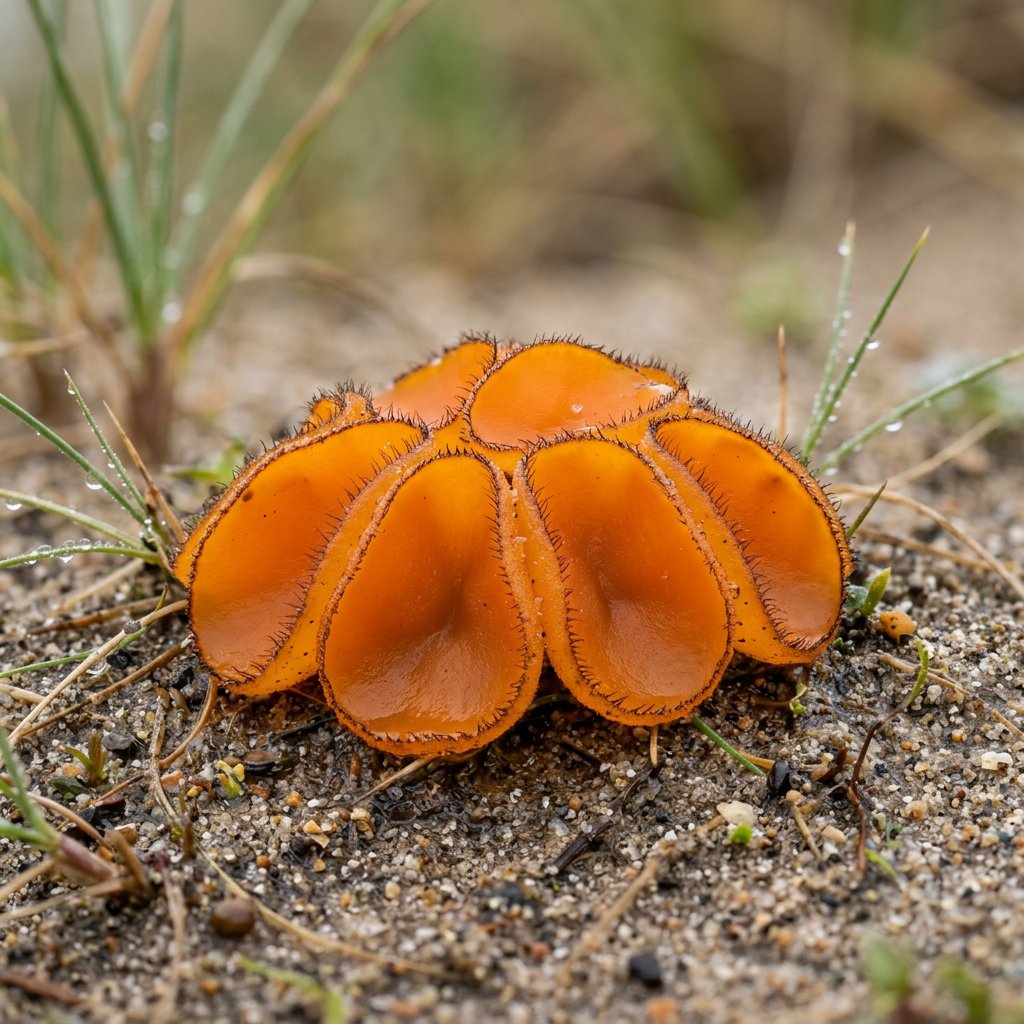
Often called the Orange Cup Fungus or the Fringed Cup, Melastiza cornubiensis looks like a tiny, glowing bowl of fire dropped onto the forest floor. It belongs to a whimsical group of fungi that resemble miniature crockery for woodland spirits. In old folklore, these "cup" mushrooms were often imagined as drinking vessels used by fairies to gather the morning dew.
🔍 How to Identify
- 🍄 The Cup: It typically grows between 1–3 cm wide. It starts as a deep, closed cup and gradually flattens out into a shallow saucer as it matures.
- 🧶 The Fringed Rim: The most defining feature is the rim, which is lined with tiny, stiff, dark brown hairs (setae). You may need a magnifying glass to see them, but they give the edge a slightly "dirty" or "eyelash" appearance.
- 🎨 Vivid Color: The interior (hymenium) is a brilliant, saturated orange, while the exterior is a slightly paler, dusty orange.
🌲 Habitat & Ecology
- 🧱 Disturbed Ground: This fungus is a pioneer. It thrives on "unhappy" soil—sandy paths, gravelly tracks, burnt ground, or areas where the earth has been recently turned or compacted.
- 🍂 The Decomposer: As a saprobic species, it spends its life breaking down organic matter in the soil. It doesn't form a partnership with trees; instead, it works independently to recycle nutrients back into the earth.
⚠️ Safety & Toxicity
- 🚫 WARNING: Melastiza cornubiensis is considered inedible.
- 🤢 Details: While not famous for being "deadly," many cup fungi contain complex compounds that can cause significant gastrointestinal distress. Because of its small size and lack of culinary value, it should be admired for its beauty but never placed on a dinner plate.
✨ Fun Fact
The specific name cornubiensis is a tribute to its origins in mycological history—it is the Latin name for Cornwall, the rugged coastal county in South West England where this species was first scientifically described.
More Details







