Info
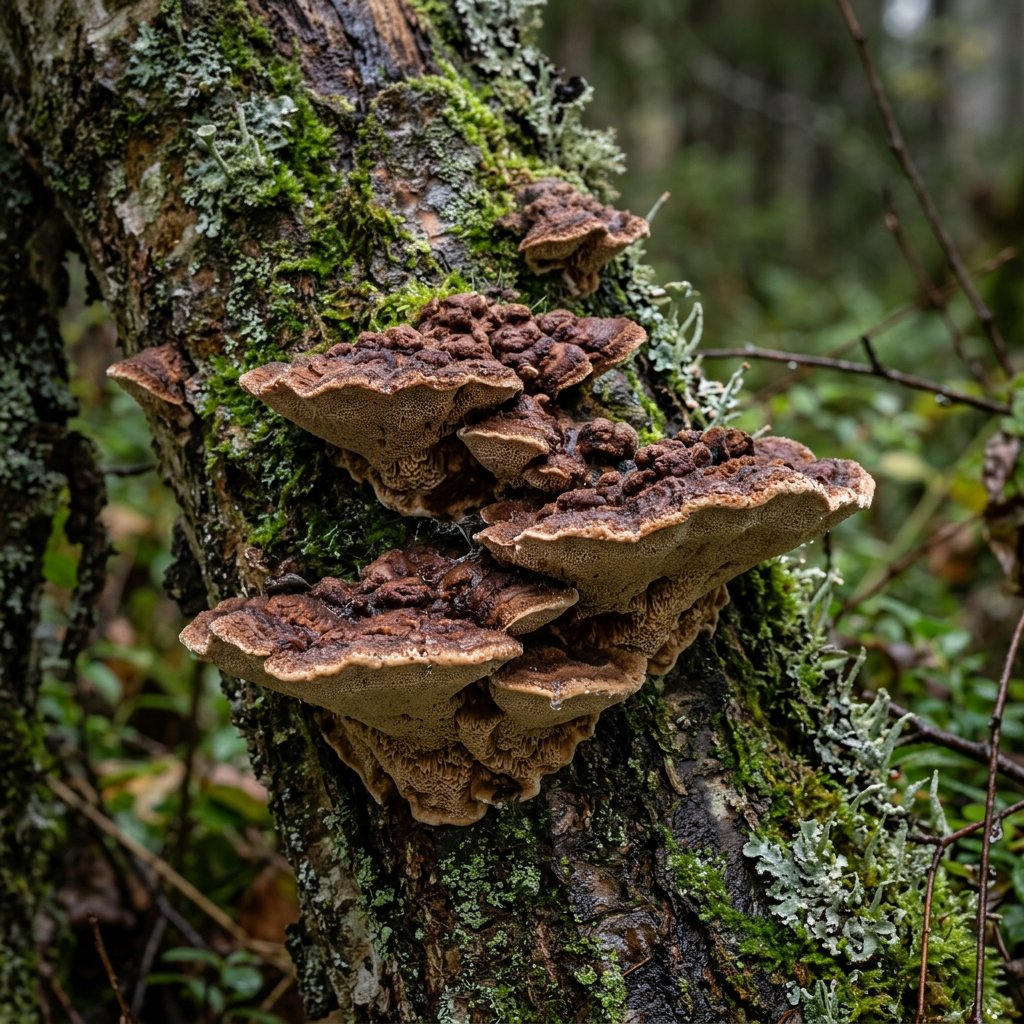
Often resembling clusters of charred, lumpy wax clinging to beech branches, Mensularia nodulosa is a quiet architect of the forest floor. Known commonly as the Nodular Cinder Fungus, it is a master of recycling, turning old wood back into nutrient-rich soil. Its rugged, "knotty" appearance often makes it look more like a strange growth on the bark than a traditional mushroom.
🔍 How to Identify
- 🍄 The Caps: It typically forms small, shelf-like brackets that are often fused together. The upper surface is noticeably "nodular"—covered in small, rounded bumps and irregular ridges.
- 🎨 Color Palette: When young, it displays warm tawny or ochre shades. As it matures, it deepens into a dark, rusty brown or even a burnt black-brown, giving it a "cinder" appearance.
- 🕳️ The Underside: The pore surface is silvery-grey to cinnamon brown. If you tilt it in the light, the tiny angular pores can have a slight shimmering or "chatoyant" effect.
🌲 Habitat & Ecology
- 🌳 The Beech Specialist: This fungus has a very specific preference; it is almost exclusively found on dead or dying Beech trees (Fagus). It plays a vital role in the ecosystem by causing "white rot," breaking down the tough lignin in the wood.
- 🌿 Growth Habit: You will often find it running along the underside of fallen limbs or encircling dead standing trunks. It can grow in a "resupinate" fashion, meaning it lays flat against the bark like a crust, or it may develop small, distinct caps.
⚠️ Safety & Toxicity
- 🚫 Status: WARNING: INEDIBLE. While not known to be deadly like some forest fungi, Mensularia nodulosa is strictly not for consumption.
- 🪵 Texture: The flesh is incredibly tough, corky, and woody. It lacks any culinary value and would be impossible to chew, let alone digest.
- 🐾 Pets & Kids: Because it is hard and grows high on tree trunks or on fallen logs, it is rarely accidentally ingested, but it should still be kept away from curious pets.
✨ Fun Fact
The species name nodulosa comes from the Latin word for "full of little knots." This perfectly describes its lumpy, "knotty" texture, which helps distinguish it from its smoother relatives in the polypore family.
More Details