Info
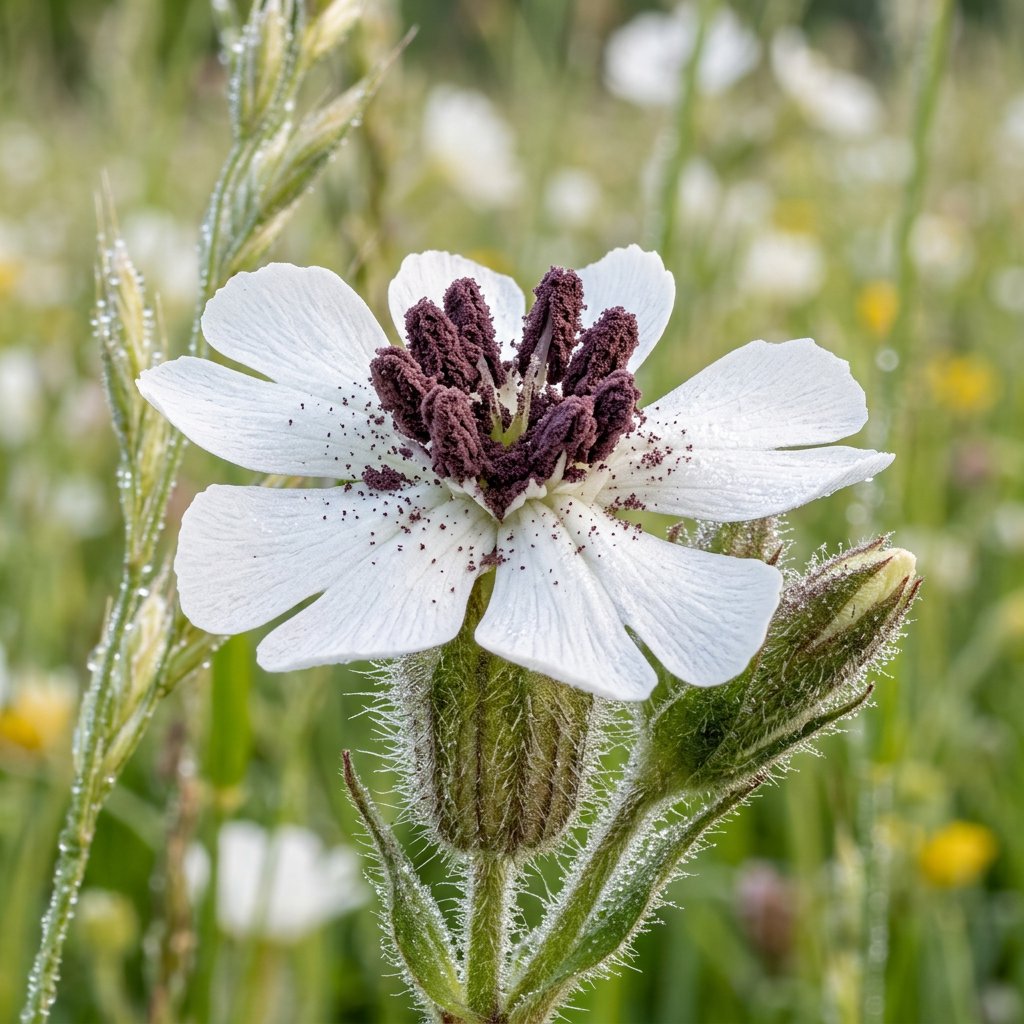
Often called the "Anther Smut," this fascinating fungus is a master of disguise and manipulation. Unlike the mushrooms you find on the forest floor, Microbotryum lychnidis-dioicae is a specialized parasite that targets the White Campion flower, effectively turning the plant into a "zombie" spore-spreader. It is frequently studied by scientists as a model for how diseases can be sexually transmitted in the plant kingdom.
🔍 How to Identify
- 🪻 Sooty Anthers: Look closely at the center of a White Campion flower. Instead of the usual yellow or white pollen-covered anthers, you will see them swollen and covered in a dark, brownish-purple "soot."
- 🌫️ Spore Dust: If you gently tap the flower, a fine dark powder (the fungal spores) will puff out. This is the fungus’s clever way of mimicking pollen.
- 🌸 Gender Deception: This fungus is a biological magician; if it infects a female plant (which normally has no anthers), it forces the plant to grow "pseudo-anthers" just so the fungus has a place to produce its spores.
🌲 Habitat & Ecology
- 🐝 The Pollinator Trick: This fungus hitches a ride on the backs of bees and butterflies. When an insect visits an infected flower looking for nectar, it gets coated in fungal spores instead of pollen, which it then carries to the next healthy flower.
- 🌿 Systemic Resident: Once the fungus enters a plant, it lives inside the tissues (the "bloodstream" of the plant) forever. Every year the plant grows, its new flowers will be born "infected" and unable to produce seeds.
- 🏘️ Meadow Dweller: You are most likely to spot this fungus in sunny meadows, roadside verges, and waste grounds—anywhere its host plant, the White Campion (Silene latifolia), thrives.
⚠️ Safety & Toxicity
- 🚫 WARNING: While this fungus is not known to be deadly to humans, it is not edible. Smut fungi are parasites and are never considered food sources.
- 🐾 Pets & Kids: It is generally safe to touch, but avoid inhaling the dark spores or allowing pets to graze on infected plants, as the internal chemical changes in the host plant are not well-documented for consumption.
✨ Fun Fact
This fungus is essentially a "Botanical STI." Because it relies on the reproductive organs of the plant and the mating-like behavior of pollinators to spread, it is one of the most famous examples of a sexually transmitted infection in nature!
More Details







