Info
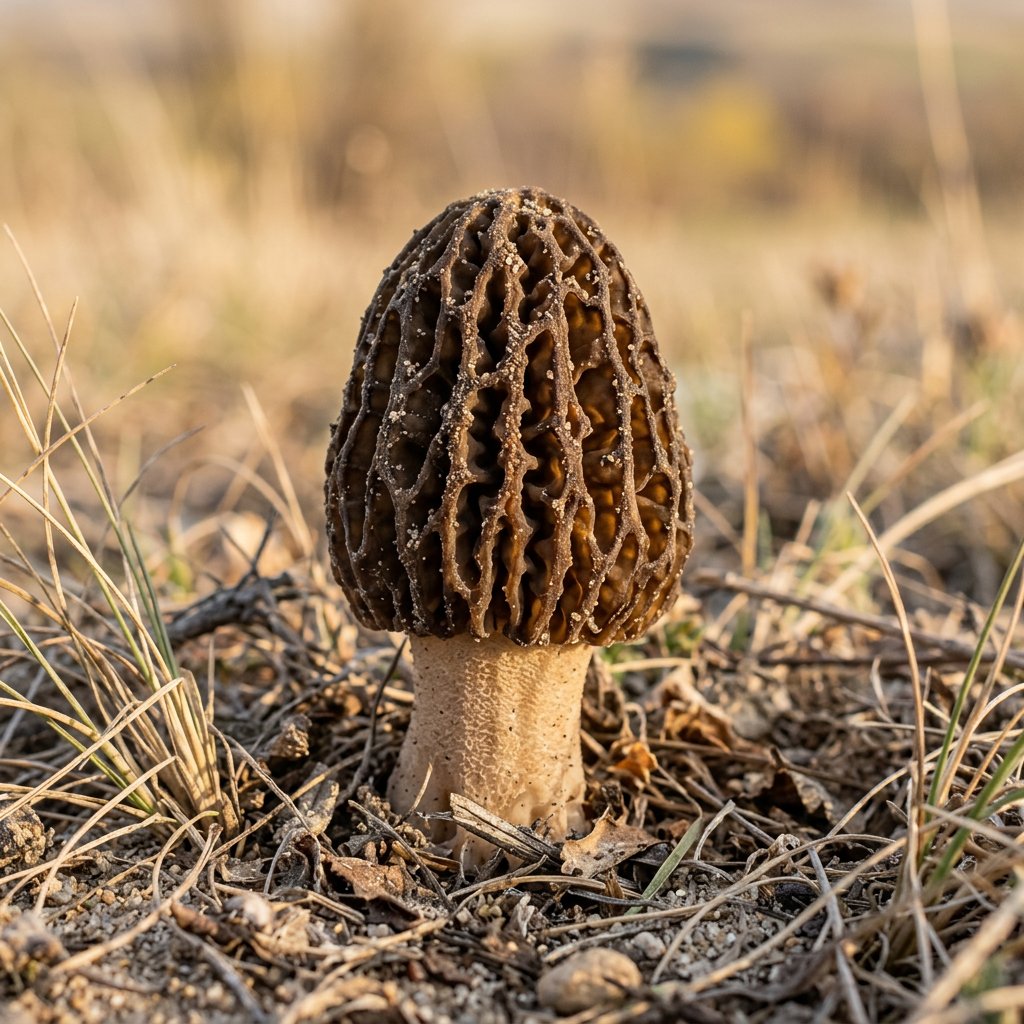
Known as the "Brain of the Steppe," Morchella steppicola is a rare and rugged wanderer among the morel family. Unlike its woodland cousins that hide under the shade of ancient trees, this hardy mushroom braves the windswept, open grasslands of Eurasia. It is deeply tied to the history of the Pontic-Caspian steppe, where it has been gathered for generations as a prized springtime treasure.
🔍 How to Identify
- 🧠 The Cap: Unlike the neat honeycomb look of other morels, the Steppe Morel has a dense, grayish-brown cap with a labyrinth of tight, brain-like folds and deep pits.
- 🦴 The Stem: The stalk is notably short, thick, and cream-colored. It often looks slightly "wrinkled" or ribbed near the base.
- 🕳️ The Interior: If sliced vertically, the entire mushroom is hollow from top to bottom—a key feature that distinguishes true morels from many lookalikes.
🌲 Habitat & Ecology
- 🌾 Open Landscapes: You won't find this mushroom in deep forests. It thrives in virgin steppes, meadows, and grassy hillsides, often appearing just as the snow melts and the first green shoots of spring emerge.
- 🌱 Soil Preference: It favors loamy or clay-rich soils. Because it grows in exposed areas, it has evolved a much denser, fleshier structure than forest morels to prevent it from drying out in the wind.
⚠️ Safety & Toxicity
- 🛑 WARNING: Never consume any wild mushroom unless it has been identified by a local expert. While Morchella steppicola is a choice edible, it can be confused with "False Morels" (Gyromitra species), which contain dangerous toxins.
- 🔥 Must Be Cooked: Like all true morels, the Steppe Morel contains small amounts of hydrazine toxins that are destroyed by heat. It should never be eaten raw, as it can cause severe digestive upset.
- 🐾 Pets and Kids: Keep curious pets away; raw wild mushrooms of any kind can lead to vomiting or neurological distress in dogs and cats.
✨ Fun Fact
The Steppe Morel is a survivor of the Ice Age! It is considered a "relict" species, meaning it has survived in its specific grassland niche since the Pleistocene epoch, largely unchanged while the world around it transformed.
More Details