Info
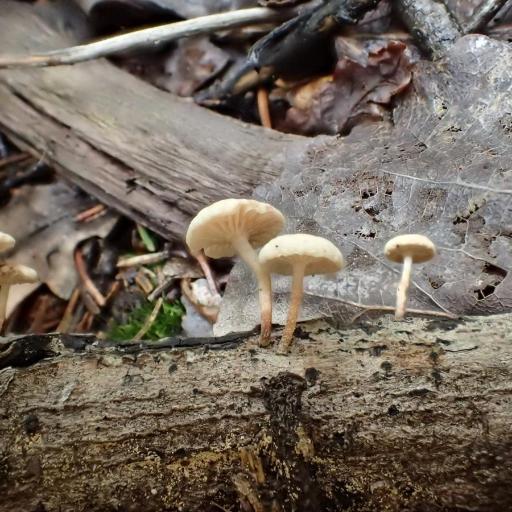
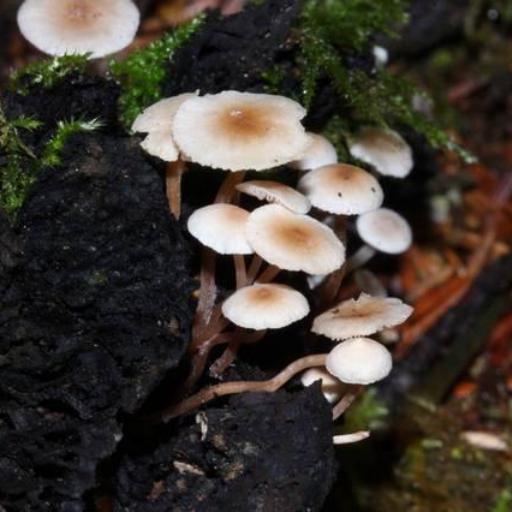
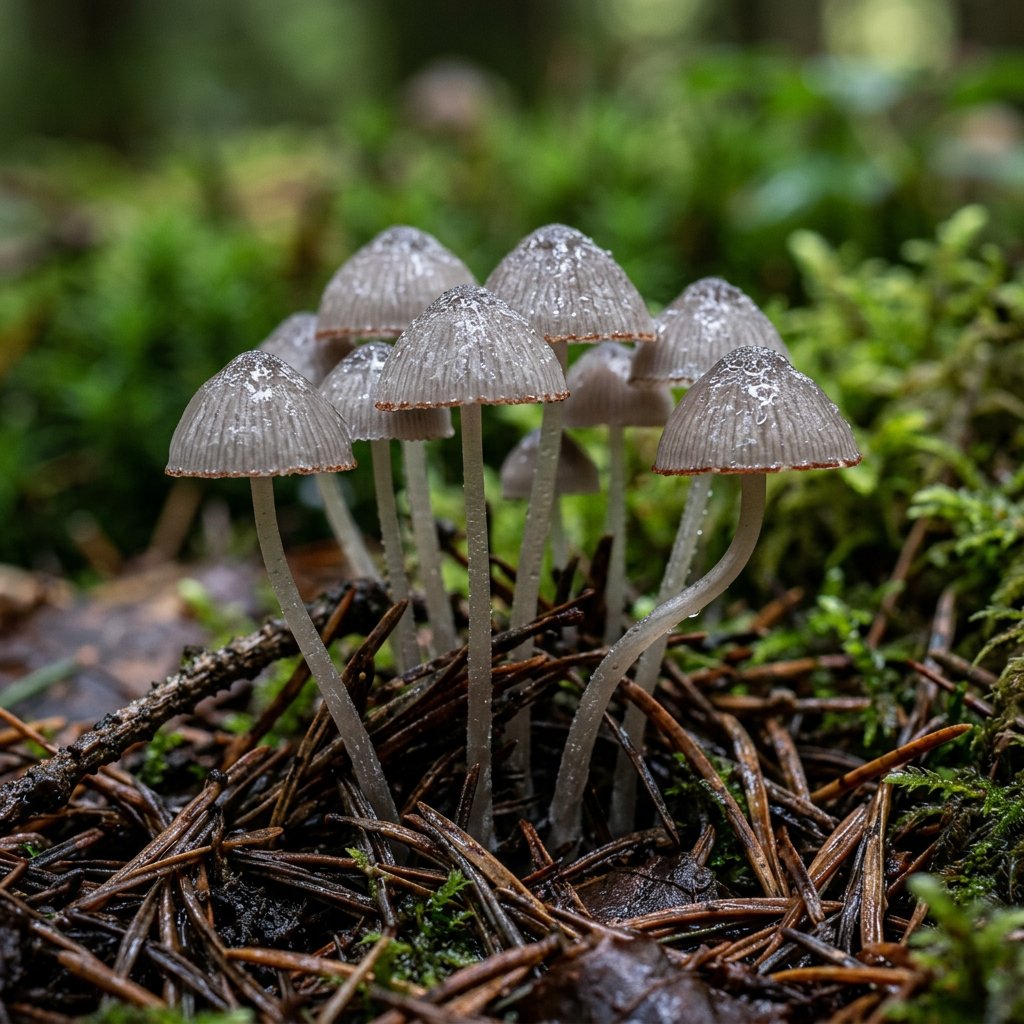
Often called the Pinkedge Bonnet, this fragile little fungus looks like it belongs in a miniature forest ballroom. Despite its delicate, ethereal appearance, it carries a surprising secret—a sharp, bleach-like scent that helps foragers identify it from a distance. You will usually find these tiny umbrellas huddled together on a thick bed of fallen pine or spruce needles during the damp days of autumn.
🔍 How to Identify
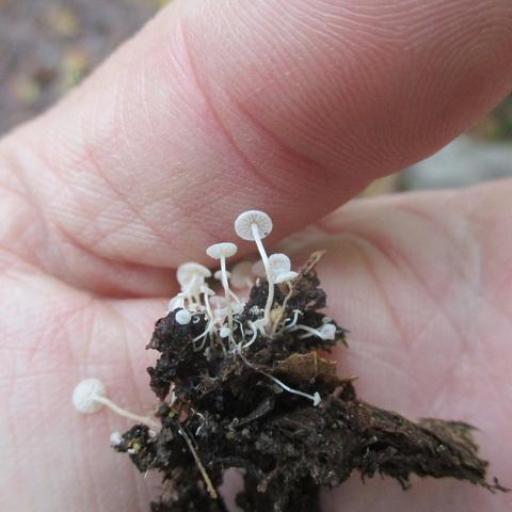
- 🍄 The Cap: A tiny, bell-shaped umbrella (usually less than 2cm wide) that starts brownish-pink and fades to a pale gray-purple as it ages.
- 💓 The Gill Edges: The most striking feature—if you look closely at the gills underneath, they are fringed with a distinct, beautiful pinkish-red border.
- 🧪 The Scent: If you gently crush a specimen, it releases a strong, chemical odor reminiscent of chlorine or nitrous acid.
- 🖋️ The Stem: Extremely thin, tall, and fragile; it is hollow and usually matches the grayish-pink color of the cap.
🌲 Habitat & Ecology
- 🌲 Needle Specialist: This species is a "saprobe," meaning it eats dead matter. It specifically specializes in breaking down fallen needles from coniferous trees like spruce and pine.
- 👯 Strength in Numbers: You will rarely find a Pinkedge Bonnet alone. They typically grow in large, scattered groups or "troops," creating a pinkish carpet across the dark forest floor.
- ☁️ Humidity Lover: They are highly sensitive to drying out; you’ll see them pop up in massive numbers immediately after heavy autumn rains when the air is cool and misty.
⚠️ Safety & Toxicity
- 🚨 WARNING: Mycena capillaripes is classified as Inedible. While it is not historically listed as "deadly," its chemical scent and tiny size make it completely unsuitable for the kitchen.
- 🧪 Unknown Chemistry: Many mushrooms in the Mycena family contain unstudied alkaloids. It is best to admire their beauty and leave them in the woods.
- 🐾 Pet Safety: Because they grow in "carpets," they can be tempting for curious dogs. Ingestion may lead to digestive distress or more severe neurological symptoms depending on the specific toxins present.
✨ Fun Fact
The "nitrous" smell of this mushroom is so reliable that mycologists use it as a benchmark to train their noses! If a mushroom book says a species "smells like Mycena," this is the specific, pungent bleach-scent they are referring to.
More Details