Info
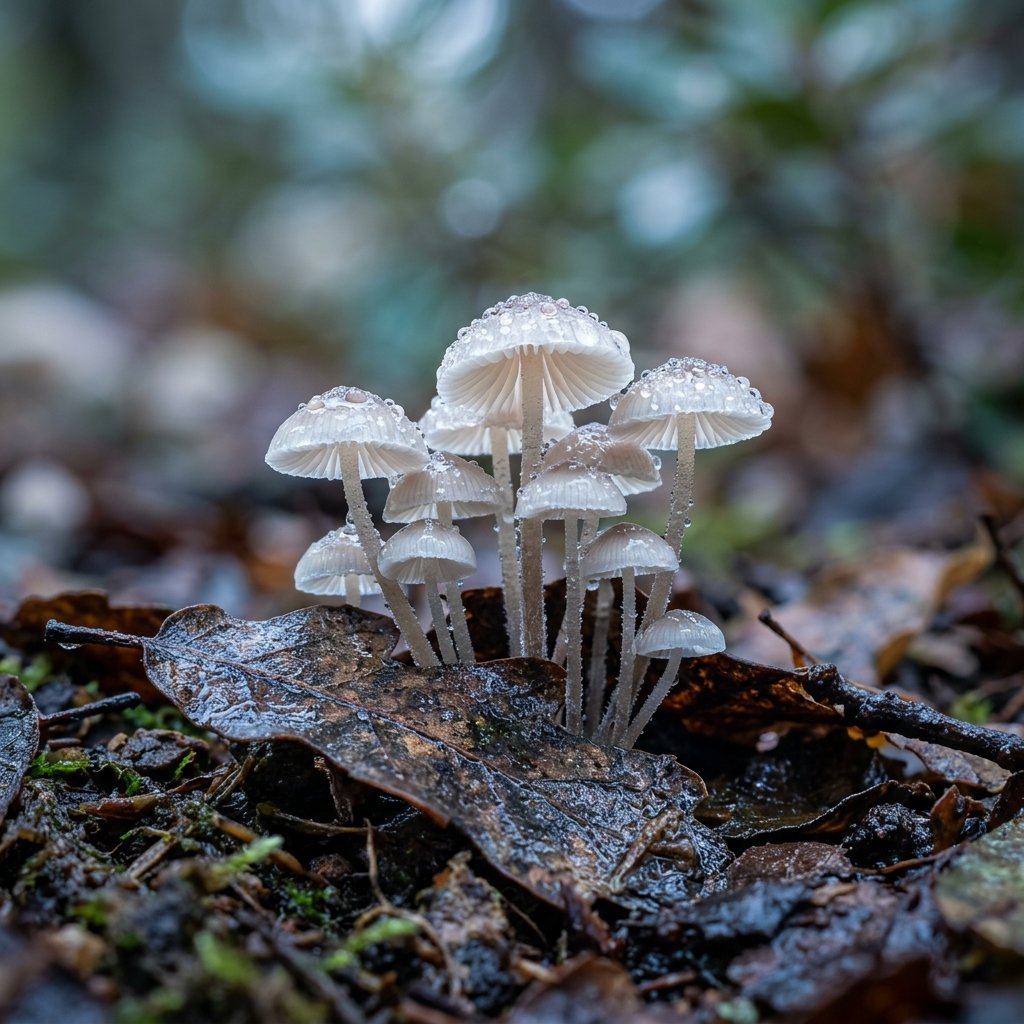
Known as the "Carmel Bonnet," Mycena carmeliana is a delicate, ethereal inhabitant of the forest floor. First described in the Mediterranean region, particularly the Mount Carmel range in Israel, this tiny mushroom looks like a miniature parasol left behind by a woodland sprite. Its fragile, translucent appearance makes it a favorite for macro photographers who enjoy capturing the light passing through its paper-thin cap.
🔍 How to Identify
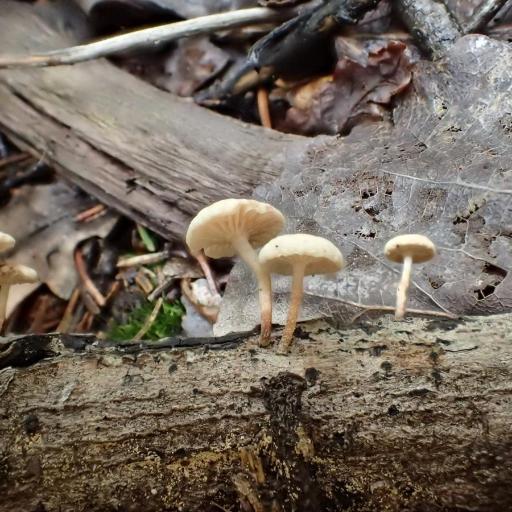
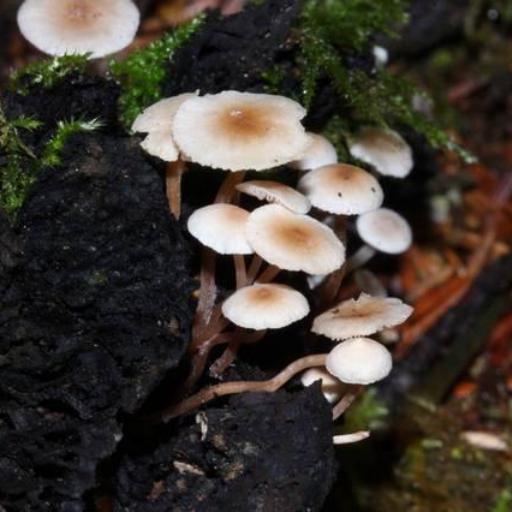
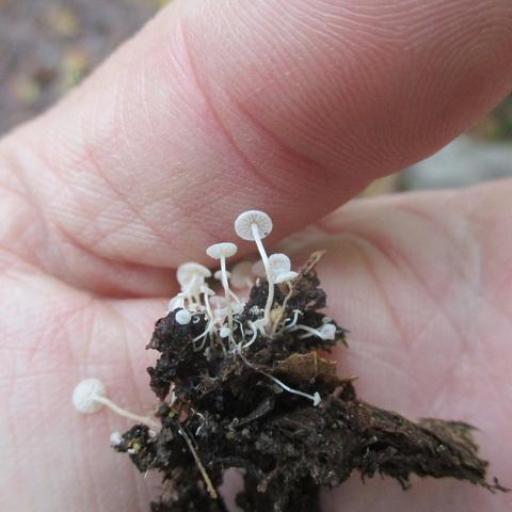
- 🍄 The Cap: Small (usually under 2cm), bell-shaped to conical, often featuring a tiny central bump (umbo). The color ranges from a soft grayish-beige to a pale, watery brown.
- ❄️ The Gills: Underneath, the gills are white or very pale gray, spaced moderately apart, and typically attached squarely to the stem.
- 📏 The Stipe (Stem): Exceptionally thin, hollow, and translucent. It often has a slight "frosty" or hairy base where it meets the decaying wood or leaf litter.
🌲 Habitat & Ecology
- 🍂 Woodland Recycler: This fungus is saprobic, meaning it survives by breaking down dead organic matter. You will most likely find it tucked away in the leaf litter of oak forests or growing on decaying hardwood twigs.
- 🌧️ Rainy Season Regular: It is a moisture-lover. It typically emerges shortly after heavy rains when the humidity is high, appearing in small, social clusters rather than standing alone.
⚠️ Safety & Toxicity
- 🛑 WARNING: Do not consume. While many Mycena species have not been proven to be lethally toxic, they are generally considered "inedible" due to their tiny size and the presence of unknown chemical compounds.
- 🚫 Look-alike Risk: It belongs to a group of "Little Brown Mushrooms" (LBMs) that are notoriously difficult to distinguish from one another. Some LBMs are dangerously toxic, so this mushroom should be treated as "look but don't touch" for children and pets.
✨ Fun Fact
The name carmeliana specifically honors Mount Carmel in Israel. In botanical and mycological naming, this is known as a "toponym," a name derived from the specific geographical location where the species was first discovered by scientists!
More Details