Info
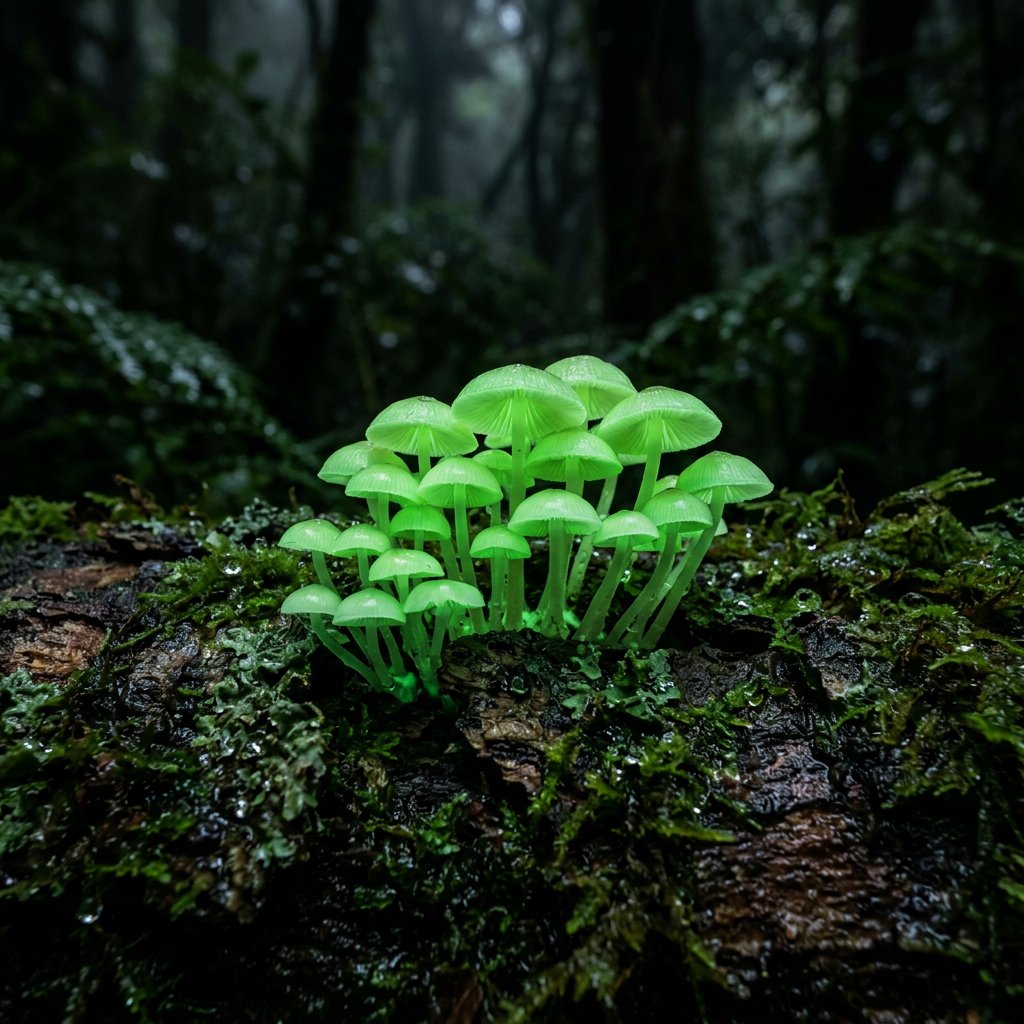
Known as the "Forest Ghost" or the "Pale Green Mycena," this tiny fungus looks like something straight out of a bioluminescent scene from a fantasy film. Native to the subtropical forests of Asia and the Pacific, it is world-famous for its ability to emit a ghostly, neon-green light in total darkness. While it might look magical, it is a master of natural chemistry, using its glow to stand out in the deep shadows of the forest floor.
🔍 How to Identify
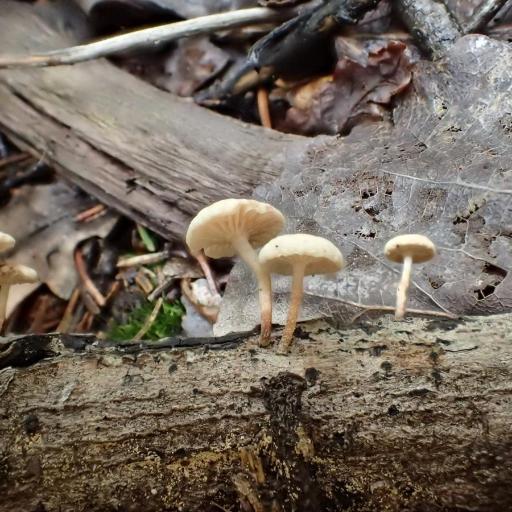
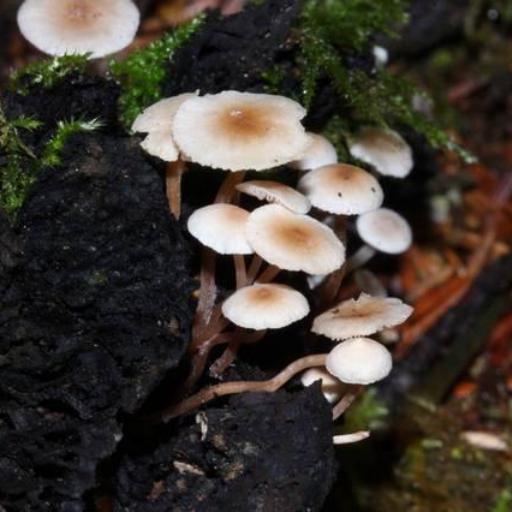
- 🍄 The Cap: Small (typically 5–30mm), bell-shaped, and brownish-grey. When it is humid or raining, the surface becomes distinctly sticky or slimy to the touch.
- 💡 The Glow: Its most striking feature is a steady, neon-green bioluminescence emitted from the gills and cap. The light is brightest when the mushroom is young and the temperature is around 80°F (27°C).
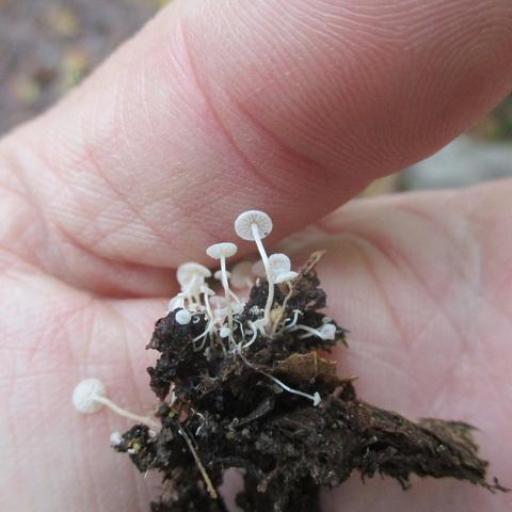
- 📏 The Stem: A thin, fragile, and relatively short stalk that often has a slightly swollen base where it attaches to its wooden home.
🌲 Habitat & Ecology
- 🪵 Woody Substrate: You will rarely find these growing directly in soil. They prefer "dining" on decaying woody debris, specifically fallen branches, twigs, or old bamboo poles in tropical climates.
- ☁️ Humidity Lover: These mushrooms are very sensitive to drying out. They require extremely high humidity to fruit and glow; if the air is too dry, the chemical reaction that causes the light will simply shut down.
⚠️ Safety & Toxicity
- 🚫 WARNING: Do not consume. While not categorized as "deadly" like some of its forest cousins, the Mycena chlorophos is considered inedible.
- 🧪 Unknown Risks: Its chemical makeup has not been fully cleared for human consumption, and many small Mycena species contain trace toxins that can cause severe gastrointestinal distress. It is strictly a mushroom for photography and nighttime observation.
✨ Fun Fact
The mushroom’s eerie glow is caused by a chemical reaction between a molecule called luciferin and an enzyme called luciferase—the exact same biological mechanism that allows fireflies to light up the summer night!
More Details
| Hymenium Type | Lamella |
| Stipe Character | Bare Stipe |
| Spore Print Color | White |
| Hymenium Attachment | Free Hymenium Attachment |
| Mushroom Ecological Type | Saprobiont |