Info
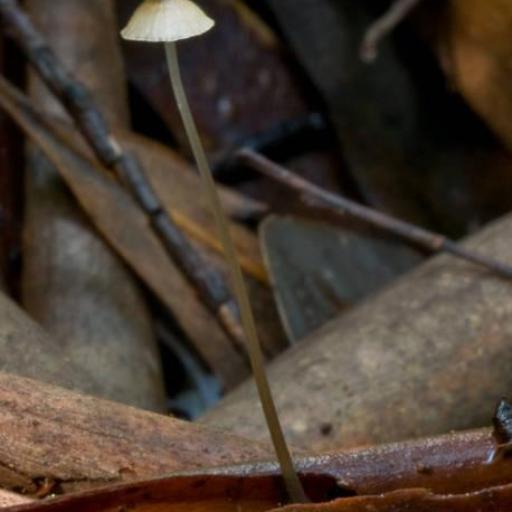
Often called the "Hairy-stalked Mycena," this tiny fungus looks like something straight out of a woodland fairytale. These delicate "Fairy Bonnets" are master recyclers, quietly breaking down leaf litter on the damp forest floor. They are particularly famous among mycologists for their unusually long, hair-like structures that give the stem a distinctively fuzzy appearance.
🔍 How to Identify
- 🍄 The Cap: Small (usually under 2cm), bell-shaped or conical, featuring fine radial lines (striations) that look like the ribs of a tiny, translucent umbrella.
- ☁️ The Gills: Pale, whitish, and thinly spaced underneath the cap, reaching toward the center but barely attached to the stem.
- 🪶 The "Hairy" Stem: The most defining trait; the slender, fragile stem is covered in tiny, white, whisker-like bristles called "macro-cystidia" that are often visible to the naked eye.
🌲 Habitat & Ecology
- 🍂 Forest Floor Resident: You’ll typically find them hiding in deep, damp leaf litter or nestled among rotting wood in temperate rainforests and wet woodlands.
- 🌿 Fern Association: They have a particular fondness for growing near the base of ferns or in shaded, mossy hollows where moisture is constantly trapped.
- ♻️ The Clean-up Crew: As saprobic fungi, they play a vital role in the ecosystem by breaking down tough organic matter and returning nutrients to the soil.
⚠️ Safety & Toxicity
- 🛑 WARNING: Do not eat this mushroom. Never consume small, "Little Brown Mushrooms" (LBMs) found in the wild, as many are indistinguishable from highly toxic species.
- 🚫 Edibility Status: Mycena cystidiosa is considered inedible. It lacks any culinary value due to its minuscule size and potential for causing gastrointestinal distress.
- 🐾 Pets & Kids: Because of their delicate nature, they are easily crushed, but they should be kept away from curious pets and toddlers who might try to taste them.
✨ Fun Fact
🔬 Microscopic Giants: The "hairs" on the stem are actually giant sterile cells. While most mushrooms require a high-powered microscope to see these cells, Mycena cystidiosa wears them like a visible fur coat, making it a favorite for amateur photographers!
More Details







