Info
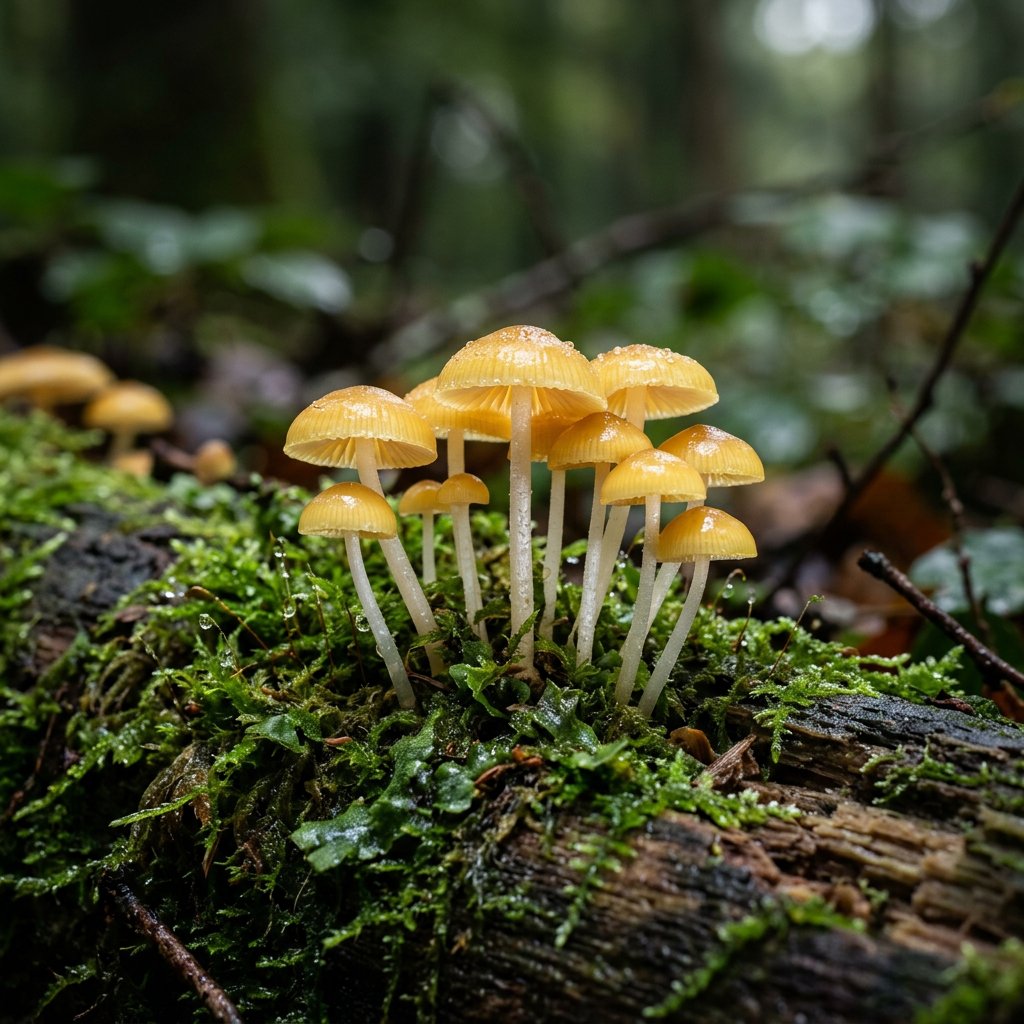
Known as the Beautiful-stemmed Bonnet, Mycena renati is a tiny, vibrant jewel of the forest floor. These delicate mushrooms look like something straight out of a woodland fairytale, often appearing in cheerful clusters on decaying logs. Their striking contrast between a pinkish-tan cap and a brilliant golden-yellow stem makes them a favorite for nature photographers and amateur mycologists alike.
🔍 How to Identify
- 🍄 The Cap: Small and bell-shaped (conical), usually measuring 1–3 cm across. The color is a sophisticated blend of pinkish-tan or flesh-colored tones, often darker and more reddish toward the center.
- 🎨 The Stem: This is the identifying "wow" factor. The stem is a vivid, translucent yellow or golden-orange. It is smooth, hollow, and surprisingly sturdy for such a delicate-looking fungus.
- ☁️ The Gills: Beneath the cap, you will find white to pale pink gills that are spaced closely together. They are "adnate," meaning they are broadly attached to the stem.
- 🌬️ The Aroma: If you gently crush a piece of the cap, many enthusiasts note a distinct, slightly bleach-like or nitrous smell, which is a common trait among many Mycena species.
🌲 Habitat & Ecology
- 🪵 Woodland Preference: Unlike many mushrooms that grow from the soil, the Beautiful-stemmed Bonnet is "saprobic," meaning it feeds on dead organic matter. You will almost always find it growing directly on the rotting wood of broadleaf trees, especially Beech and Oak.
- 🌿 Strength in Numbers: These mushrooms rarely travel alone. They typically grow in "cespitose" clusters, meaning many stems originate from a single point on a log, creating a beautiful bouquet effect against the dark bark or green moss.
⚠️ Safety & Toxicity
- 🛑 WARNING: Do not consume this mushroom. While it is not recorded as "deadly" like some of its forest neighbors, Mycena renati is considered inedible.
- 🧪 Chemical Content: Many species in the Mycena genus contain trace amounts of muscarine or other unstudied alkaloids. Because of its small size and lack of culinary value, it has never been deemed safe for human or pet consumption.
- 🐾 Pets & Kids: Ensure curious pets or children do not ingest these, as they may cause gastrointestinal distress.
✨ Fun Fact
The specific epithet renati was chosen to honor the French mycologist René Maire. While many people mistake these for bioluminescent mushrooms because of their "glowing" yellow stems, they don't actually glow in the dark—they just catch the sunlight perfectly through the forest canopy!
More Details







