Info
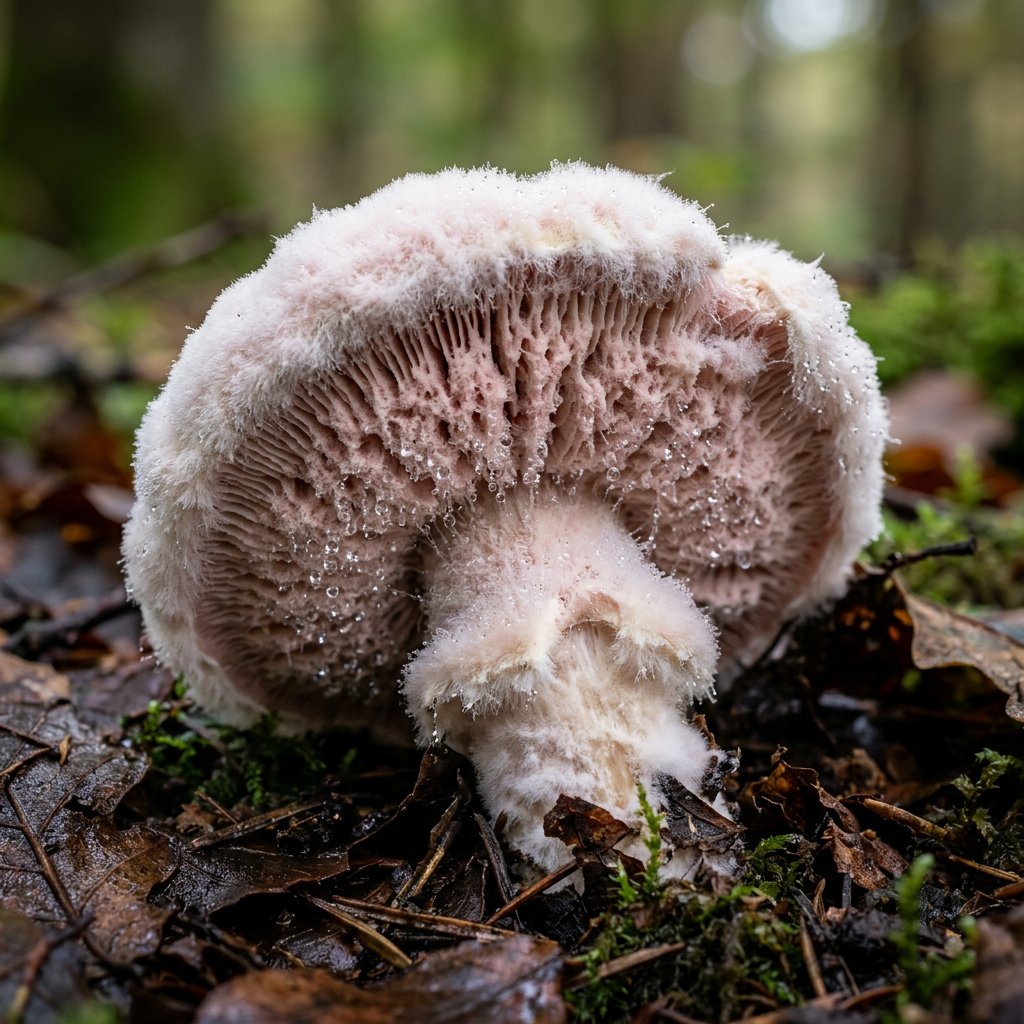
Known to mushroom farmers as the "Wet Bubble," Mycogone is a fascinating yet destructive parasite that doesn't just grow on soil—it grows on other mushrooms. Often resembling a fluffy, pinkish marshmallow, it turns its host into a distorted, unrecognizable mass, earning it a reputation as a ghost-like intruder in the fungal kingdom.
🔍 How to Identify
- 🍄 The "Bubble" Growth: Rather than a traditional cap and stem, this fungus appears as a white, cottony mass that swells into a tumor-like "bubble" on the surface of its host.
- 💧 Amber Droplets: As the infection matures, it often "weeps" small, clear, or amber-colored liquid droplets across its surface, giving it a moist, blistered appearance.
- 🌸 Rosy Transformation: While it starts out snowy white, species like Mycogone rosea eventually shift into a distinct, dusty rose or pinkish-brown color as they produce spores.
🌲 Habitat & Ecology
- 🧬 The Fungal Hijacker: This is a mycoparasite, meaning its entire lifestyle revolves around feeding on the tissues of other fungi. It is the primary antagonist in commercial mushroom houses, where it can wipe out entire crops of button mushrooms.
- 🍂 Forest Strategy: In the wild, you are most likely to find it "consuming" certain species of Amanita or Russula. It thrives in damp, humid conditions where the air is still, allowing its spores to settle quietly onto a host.
⚠️ Safety & Toxicity
- 🚫 WARNING: Do not consume any mushroom infected by Mycogone. Even if the host mushroom (such as a button mushroom) is normally edible, the parasite causes the host to decompose and rot, making it toxic to ingest.
- 🤢 Digestive Danger: Ingesting an infected mushroom can lead to severe gastrointestinal distress due to the secondary decay and bacterial growth that follows the Mycogone infection.
✨ Fun Fact
The common name "Wet Bubble" is so descriptive that it is used by both scientists and farmers; the name refers to the way the parasite causes the host's tissue to expand and "leak" fluids, making the mushroom look like it is literally melting into a puddle of bubbles.
More Details







