Info
The "Pepper Pot Earthstar" is one of the most distinctive and architectural mushrooms you’ll ever find in the wild. Looking like a miniature celestial sculpture or a vintage salt-shaker dropped on the forest floor, it is the only species in its genus, making it a true botanical oddity. In many regions, finding one is considered a rare treat for hikers and nature photographers.
🔍 How to Identify
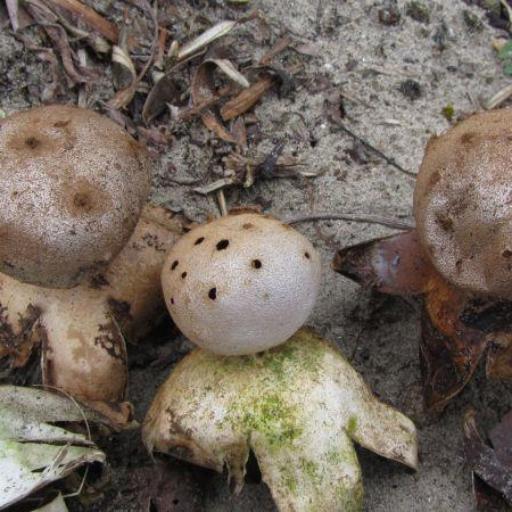
- 🎨 The Star Rays: The leathery outer skin splits into 7 to 14 "rays" that curve downward, lifting the central spore sac off the ground like a lunar lander.
- 🧂 The Pepper Pot: Unlike typical earthstars that have a single opening, the central sac of this species features dozens of tiny pores (ostioles) at the top, looking exactly like a spice shaker.
- 🏗️ Multiple Stems: If you peek underneath the central silvery-brown ball, you will see several tiny, distinct stalks supporting it, rather than the single stem found in common earthstars.
🌲 Habitat & Ecology
- 🏖️ Sandy Soils: This fungus has a preference for well-drained, sandy earth. You’ll often find it in open woodlands, stabilized sand dunes, or even old hedgerows where the soil is nutrient-rich but light.
- 🍂 Debris Lover: It is a saprobic species, meaning it survives by breaking down decaying leaf litter and organic matter. It plays a vital role in recycling nutrients back into the forest ecosystem.
⚠️ Safety & Toxicity
- 🚫 WARNING: The Salt-shaker Earthstar is considered inedible. Its texture is tough, leathery, and woody, making it impossible to chew or digest.
- 🐾 General Safety: While not known to be aggressively toxic, ingesting wild fungi can cause severe stomach upset in humans and pets. Because it can be easily confused with other ground fungi, it should never be consumed.
✨ Fun Fact
The scientific name Myriostoma translates from Greek to "myriad mouths." This is a perfect description for its unique spore-dispersal method: whenever a raindrop hits the sac, a puff of spores is "shaken" out of every single hole at once!
More Details







