Info
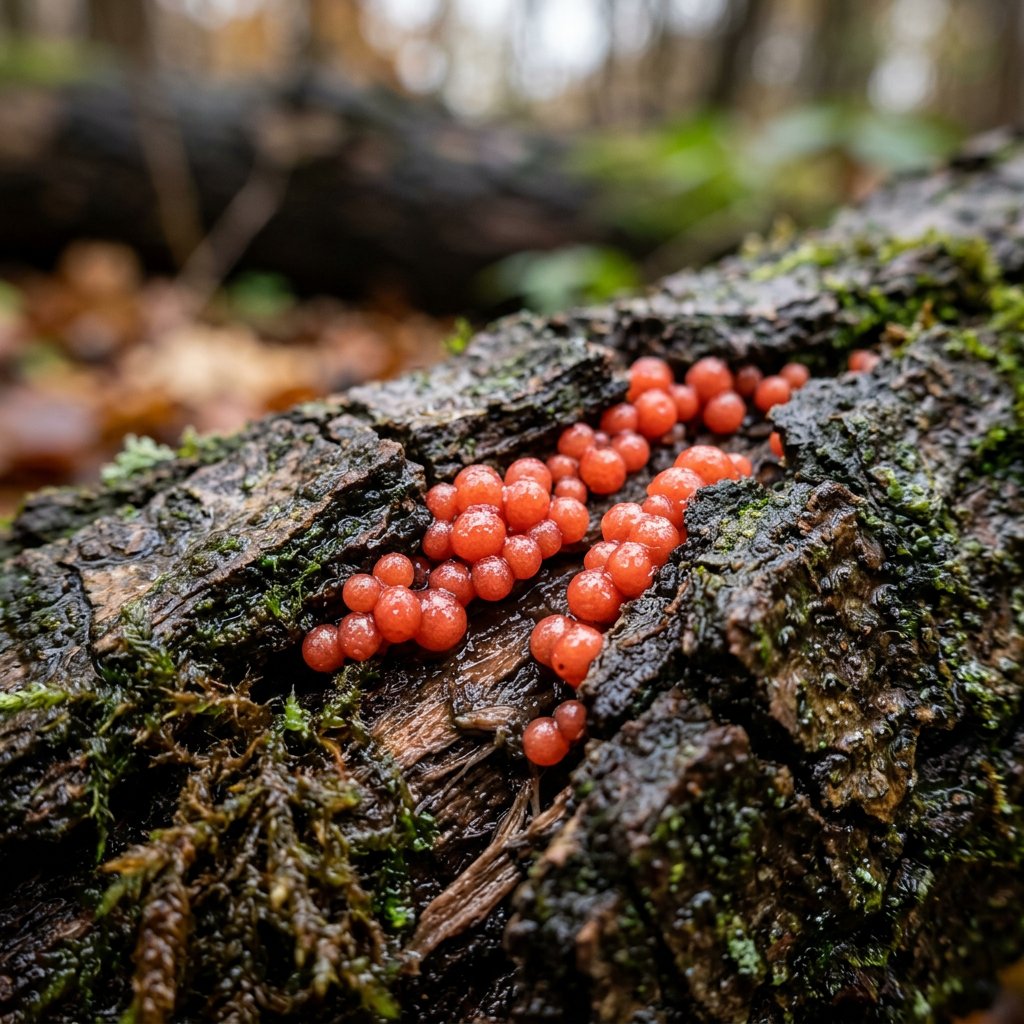
Known as the Coral Spot, this fungus looks like tiny, glowing embers scattered across fallen branches. While it might look like a decorative miniature garden, it is often a sign that a tree is under stress or that pruning shears weren't cleaned properly. It’s a common sight in woodlands and gardens across the globe, appearing like festive pink and red beads during damp weather.
🔍 How to Identify
- 🎨 The "Cinnabar" Color: Look for tiny cushions that transition from a bright coral-pink (asexual stage) to a deep, ruby-red (sexual stage) as they mature.
- 🪵 The Pustule Shape: These aren't traditional mushrooms with caps; instead, they form small, rounded bumps about 1–3 mm wide, often clustered in large groups.
- 🍄 Surface Texture: In the early "pink" stage, they are smooth and somewhat waxy; in the later "red" stage, they become rough, granular, and "wart-like" to the touch.
🌲 Habitat & Ecology
- 🌳 The Clean-up Crew: Primarily a saprobe, this fungus feasts on dead or decaying hardwood. You will most often find it on fallen sticks of Beech, Sycamore, and Horse Chestnut.
- ✂️ The Garden Invader: In the home garden, it is a frequent guest on Redcurrant bushes and Maples. It often enters living plants through fresh pruning cuts or frost-damaged tips, where it can cause minor dieback of the branch.
- 🌧️ Damp Weather Lover: While present year-round, the pustules become much more vibrant and noticeable after heavy autumn and winter rains.
⚠️ Safety & Toxicity
- 🚫 WARNING: This is not an edible mushroom. While it is not known to be "deadly" to humans, its tiny size and tough, woody consistency make it entirely unpalatable.
- 🐾 Pet & Plant Safety: It is generally harmless if a pet sniffs or brushes against it. However, for the "health" of your garden, it is a warning sign; seeing it on a living plant means you should prune away the affected wood to prevent further spread.
✨ Fun Fact
This fungus is a "shapeshifter" known as a pleomorphic species. For many years, mycologists thought the pink cushions and the red warts were two completely different species of fungi until they realized they were just different life stages of the same organism!
More Details







