Info
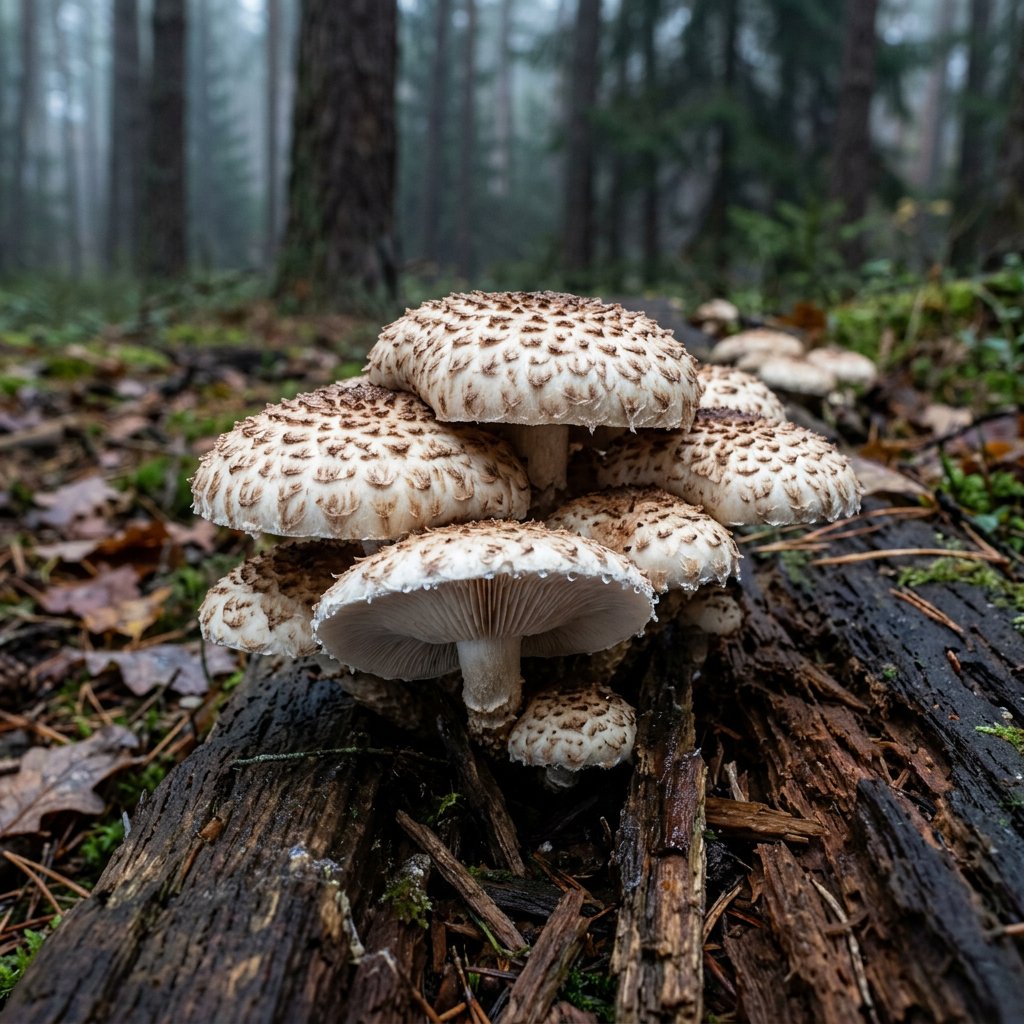
Known as the "Train Wrecker," Neolentinus lepideus is a rugged and resilient fungus famous for its ability to digest wood that has been treated with heavy preservatives. While many mushrooms prefer pristine forests, this species is a pioneer of the industrial landscape, often popping up in the most unexpected urban environments.
🔍 How to Identify
- 🍄 The Cap: Large and fleshy (5–15 cm), the surface is creamy white to pale tan, covered in distinct, brownish, overlapping scales that give it a "shaggy" appearance.
- 🪚 Saw-Toothed Gills: The white gills underneath are uniquely serrated or "jagged" along the edges, looking almost like the blade of a tiny saw.
- 🪵 The Stem: Extremely tough and woody, the stem is often off-center and covered in the same brownish scales as the cap, tapering downward into the wood.
- 👃 The Scent: When fresh, it often emits a surprising and pleasant fragrance reminiscent of anise or cloves.
🌲 Habitat & Ecology
- 🚂 The "Train Wrecker": This mushroom earned its nickname because it is one of the few organisms capable of breaking down creosote—a toxic coal-tar derivative used to preserve railroad ties and telephone poles.
- 🌲 Conifer Lover: In the wild, you’ll find it growing on the stumps or logs of pine, fir, and hemlock trees, usually in sunny, open areas rather than deep, dark forests.
- ☀️ Sun Tolerance: Unlike many delicate mushrooms that wither in the sun, the Train Wrecker is remarkably drought-tolerant and can survive in hot, dry conditions that would kill other fungi.
⚠️ Safety & Toxicity
- 🛑 WARNING: While the mushroom is technically listed as edible when young, extreme caution is required regarding its location.
- 🧪 Chemical Absorption: If found on railroad ties, telephone poles, or any treated lumber, it is toxic. The fungus absorbs the heavy metals and creosote from the wood, making it dangerous to ingest.
- 🤢 Digestive Upset: Even in the wild, older specimens become very tough and cork-like, often causing stomach upset if not prepared correctly or if eaten past their prime.
✨ Fun Fact
The "Train Wrecker" was a genuine economic menace in the early 20th century. Before modern chemical treatments were perfected, this mushroom caused so much structural rot in railway sleepers that it was responsible for several historical train derailments!
More Details







