Info
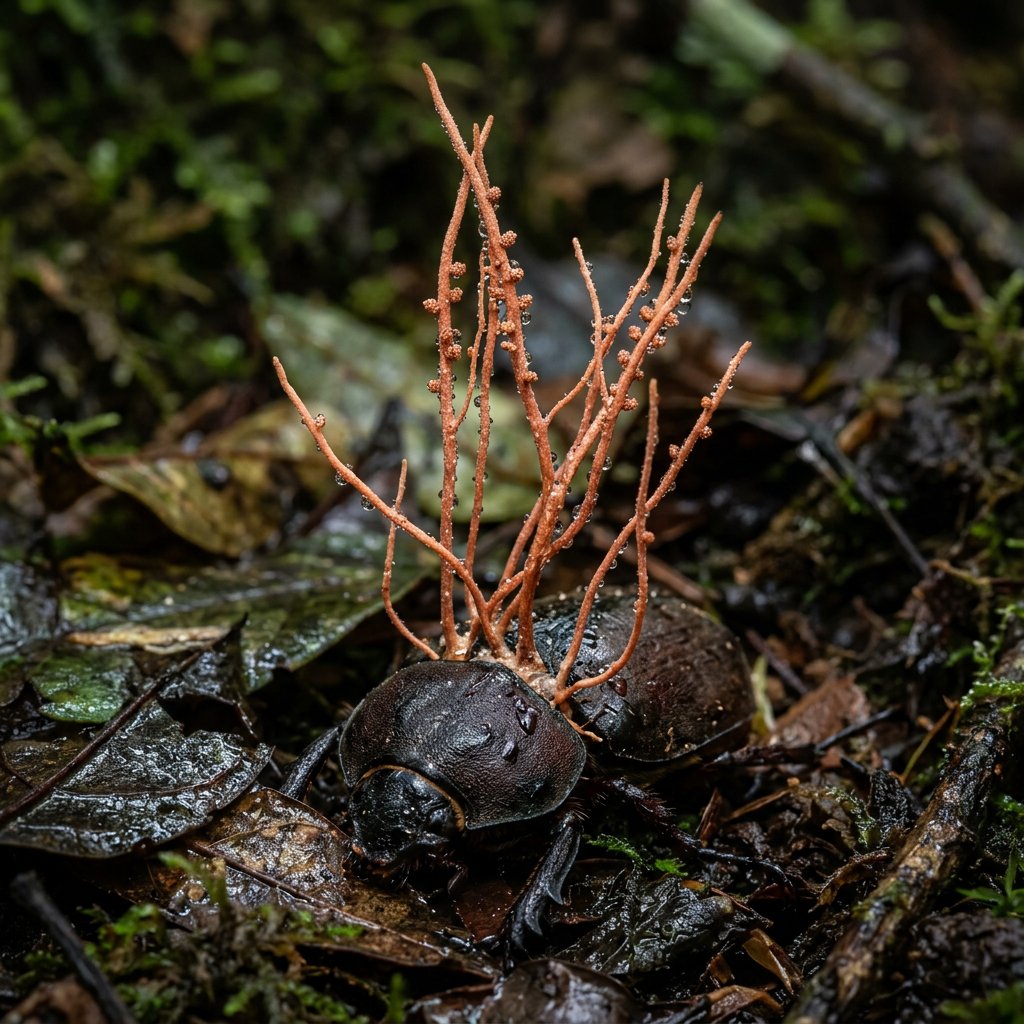
Often referred to as the "Fly-Destroyer," Ophiocordyceps variabilis is a fascinating member of the "zombie fungus" family. This tiny, orange-hued specialist doesn't grow from the soil or wood like most mushrooms; instead, it erupts from the buried larvae of flies. In the quiet undergrowth of the forest, it acts as a natural population controller, turning its host into a biological nursery.
🔍 How to Identify
- 🍄 The Fruiting Body: It features a small, club-shaped head (stroma) that is usually bright orange to reddish-orange. The surface is often textured with tiny bumps where the spores are produced.
- 🖋️ The Stem: The stalk is slender, wiry, and pale yellow or cream-colored near the base, deepening in color as it reaches the head.
- 🪰 The Hidden Host: If you carefully dig at the base, you will find the mummified remains of a fly larva (usually a member of the Xylophagidae family) from which the fungus is growing.
🌲 Habitat & Ecology
- 🍂 Forest Floor Detective: This fungus is most commonly found in well-decayed, mossy logs or very moist soil where fly larvae reside. It is often overlooked because of its tiny size, usually standing only a few centimeters tall.
- 🧟 Host Manipulation: While many Ophiocordyceps species are famous for "zombifying" ants, O. variabilis is a specialist of the Diptera (fly) order. It consumes the internal organs of the larva while it is still alive, eventually replacing the host's tissue with fungal mycelium.
⚠️ Safety & Toxicity
- 🚨 WARNING: Do not consume. While some species of Cordyceps are used in traditional medicine, Ophiocordyceps variabilis is not considered edible and has no documented culinary value.
- 🧪 Unknown Profile: Because it is so small and rare to find in large quantities, its chemical toxicity to humans is not well-studied. It should be treated as potentially toxic and left in the wild to fulfill its ecological role.
✨ Fun Fact
The "variabilis" in its name refers to its highly variable appearance. Depending on the depth of the buried host and the moisture of the environment, the fungus can grow long, twisted stalks or short, stubby ones to ensure its spores reach the open air!
More Details