Info
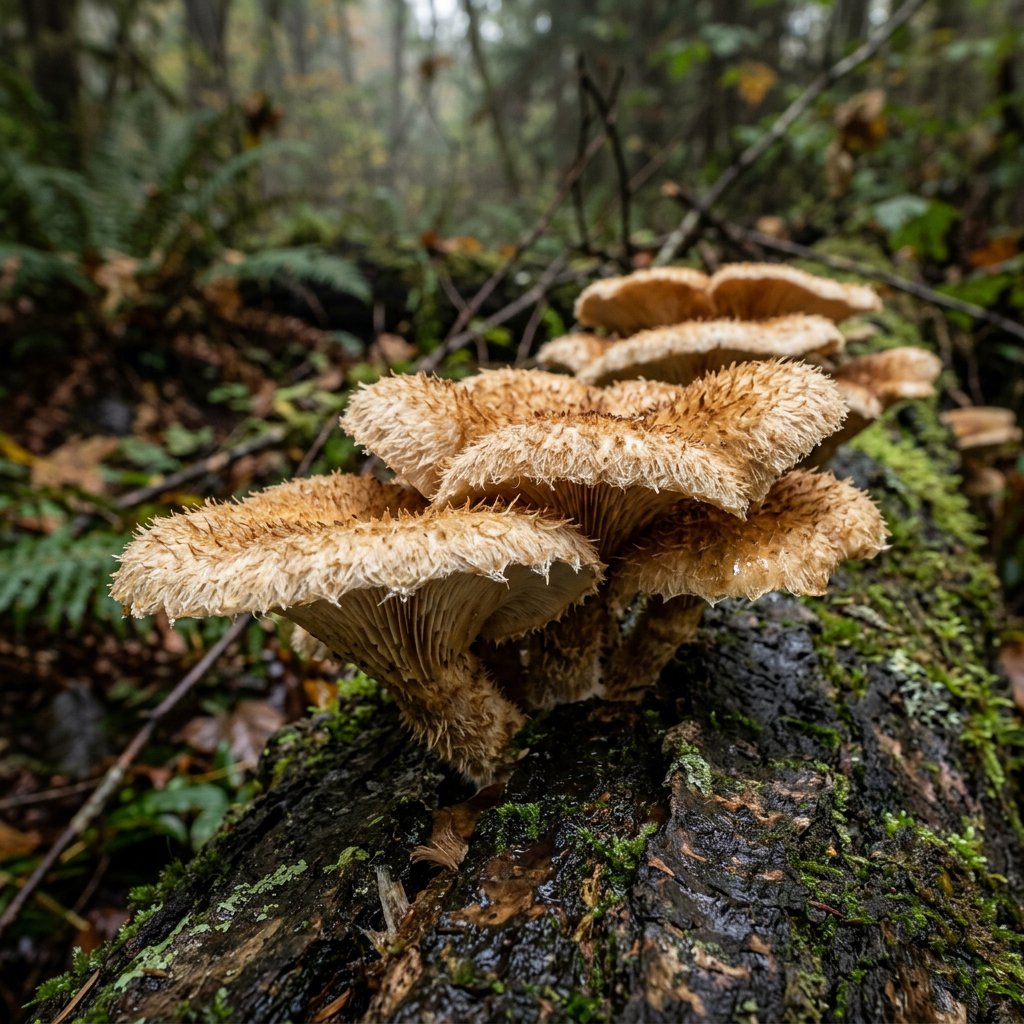
Known commonly as the Hairy Sawgill, this mushroom looks like it stepped straight out of a whimsical forest tale. Often mistaken for a discarded piece of purple velvet or a fuzzy creature clinging to a log, it is famous for its remarkably "shaggy" appearance. This fungus is a master of transformation, changing from a vibrant violet hue in its youth to a humble tan as it ages.
🔍 How to Identify
- 🪶 The "Hairy" Cap: The most striking feature is the dense covering of stiff, coarse hairs (strigose) that give the cap a felt-like or suede texture.
- 🗡️ Serrated Gills: The gills underneath are crowded and often have slightly jagged or "saw-toothed" edges, which is how it earned the name "Sawgill."
- 🌪️ Funnel Shape: As it matures, the mushroom typically develops a deep central depression, taking on a funnel or cup-like shape, often with a wavy, irregular margin.
🌲 Habitat & Ecology
- 🪵 The Recycler: This mushroom is a saprobe, acting as nature’s cleanup crew by breaking down dead hardwood. Look for it sprouting in clusters on fallen logs, stumps, or buried branches of deciduous trees like Oak and Beech.
- ☀️ Drought Resistant: Thanks to its thick, hairy "coat," it is much better at retaining moisture than its smooth-skinned cousins. This allows it to persist in the forest even during drier summer spells when other mushrooms have withered.
⚠️ Safety & Toxicity
- 🛑 WARNING: Panus neostrigosus is strictly classified as inedible.
- 👅 Texture & Taste: While not known to be dangerously toxic to humans, its flesh is incredibly leathery, tough, and bitter. Eating it has been compared to chewing on a piece of hairy, bitter cardboard—it is a culinary disappointment rather than a meal.
- 🐾 Pets: As with most wild fungi, keep curious dogs away, as ingestion may cause gastrointestinal upset.
✨ Fun Fact
The Hairy Sawgill is a "color-shifter." In high-humidity environments, young specimens are a brilliant, shocking shade of lilac or deep purple. However, as soon as the sun hits them or they begin to age, the purple pigments vanish, leaving the mushroom a dull, leathery beige.
More Details