Info
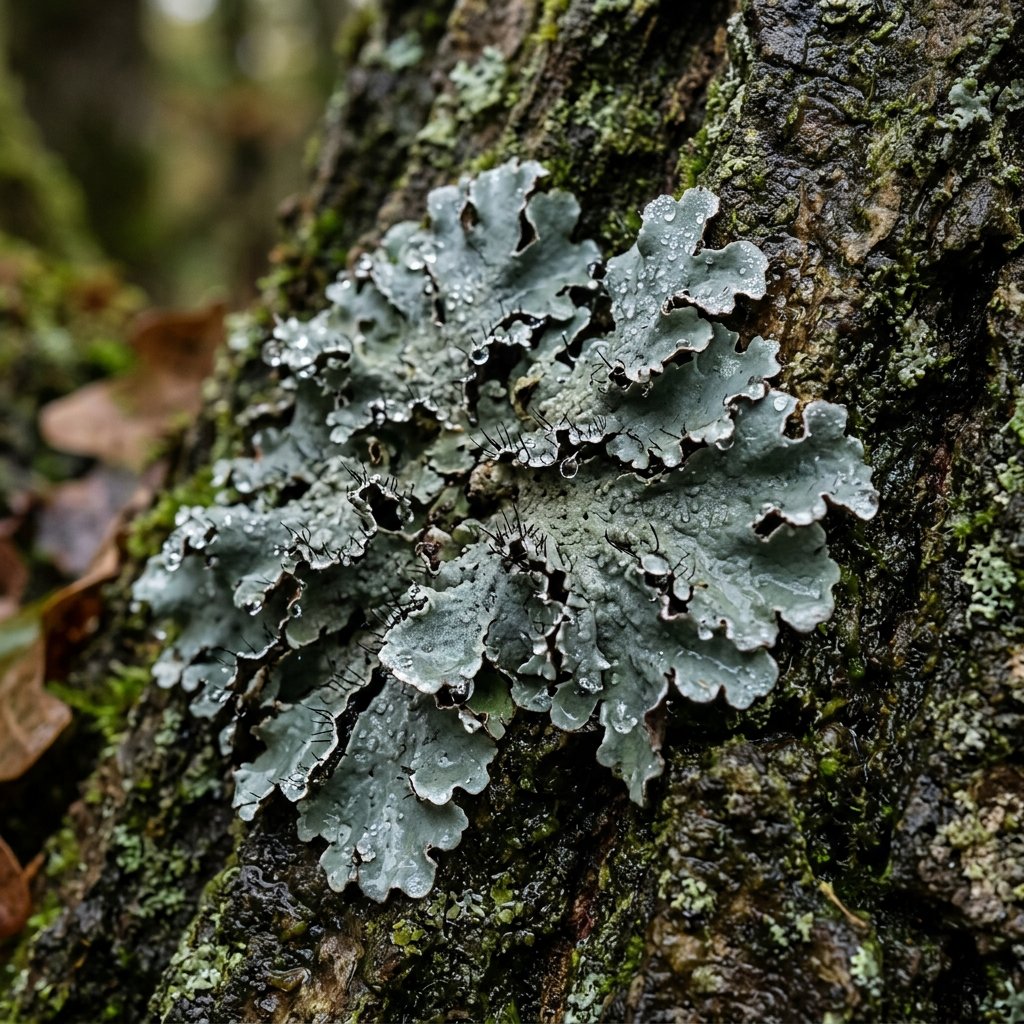
Often called the Sea-green Shield Lichen or the Dyer’s Lichen, this species is a fascinating example of nature’s teamwork. While categorized under fungi, it is actually a lichen—a complex partnership where a fungus provides a home for algae to live in. For centuries, this "shield" was a prized treasure for textile artists, as it holds the secret to creating vibrant, regal pigments from seemingly dull grey scales.
🔍 How to Identify
- 🎨 The Thallus: It grows in large, leafy (foliose) patches that look like crumpled sea-foam green or mineral-grey paper pressed against a tree.
- 🌫️ Powdery Margins: The edges of the lobes are often covered in "soredia"—fine, grainy dust that looks like it was sprinkled with flour. This is how the lichen reproduces without seeds.
- 🖤 The Underside: If you gently lift a lobe, you’ll find a dark, black center that fades to a smooth, chestnut brown toward the very edge.
🌲 Habitat & Ecology
- 🌬️ Air Quality Sensor: This species is a "bio-indicator." Because it absorbs everything from the air, it cannot survive in polluted cities. If you find it thriving, you are breathing very clean air.
- 🌳 Host Trees: It prefers the rough bark of hardwoods (like Oaks) or sun-drenched rocks in humid, temperate, and tropical climates.
- 🤝 Mutualistic Bond: The fungal part of the lichen provides structural protection and minerals, while the microscopic algae perform photosynthesis to feed the fungus.
⚠️ Safety & Toxicity
- 🛡️ General Status: Non-toxic but inedible. It is not a culinary mushroom and should never be consumed.
- 🧤 Handling: It is generally safe to touch, though some people with sensitive skin may experience mild irritation if they handle it extensively during the dyeing process.
- 🐾 Pets: Most pets ignore lichens due to their tough, papery texture and bitter lichen acids, but keep an eye on curious chewers to avoid indigestion.
✨ Fun Fact
The name tinctorum comes from the Latin word for "dyeing." When fermented in a specific solution (historically using aged urine!), this dull green lichen undergoes a chemical transformation to produce a magnificent deep purple and crimson dye known as "orchil."
More Details







