Info
The Alder Paxillus is a modest, earth-toned mushroom that plays a vital role in wetland ecosystems. Often found nestled among the roots of its namesake tree, this fungus is a master of camouflage against the damp forest floor. While it lacks the vibrant colors of some of its cousins, its story is one of complex chemistry and serves as a vital cautionary tale for modern foragers.
🔍 How to Identify
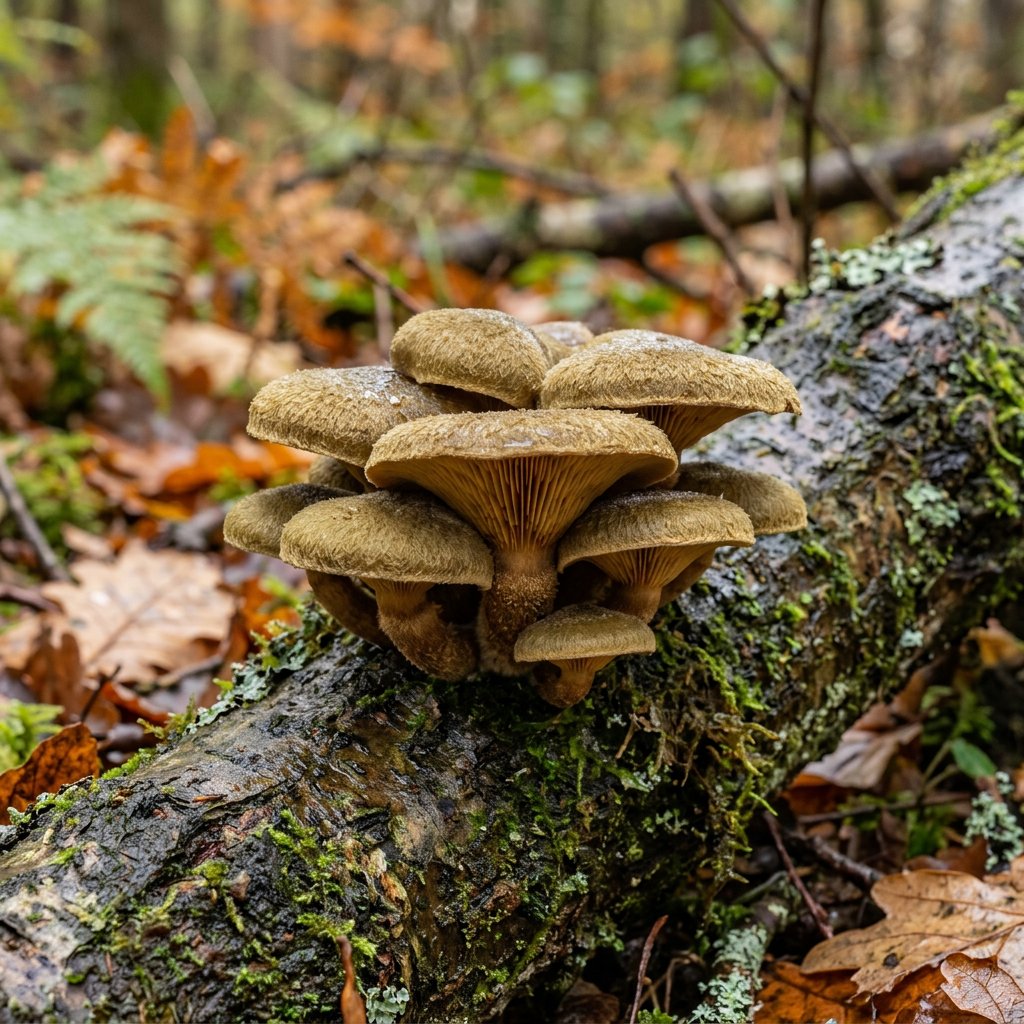
- 🍄 Scaly Cap: The cap is typically 5–10 cm wide, featuring an ochre-yellow to olive-brown surface that is often covered in small, pressed-down scales, especially toward the center.
- 🕸️ Decurrent Gills: The gills are yellowish and crowded, running slightly down the stem. A key identifying feature is that they turn a distinct rusty-brown color almost immediately when bruised.
- 🪵 The Stem: Usually short, sturdy, and tapering toward the base, the stem often shares the same brownish-yellow hue as the cap.
🌲 Habitat & Ecology
- 🌳 The Alder Bond: This mushroom is an "ectomycorrhizal" specialist. It forms a deep, symbiotic relationship almost exclusively with Alder trees (Alnus species), helping the tree absorb nutrients in exchange for sugars.
- 💧 Water Lovers: You are most likely to find these in damp, marshy areas, along riverbanks, or in boggy woodlands where their host trees thrive. They prefer the acidic, nitrogen-rich soil common in these habitats.
⚠️ Safety & Toxicity
- 🚫 WARNING: Extremely Dangerous. The Alder Paxillus must be considered toxic and potentially fatal.
- 🩸 The Paxillus Syndrome: This mushroom contains antigens that can cause the human immune system to produce antibodies that attack its own red blood cells. While a person might feel fine after eating it once, the toxin builds up in the body; a subsequent meal can trigger a sudden, violent, and often fatal allergic reaction involving kidney and liver failure.
- 🐾 Pets & Kids: Ensure children and pets are kept away from these mushrooms in the garden or on trails, as the "cumulative" nature of the toxin is poorly understood in domestic animals.
✨ Fun Fact
🧬 For decades, many mycologists believed this was simply a smaller, scaly version of the common Brown Roll-rim (Paxillus involutus). It wasn't until the rise of DNA sequencing that it was officially recognized as a distinct species with its own unique "personality" and strict preference for Alder trees!
More Details
| Hymenium Type | Lamella |
| Stipe Character | Bare Stipe |
| Spore Print Color | Brown |
| Hymenium Attachment | Decurrent Hymenium Attachment |
| Mushroom Ecological Type | Mycorrhiza |