Info
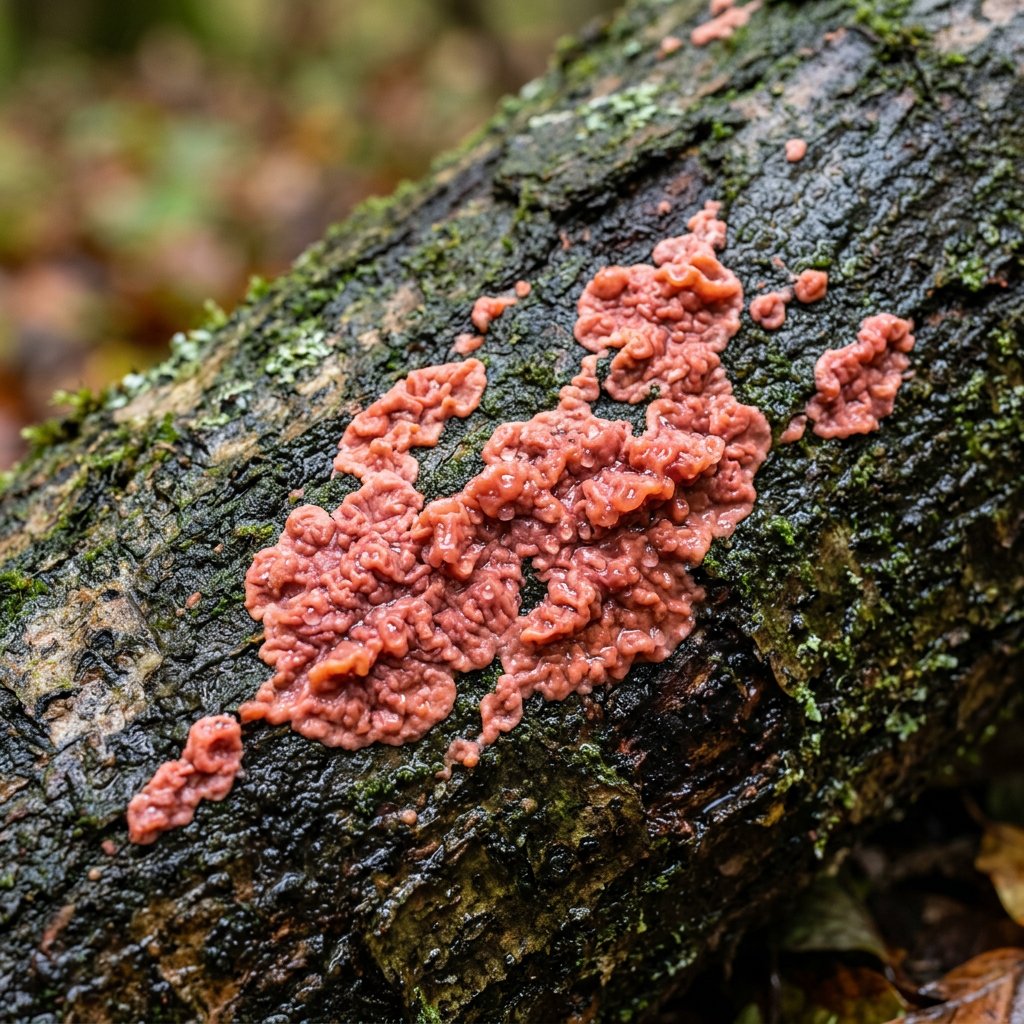
Commonly known as the Rosy Crust, this fungus looks less like a traditional mushroom and more like a splash of vibrant, salmon-colored paint across a fallen branch. Often overlooked by those searching for caps and stems, Peniophora incarnata is a resilient recycler that brings a warm, "fleshy" glow to the damp winter woods of the Northern Hemisphere.
🔍 How to Identify
- 🎨 Growth Form: It is "resupinate," meaning it grows flat against the wood like a crust, often forming irregular patches that can merge to cover large areas.
- 🌸 Coloration: Its signature hue ranges from soft pink to a deep, waxy orange or "flesh" color (hence the name incarnata). The edges are often paler or white.
- 🖐️ Texture: When moist, the surface feels waxy or slightly velvety; as it dries out, it becomes brittle and may develop fine cracks like old parchment.
🌲 Habitat & Ecology
- 🪵 The Wood Recycler: This fungus is saprobic, meaning it lives on dead wood. You’ll most often find it on the fallen branches or stumps of deciduous trees like Oak, Beech, Hazel, and Birch.
- 🌧️ Winter Specialist: While it can be found year-round, it is most conspicuous during wet autumn and winter months. It thrives in high humidity and is one of the few splashes of color left when the leaves have fallen.
- 🔄 Eco-Role: It plays a vital role in the forest ecosystem by breaking down lignin, a tough organic polymer in wood, clearing the way for new plant life.
⚠️ Safety & Toxicity
- 🚫 WARNING: While the Rosy Crust is not known to be dangerously toxic, it is considered inedible.
- 🦷 Palatability: The texture is thin, tough, and leathery, providing zero culinary value.
- 🛑 Identification Risk: Many crust-like fungi look similar; never consume any wild fungus unless you are 100% certain of its identity and safety.
✨ Fun Fact
The Rosy Crust is a master of "resurrection." During dry spells, it can shrink and turn dull to conserve moisture, but just a few minutes of rainfall can make it swell up and regain its vivid, waxy luster almost instantly.
More Details