Info
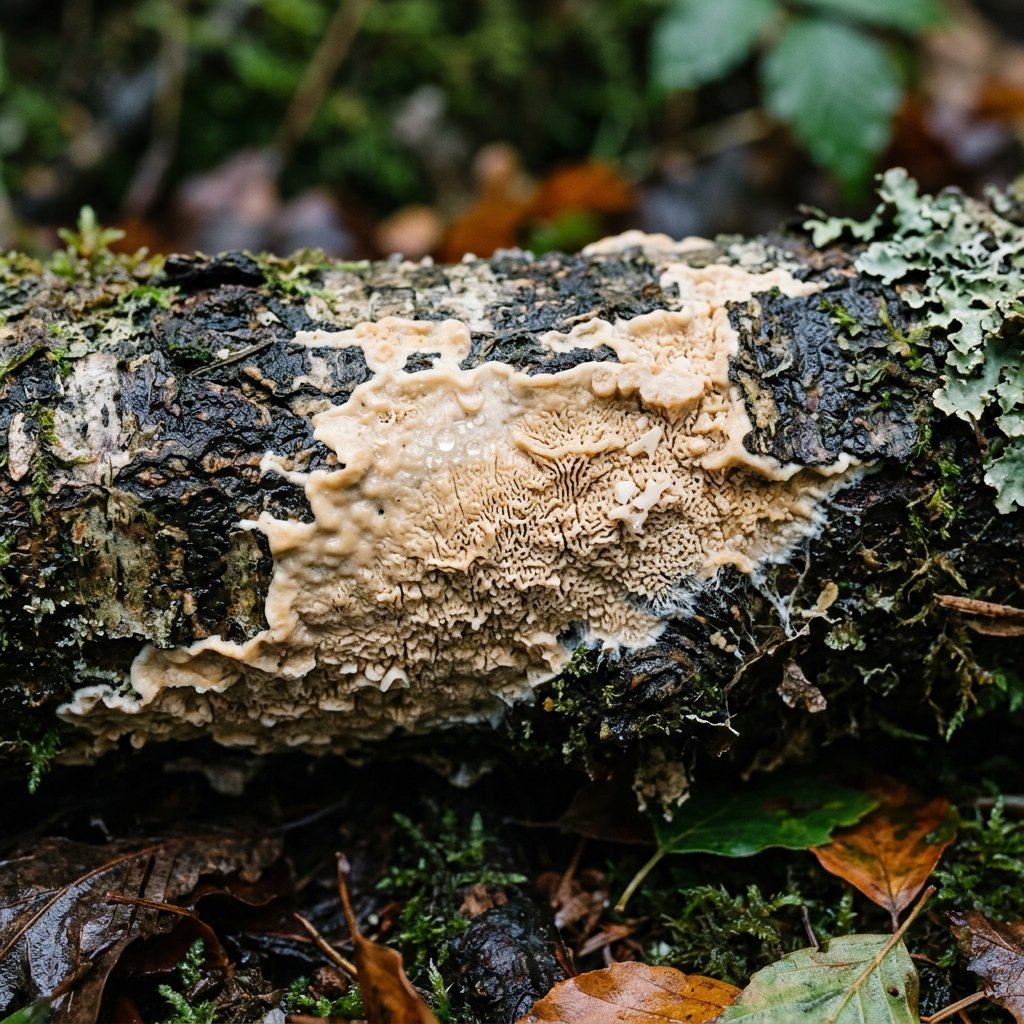
Often called "Crust Fungi," species in the Peniophorella genus look like nature’s own coat of white or cream-colored paint applied to the underside of decaying logs. While they lack the classic "toadstool" shape, these humble decomposers are the unsung heroes of the forest, quietly recycling fallen wood back into the soil. They are part of a fascinating group of fungi that grow flat against their surface, mimicking the texture of the bark they inhabit.
🔍 How to Identify
- 🎨 Growth Form: These are "resupinate" fungi, meaning they grow as a flat, crust-like layer without a traditional cap, gills, or stem.
- ☁️ Surface Texture: The surface can appear smooth, waxy, or slightly grainy (granulose) to the naked eye, often following the cracks of the wood beneath.
- 🏳️ Coloration: Most species are pale and understated, ranging from snowy white and ivory to a muted yellowish-tan or greyish hue.
🌲 Habitat & Ecology
- 🪵 The Wood Recycler: You will almost always find Peniophorella on the underside of fallen branches or logs. They are saprobic, meaning they feed on dead organic matter, specifically targeting the tough lignin and cellulose in wood.
- 💧 Moisture Seekers: They prefer damp, shaded forest floors where the wood remains consistently moist. In dry weather, the "crust" may shrink and become brittle, only to revive and look "waxy" again after a heavy rain.
⚠️ Safety & Toxicity
- 🛑 WARNING: Never consume any wild mushroom without expert in-person identification.
- 🚫 Inedibility: While not typically listed as "deadly toxic," Peniophorella is strictly considered inedible. Its thin, leathery, or crusty texture has no culinary value, and very little is known about the chemical effects of ingesting these specific fungi.
- 🧤 Handling: They are generally safe to touch, though it is always a good practice to wash your hands after handling any wild fungi.
✨ Fun Fact
Under a microscope, Peniophorella is anything but plain! They possess specialized cells called "cystidia" that are often tipped with beautiful, crown-like crystal formations, which mycologists use to tell the different species apart.
More Details







