Info
Often referred to as a "micro-mushroom" or "pinhead mold," Periconia is a secretive recycler of the plant world. Unlike the classic mushrooms you see in fairy tales with caps and stems, these are microfungi that appear like a tiny, dark forest when viewed through a magnifying glass. They play a vital role in breaking down old garden waste, though they occasionally make their presence known as uninvited guests on damp agricultural crops.
🔍 How to Identify
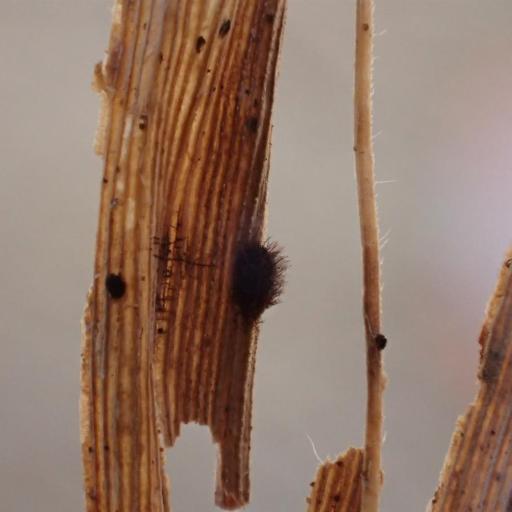
- 🌑 Appearance: To the naked eye, it looks like a fine dusting of soot, charcoal, or dark "stubble" on dead plant stems.
- 📍 Structure: Under a lens, it reveals stiff, upright, dark brown or black stalks (conidiophores) that hold a spherical cluster of spores at the very tip.
- 🪵 Growth Pattern: It usually forms in dense, velvety patches rather than isolated spots, colonizing the surface of decaying wood or dry grasses.
🌲 Habitat & Ecology
- 🍂 The Great Recycler: You will most often find Periconia in the "duff" layer of the garden—thriving on dead herbaceous stems, fallen leaves, and rotting wood.
- 🌾 Agricultural Impact: While mostly a decomposer, certain species can be opportunistic, causing "black spot" or "root rot" in crops like sorghum, grasses, and even some garden vegetables if conditions are overly damp.
⚠️ Safety & Toxicity
- 🚫 WARNING: Periconia is not a mushroom for consumption. Because it is a microfungus, it is classified as a mold rather than an edible fungus.
- 🌬️ Inhalation Risk: The primary concern with Periconia is its spores. They are known allergens and can trigger respiratory issues, hay fever, or asthma in sensitive individuals if disturbed in large quantities.
- 🏠 Indoor Air: If found growing indoors on damp building materials, it is considered an indicator of moisture problems and should be handled with standard mold remediation precautions.
✨ Fun Fact
Scientists have discovered that some species of Periconia produce unique natural compounds called "periconicins." These chemicals are actually potent antifungal agents, meaning this tiny fungus produces its own "antibiotics" to fight off rival fungi in the soil!
More Details