Info
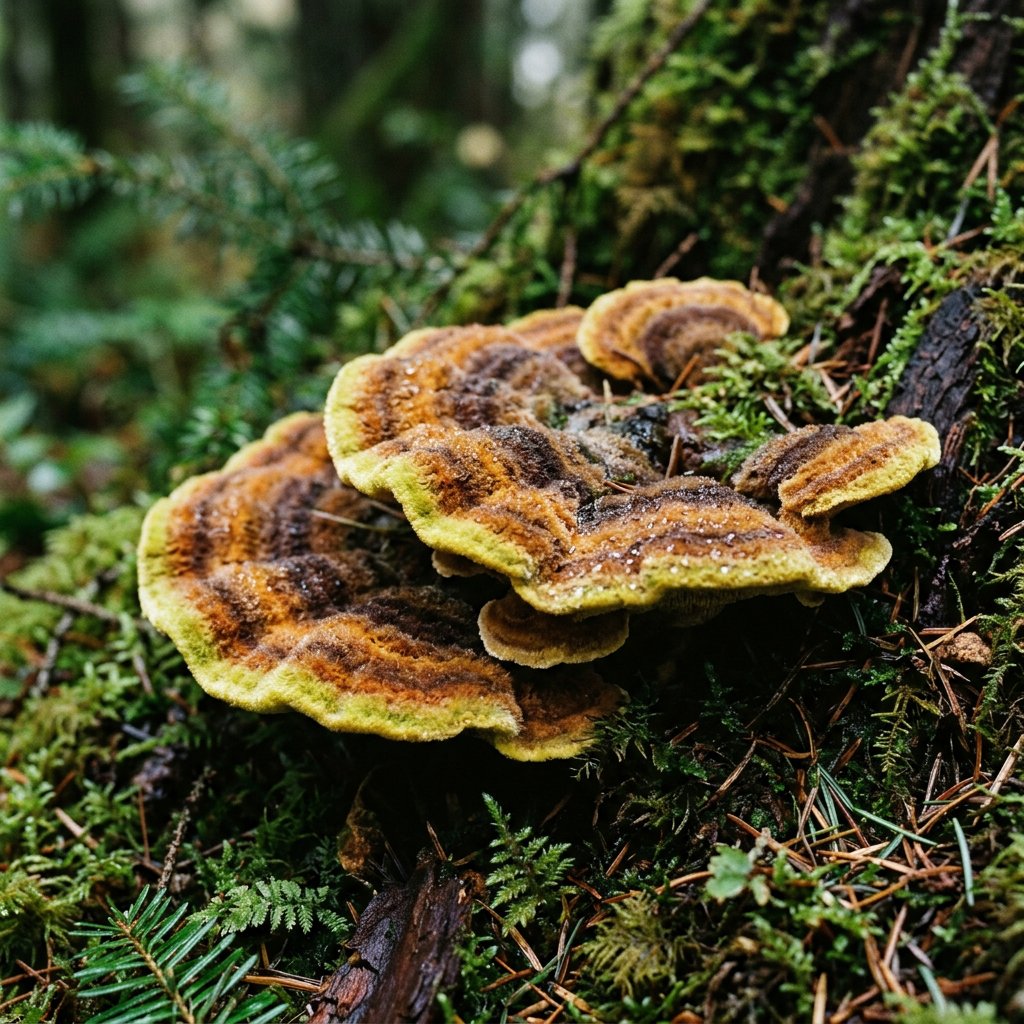
Often called the Dyer’s Polypore or the Velvet-top Fungus, this mushroom is a striking sight at the base of ancient conifers. While it looks like a pile of fuzzy, concentric pancakes, it tells a story of both forest decay and artistic creation. For centuries, it has been the secret ingredient for weavers seeking to pull earthy gold and deep chocolate hues from the natural world.
🔍 How to Identify
- 🍄 The Cap: A large, circular, or rosette-shaped bracket that starts out soft and velvety. It usually features a dark brown center with bright yellow or orange growing edges that look almost glowing when fresh.
- 🕳️ The Pores: Instead of gills, the underside is covered in tiny tubes (pores). These are greenish-yellow when young but turn a muddy dark brown when bruised or aged.
- 🪵 The Texture: When young, it feels like felt or suede. As it matures, it becomes tough, woody, and cork-like, often becoming quite brittle in dry weather.
🌲 Habitat & Ecology
- 🌲 Host Trees: It is almost exclusively found at the base of conifers, particularly Douglas firs, pines, and spruces. It causes "butt rot," a condition where it decays the heartwood of the roots and lower trunk.
- 🍂 Forest Role: While it is technically a parasite that can eventually topple a tree, it is also a vital recycler. It specializes in "brown rot," breaking down the cellulose of the tree and leaving the lignin behind, which helps create nutrient-rich forest soil.
⚠️ Safety & Toxicity
- 🚫 Status: NON-EDIBLE. While it is not considered "deadly" in the same way as some Amanitas, its tough, woody texture makes it impossible to digest.
- 🤢 Potential Irritant: Some sources suggest it may contain compounds that cause gastric upset if ingested. It is strictly for looking (and dyeing), not for the dinner plate.
- 🐾 Pets & Kids: Because of its tough, bitter nature, pets and children are unlikely to eat enough to cause harm, but it should still be kept out of reach to avoid choking or stomach pain.
✨ Fun Fact
As its nickname suggests, this mushroom is a favorite among textile artists. Depending on the age of the mushroom and the type of metal (mordant) used in the pot, a single Phaeolus schweinitzii can produce dyes ranging from brilliant sunflower yellow to deep, burnt orange and rich "Van Dyke" brown.
More Details