Info
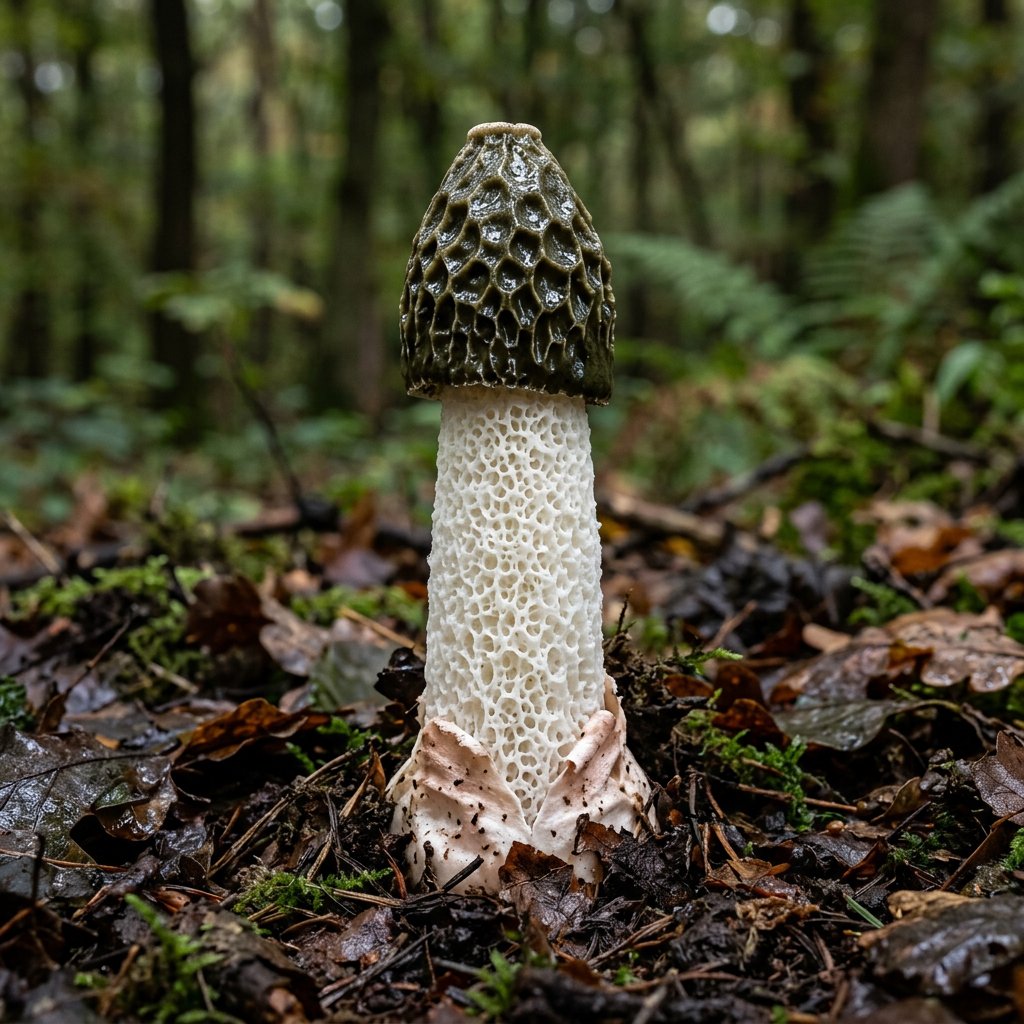
Often discovered by the nose before the eyes, the Common Stinkhorn is one of nature's most eccentric and "scandalous" fungi. Known for its unapologetically phallic shape and a scent reminiscent of rotting carrion, it has a long history of causing both scientific fascination and social embarrassment. In its early development, it sits quietly in the soil as a gelatinous "Witch’s Egg."
🔍 How to Identify
- 🍄 The Cap: The conical head is covered in a thick, olive-green slime called "gleba," which houses the spores. Once the slime is removed by flies, a white, honeycombed structure is revealed underneath.
- 🦴 The Stalk: A tall, upright, and hollow stem that is brilliant white and has a fragile, spongy texture similar to polystyrene.
- 🥚 The Volva: The mushroom emerges from a white, leathery, egg-shaped sac at the base, which often stays partially buried in the earth or mulch.
🌲 Habitat & Ecology
- 🍂 Woodland Decomposer: This fungus is saprobic, meaning it feeds on dead organic matter. You will most often find it in deciduous or mixed woodlands, or popping up in garden flowerbeds rich in woodchip mulch.
- 🪰 The Fly Strategy: Unlike most mushrooms that rely on the wind to carry spores, the Stinkhorn uses "chemical warfare." Its rot-like stench mimics a dead animal to attract flies, which then walk through the slime and carry the spores away on their feet and bodies.
⚠️ Safety & Toxicity
- 🚫 WARNING: Do not consume any wild mushroom unless you are 100% certain of its identity. While Phallus impudicus is not known to be poisonous, it can be confused with other emerging fungi by beginners.
- 🤢 Palatability: While the "Witch's Egg" stage is considered a delicacy in parts of Europe and China (after removing the slime), the mature mushroom is considered inedible due to its revolting odor.
- 🐾 Pets: The pungent smell of rot may attract curious dogs. While not highly toxic, ingesting wild fungi can lead to digestive distress in pets.
✨ Fun Fact
Henrietta Darwin, the daughter of Charles Darwin, was so deeply offended by the "indecent" appearance of these mushrooms that she used to conduct "stinkhorn hunts." She would collect them and burn them in secret to protect the morals of the local maidservants!
More Details
| Hymenium Type | Gleba |
| Stipe Character | Bare Stipe |
| Mushroom Cap Shape | Conical Mushroom Cap |
| Mushroom Ecological Type | Saprobiont |







