Info
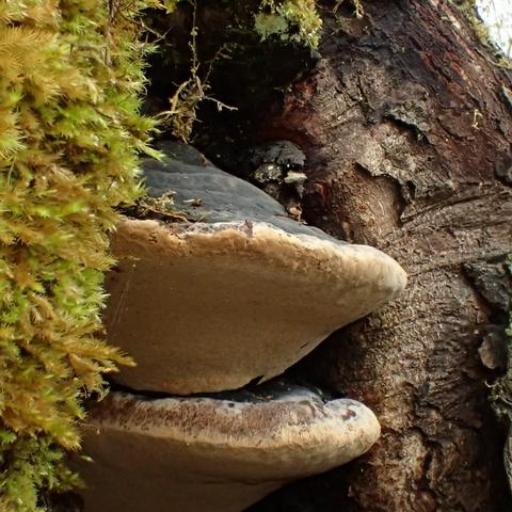
Known as the Willow Bracket or the Fire Sponge, this perennial fungus looks like a weathered horse’s hoof fused to the side of a tree. Its Latin name, igniarius, literally means "fire-maker," a nod to its ancient history as a slow-burning tinder used to transport embers from one campsite to the next. In many northern cultures, it wasn't just a fungus; it was a vital survival tool for keeping the hearth alive.
🔍 How to Identify
- 🪵 The Cap: Shaped like a thick, heavy hoof (ungulate). The top surface is grey to blackish, often becoming deeply cracked and "checked" as it ages, resembling charred wood.
- 🧮 The Pore Surface: Unlike mushrooms with gills, the underside is a smooth, cinnamon-brown surface covered in tiny pores. It does not have a stem, as it grows directly out of the tree trunk.
- 📏 Growth Rings: Because it is perennial, it grows a new layer every year. You can often see distinct horizontal ridges or "zones" that mark its age, much like the rings of a tree.
🌲 Habitat & Ecology
- 🌿 Tree Associations: It is most commonly found on Willows, but it can also be spotted on Birch, Alder, and Aspen. It is a "white rot" fungus, meaning it slowly breaks down the lignin in the tree, eventually causing the wood to become soft and spongy.
- 🦅 Ecological Role: While it eventually kills its host tree, it provides essential nesting sites. Heart-rot fungi like this one soften the interior of the tree, making it possible for woodpeckers to hollow out cavities for their homes.
⚠️ Safety & Toxicity
- 🚫 Status: NOT EDIBLE.
- ❗ WARNING: Phellinus igniarius is woody and cork-like. It is physically impossible to chew or digest. While not considered "deadly poisonous" like some of its forest neighbors, it should never be consumed.
- 🐕 Pets & Kids: Because it is as hard as a brick, it poses a choking hazard or digestive blockage risk for dogs who like to chew on sticks.
✨ Fun Fact
In some Indigenous cultures of Alaska, the mushroom is harvested, dried, and burned into a fine white ash. This ash is then mixed with tobacco (as a "punk") to increase the potency of the nicotine, a traditional preparation known as Iqmik.
More Details







