Info
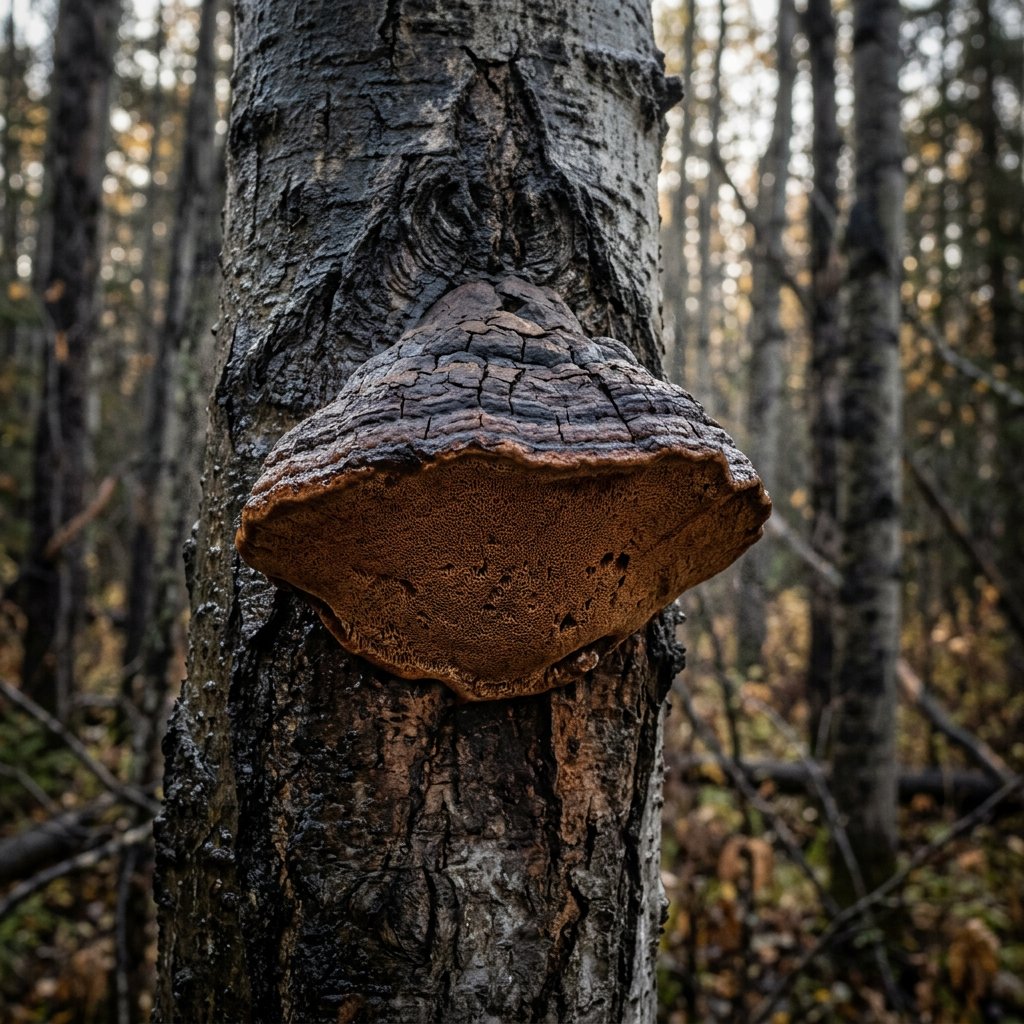
Known as the Aspen Bracket or the "Heart-Rot of the Aspen," this stoic fungus is a constant companion to the Quaking Aspen tree. It looks like a rugged, charcoal-colored hoof emerging directly from the bark, telling a silent story of the tree’s internal health. In many woodland landscapes, it is viewed as a "forest elder," indicating an aging ecosystem where nature is beginning the vital process of recycling itself.
🔍 How to Identify
- 🪨 The Cap: It is hard, woody, and roughly triangular or hoof-shaped. The top surface is typically dark gray to black and becomes deeply cracked and "crusty" as the fungus ages.
- 🕳️ The Pores: Instead of gills, the underside features a velvety, cinnamon-brown surface covered in tiny pores. If you look closely, these pores are where the spores are released to travel on the wind.
- 🌲 Growth Pattern: It grows directly out of the trunk (sessile) without a stem, usually appearing at the site of a scar or a broken branch where it first entered the tree.
🌲 Habitat & Ecology
- 🍂 The Aspen Specialist: This fungus is a "host-specific" specialist, meaning you will almost exclusively find it on Aspen trees (genus Populus). It is a primary cause of white heart rot in these trees.
- 🦉 Nature’s Architect: While it eventually weakens the tree, it performs a crucial ecological service. By softening the heartwood, it allows woodpeckers to easily excavate nesting cavities, which are later used by owls, squirrels, and bluebirds.
⚠️ Safety & Toxicity
- 🚫 Status: WARNING! Inedible.
- 🪵 Details: The Aspen Bracket is essentially as hard as wood. It is not considered a food source and is impossible to chew or digest. While not known to be "deadly" like some forest mushrooms, it should never be consumed or used for culinary purposes.
✨ Fun Fact
In some Indigenous cultures, the dried and powdered fungus was historically mixed with tobacco or used as a slow-burning "smudge" to create a fragrant smoke that helped keep biting insects at bay during the summer months.
More Details







