Info
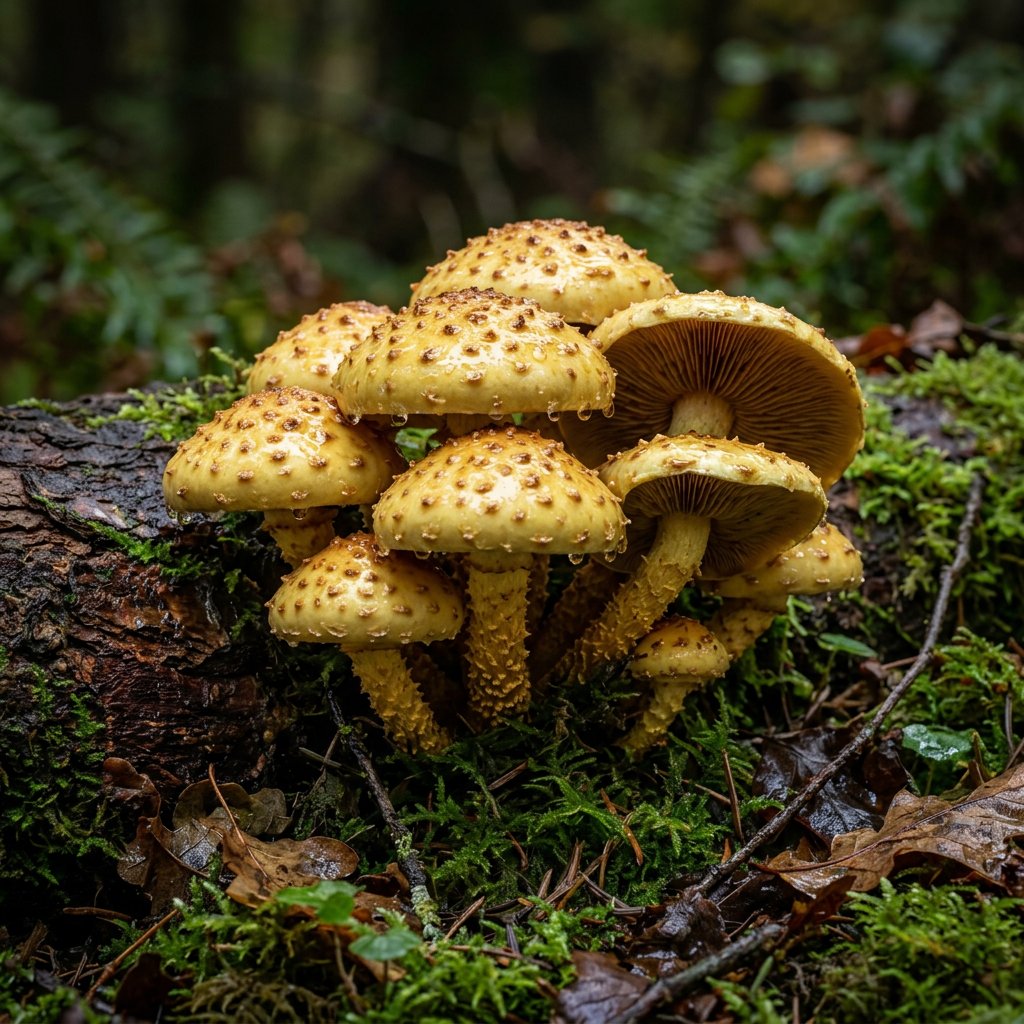
Known as the "Fat Pholiota" or often sold under the name "Chestnut Mushroom" in gourmet markets, this stunning fungus looks like it has been dipped in honey and toasted. It is a wood-loving species that brings a splash of brilliant gold to decaying logs and living trunks alike. In the wild, it forms dense, breathtaking clusters that look almost too perfect to be real.
🔍 How to Identify
- 🍄 The Cap: Bright yellow to golden-orange and distinctly "slimy" or greasy to the touch when moist. It is decorated with concentric rings of dark, upturned brown scales.
- 🌿 The Gills: Tightly packed and attached to the stem; they start as a pale yellow but turn a deep, rusty cinnamon-brown as the spores mature.
- 🪵 The Stem: Sturdy and yellowish, the stem is covered in small, recurved scales below a faint ring zone where the protective veil once attached.
🌲 Habitat & Ecology
- 🌳 The Wood Host: This mushroom is a master of hardwood. It grows in tiered, overlapping clusters on both living and dead deciduous trees, particularly Beech, Birch, and Maple.
- 🍂 Dual Nature: It acts as both a parasite (attacking weakened living trees) and a saprobe (decomposing fallen logs), helping to recycle nutrients back into the forest floor during the cool dampness of autumn.
⚠️ Safety & Toxicity
- 🚨 WARNING: While Pholiota adiposa is widely cultivated and eaten, wild identification is for experts only. Several lookalikes in the Pholiota genus can cause severe stomach upset.
- 🤢 Preparation Matters: If foraging from a reliable source or growing your own, these must be thoroughly cooked. Raw specimens contain proteins that are difficult for humans to digest and may cause gastric distress.
- 🐾 Pets & Kids: Keep away from curious pets and children; while not typically "deadly," ingestion of raw wild clusters can lead to vomiting and malaise.
✨ Fun Fact
The "crunch" factor! Unlike many mushrooms that turn soft or mushy when heated, the Pholiota adiposa maintains a distinct, snappy texture even after being sautéed, making it a favorite among chefs for adding "bite" to risottos and stews.
More Details







