Info
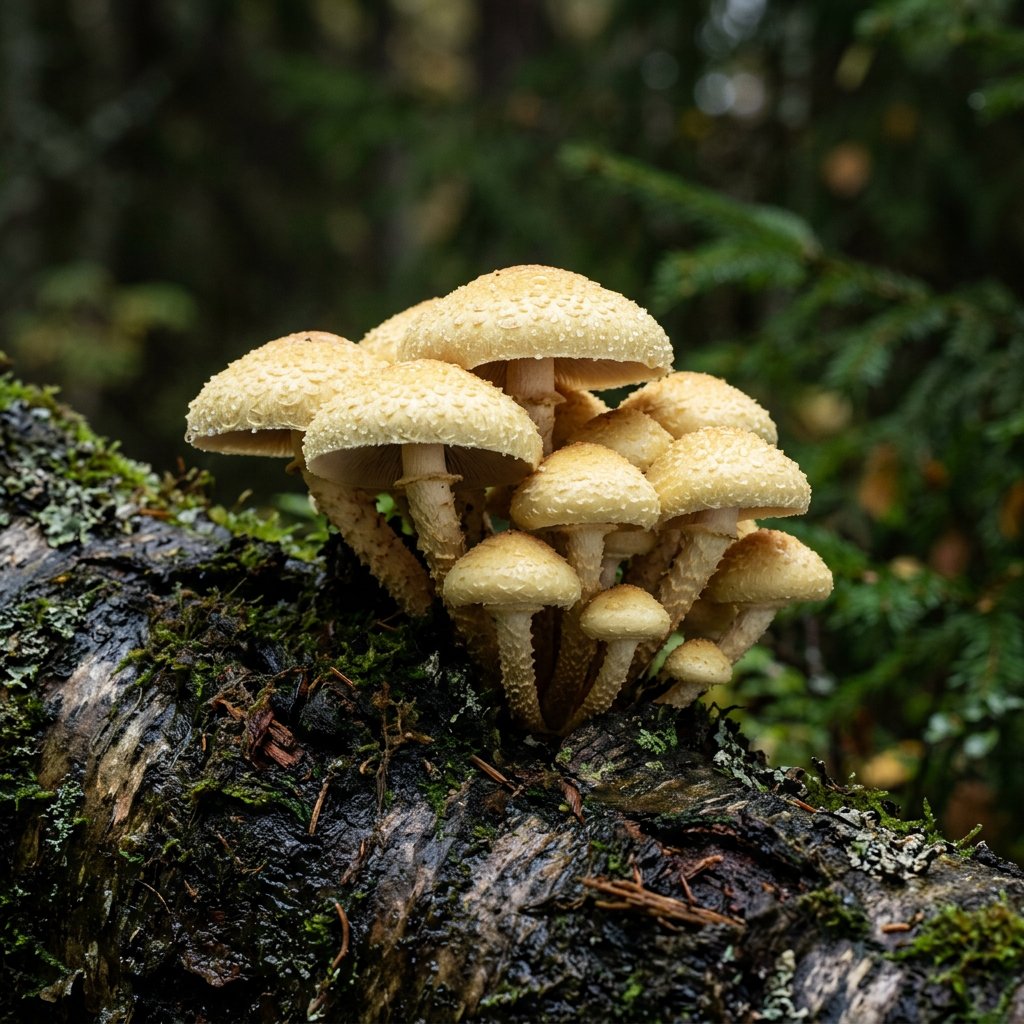
Known as a specialist of the northern woods, Pholiota heteroclita is often nicknamed the "Eccentric Pholiota" due to its habit of growing sideways or off-center from decaying tree trunks. This golden-hued fungus looks like it is wearing a shaggy, ruffled coat, acting as one of nature’s primary recyclers for aging forests. While it might look charmingly rustic, it hides a surprisingly sweet secret within its scent.
🔍 How to Identify
- 🍄 The Cap: Broad and fleshy, ranging from 5 to 15 cm across. The surface is a dull yellow to ochre, densely covered in large, woolly, brownish scales that give it a "shaggy" appearance.
- 🍂 The Gills: Close together and initially a pale cream color. As the mushroom matures and releases its spores, the gills transform into a deep, rusty cinnamon brown.
- 🪵 The Stem: Often "eccentric," meaning it attaches to the side of the cap rather than the center. It is thick, tough, and covered in the same brownish scales as the cap, often tapering toward the base.
🌲 Habitat & Ecology
- 🌳 The Birch Specialist: This mushroom is highly selective. It is almost exclusively found growing on the dead or dying wood of birch trees (Betula), though it occasionally explores other hardwoods in damp, temperate forests.
- 🗓️ Late Season Fruiter: You are most likely to spot this species in the late autumn. It thrives in the cooling temperatures of September and October, often appearing high up on standing dead timber where other mushrooms can't reach.
⚠️ Safety & Toxicity
- 🚫 Status: WARNING - INEDIBLE. Pholiota heteroclita is not considered a culinary mushroom and is widely classified as inedible or potentially toxic.
- 🤢 Details: Many species in the Pholiota genus contain compounds that cause severe gastrointestinal upset. Because it can be easily confused with other "Little Brown Mushrooms" (LBMs) that are dangerously toxic, it should never be consumed.
✨ Fun Fact
👃 The Perfumed Fungus: Despite its rugged and somewhat messy appearance, Pholiota heteroclita is famous among mycologists for its aroma. When fresh, it often emits a strong, pleasant fragrance reminiscent of cloves, apricots, or ripe pears!
More Details