Info
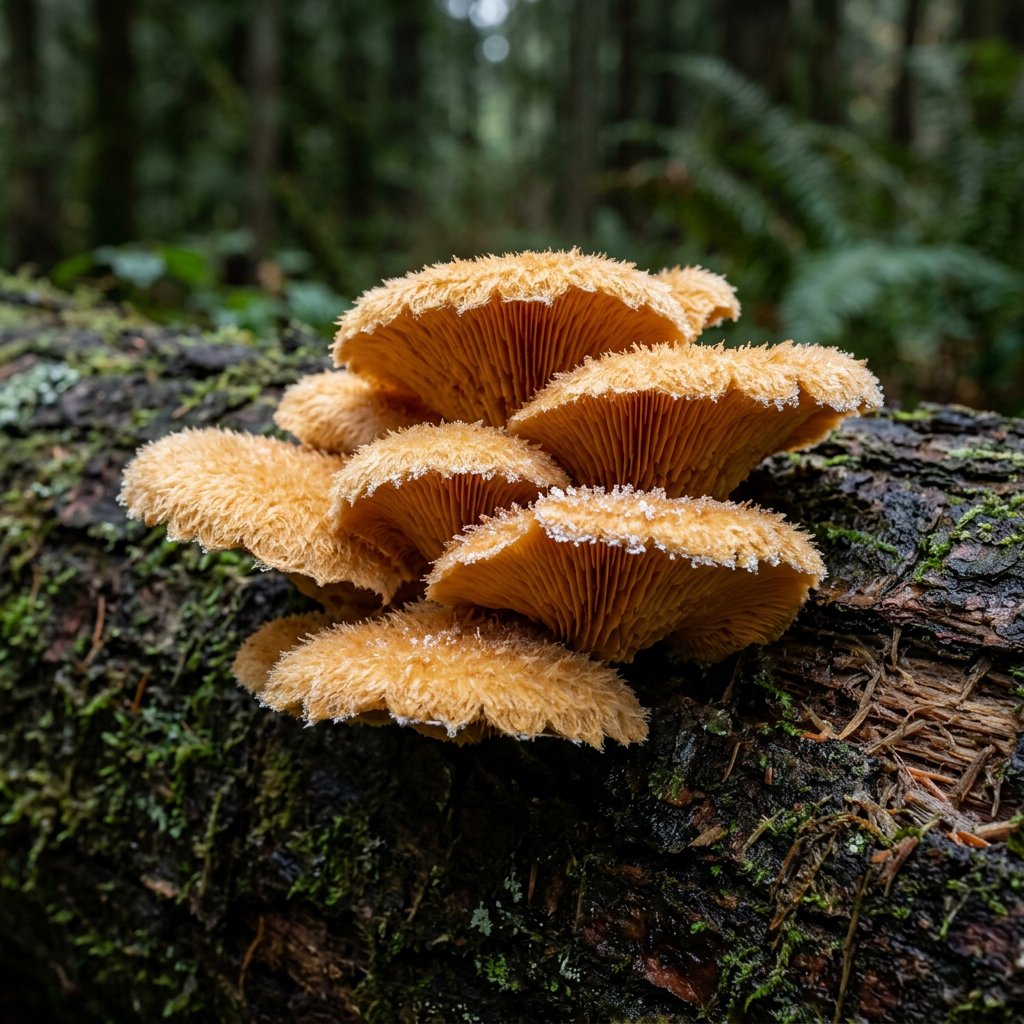
Meet the "Mock Oyster," a fungal master of disguise that paints fallen logs in vivid sunset hues. While its bright orange, fan-like shape mimics the delicious edible Oyster mushroom, this forest inhabitant is famous for a cheeky trick: it smells less like a gourmet meal and more like a skunk or rotten cabbage. It is a stunning find for photographers, but a disappointment for foragers.
🔍 How to Identify
- 🧡 The Cap: Displays a brilliant orange to pale yellow-orange color. The surface is distinctly fuzzy or "hairy" (tomentose), especially near the base, giving it a velvety texture.
- 🍄 The Gills: The gills are crowded and radiate from the point of attachment. They share the same vibrant orange hue as the cap, creating a seamless, glowing appearance.
- 👃 The Scent: Perhaps the most famous identifying trait is its strong, unpleasant odor. Most describe it as smelling like sulfur, rotten eggs, or a damp basement.
- 🪵 The Stem: This mushroom is "sessile," meaning it lacks a true stem. It grows directly out of the wood in a shelf-like, fan, or kidney shape.
🌲 Habitat & Ecology
- 🍂 The Wood-Eater: This is a saprobic species, meaning it survives by breaking down dead wood. You’ll find it clustered on decaying logs and stumps of both hardwoods (like Oak) and conifers (like Pine).
- ❄️ Cold Weather Beauty: It is a hardy fungus that often appears in late autumn or during mild winters, providing a splash of color when the rest of the forest has turned brown and grey.
⚠️ Safety & Toxicity
- 🚫 Status: INEDIBLE. While not currently classified as "deadly toxic" in the way some Amanitas are, it is universally rejected as food.
- 🤢 The Experience: Between its tough, leathery texture and its repulsive, skunk-like smell, it is considered unpalatable. Consuming it may cause mild digestive upset in some individuals.
- 🐾 Pets: It is best to keep pets away, as the foul odor might strangely attract some dogs, leading to stomach distress if ingested.
✨ Fun Fact
The Phyllotopsis nidulans uses its "stink" for a reason! Some scientists believe the sulfurous odor may help deter certain wood-eating insects from devouring the mushroom before it has a chance to release its pinkish-orange spores into the wind.
More Details







