Info
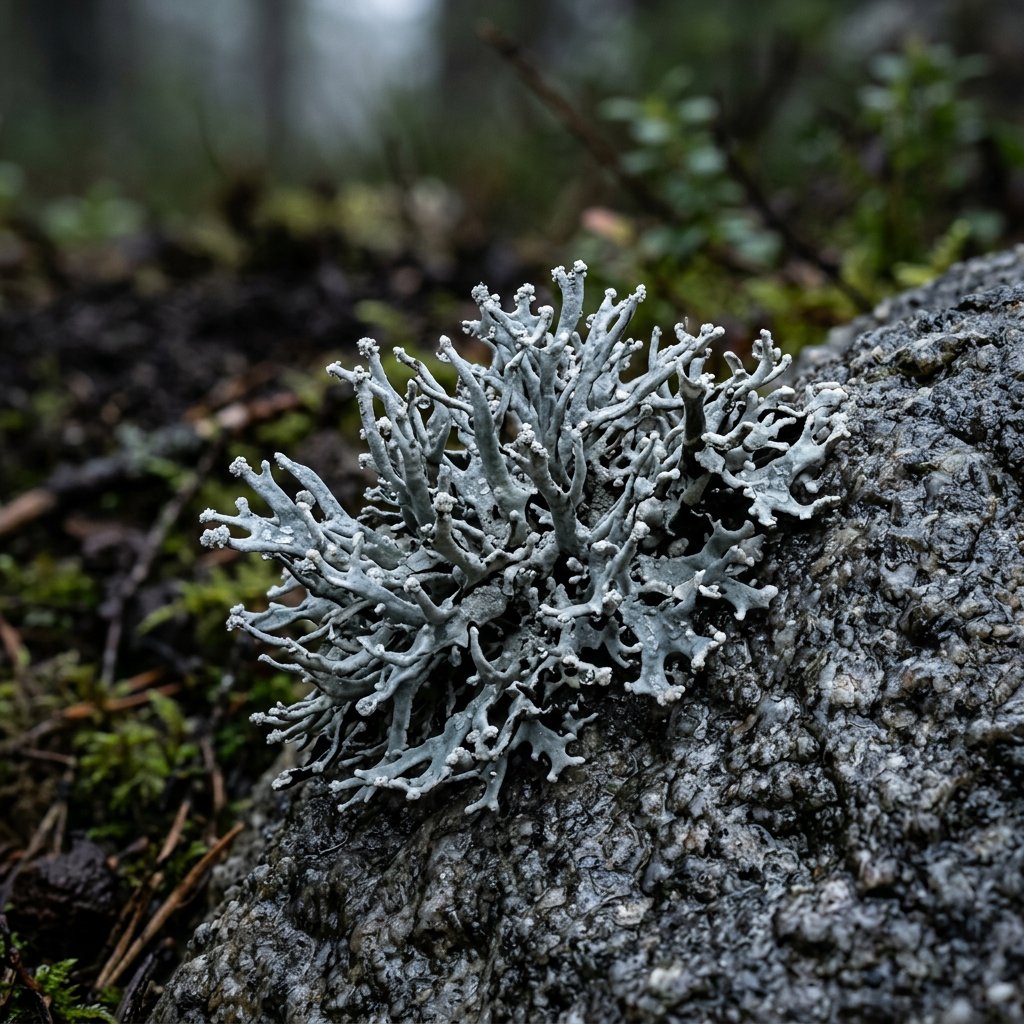
Small, tough, and remarkably resilient, Physcia dubia—often called the Dubious Rosette Lichen—is a pioneer of the micro-world. While it belongs to the fungal kingdom, it lives in a complex partnership with algae, allowing it to survive on bare stone and bark where most plants would wither. It is famously "nitrophilous," meaning it thrives in areas enriched by nitrogen, often marking the favorite perching spots of local birds.
🔍 How to Identify
- ❄️ The Rosette Shape: It grows in small, circular patches (rosettes) that are usually light grey to whitish-grey, often looking like a dusting of frost on a rock.
- 👄 Lip-Shaped Soralia: Look closely at the tips of the "leaves" (lobes); they often turn upward and break open into grainy, flour-like structures called soralia, which the lichen uses to reproduce.
- ⚓ Pale Underside: If you were to gently peel a piece back, the underside is typically white to tan, anchored by tiny hair-like structures called rhizines.
🌲 Habitat & Ecology
- 🐦 The Bird Connection: This lichen is a "nitrogen-lover." It is most commonly found on "bird rocks," tombstones, or trees near farmyards where bird droppings or dust provide a high-nutrient environment.
- ☀️ Sun Seeker: Unlike many forest fungi, Physcia dubia craves the light. It is almost always found in open, sunny areas rather than deep, damp woods, as its internal algae need sunlight to create food.
⚠️ Safety & Toxicity
- 🛑 Status: Non-toxic but inedible.
- 🖐️ Details: While it is perfectly safe to touch and observe, it has no culinary value for humans. In the wild, it serves as a micro-habitat for tiny invertebrates and occasionally as nesting material for small birds.
✨ Fun Fact
Lichens like Physcia dubia are nature’s air quality sensors. Because they absorb everything from the atmosphere, scientists study them to track nitrogen pollution levels in urban and industrial areas!
More Details