Info
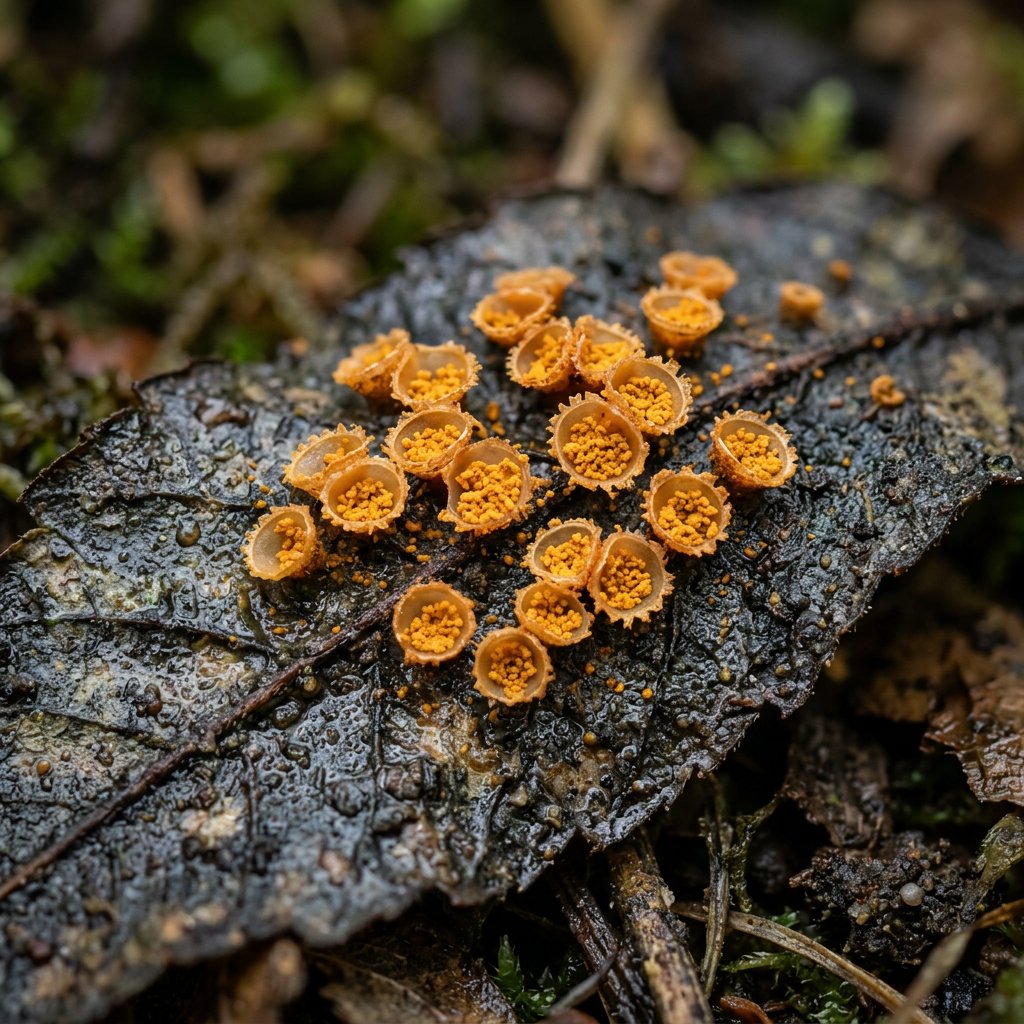
Known as the Poison Ivy Rust, Pileolaria brevipes is a specialized fungus that lives a life of high-stakes parasitism. Unlike the mushrooms you see on the forest floor, this "rust" fungus is a microscopic architect that builds its home exclusively on plants humans fear most: Poison Ivy and its relatives. It is a quiet warrior in the woods, often acting as a natural check on the growth of its irritating host.
🔍 How to Identify
- 🍂 Pustules (Sori): Look for small, raised, dark chocolate-brown to blackish bumps scattered across the leaf surface or along the stems.
- 🪵 Leaf Distortion: Infected leaves often look "sickly," showing signs of curling, yellowing, or abnormal swelling where the fungus is feeding.
- 🌿 The Host Test: If you find rusty brown spots on a "leaves of three" plant, you are likely looking at Pileolaria brevipes. It is almost never found on any other type of vegetation.
🌲 Habitat & Ecology
- 🍄 The Ultimate Specialist: This fungus is an "obligate parasite," meaning it cannot survive without its living host. It spends its entire life cycle drawing nutrients directly from the cells of Poison Ivy or Poison Oak.
- 🌬️ Wind-Borne Travelers: It reproduces through microscopic spores that are light enough to be carried by the slightest breeze. When a spore lands on a damp leaf of a new host, it "germinates" and bores into the plant tissue.
⚠️ Safety & Toxicity
- 🚫 WARNING: While the fungus itself is not known to be poisonous to humans, its environment is a minefield.
- 🧪 Double Trouble: To find this fungus, you must get close to Poison Ivy. The plant produces urushiol, an oil that causes blistering rashes on contact. If you are inspecting the rust, be extremely careful not to touch the leaves, as the oil can transfer to your skin or clothing instantly.
✨ Fun Fact
Because this rust fungus stunts the growth and reduces the vigor of its host, scientists have investigated using Pileolaria brevipes as a "biological control agent"—essentially a natural weed-killer to help manage Poison Ivy populations without using harsh chemicals!
More Details







