Info
Often overlooked due to its tiny size, Pithya vulgaris is a splash of neon in the temperate forest. Commonly known as the Fir Cup, these brilliant orange saucers look like lost buttons dropped by woodland sprites among the conifer needles. They play a vital role in the forest ecosystem by breaking down the tough debris of fir trees, turning old wood back into nutrient-rich soil.
🔍 How to Identify
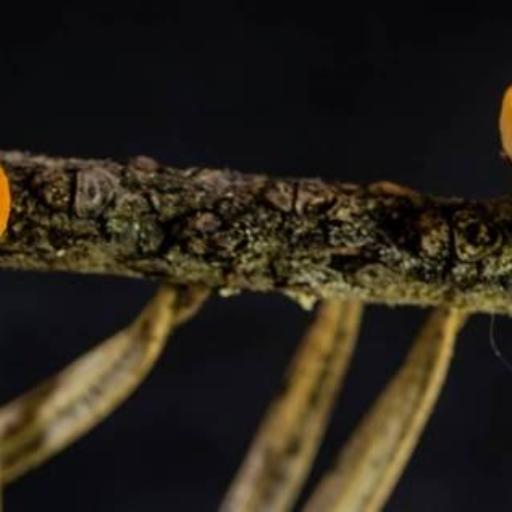
- 🍊 The Cup: It forms a shallow, disk-like or cup-shaped fruit body, usually measuring only 5 to 12 millimeters across.
- 🔥 Vibrant Hue: The interior (the spore-bearing surface) is a striking, waxy orange or reddish-orange that stands out against dark bark.
- ❄️ The Attachment: It lacks a traditional stem; instead, it sits directly on the substrate (sessile), appearing as though it were glued to the twig.
🌲 Habitat & Ecology
- 🌲 The Fir Connection: This fungus is a host-specific specialist. It is almost exclusively found growing on the fallen twigs and decaying branches of Fir trees (Abies).
- 📅 Winter Survivor: Unlike many mushrooms that vanish at the first frost, the Fir Cup is often found in late winter and early spring, frequently appearing just as the snow begins to melt from the forest floor.
⚠️ Safety & Toxicity
- 🚫 WARNING: Pithya vulgaris is strictly classified as inedible.
- 🔬 Unknown Profile: Because of its minuscule size and lack of "flesh," there is no history of human consumption. While it is not known to be deadly, it should never be eaten. It is perfectly safe to touch and photograph for nature enthusiasts.
✨ Fun Fact
Pithya vulgaris belongs to the "sac fungi" (Ascomycota). Unlike common mushrooms that drop spores from gills, these cups act like miniature cannons; when triggered by a change in humidity or a passing breeze, they can simultaneously discharge thousands of spores in a tiny, invisible puff.
More Details