Info
Known as the "King of Oyster Mushrooms" or the "French Horn," this fungus is the undisputed royalty of the Pleurotus family. Unlike its floppy-capped relatives that grow on trees, the King Oyster stands tall with a thick, succulent stem that is often more prized than the cap itself. It has been a staple in Mediterranean folklore for centuries and is now a superstar in modern gourmet kitchens worldwide.
🔍 How to Identify
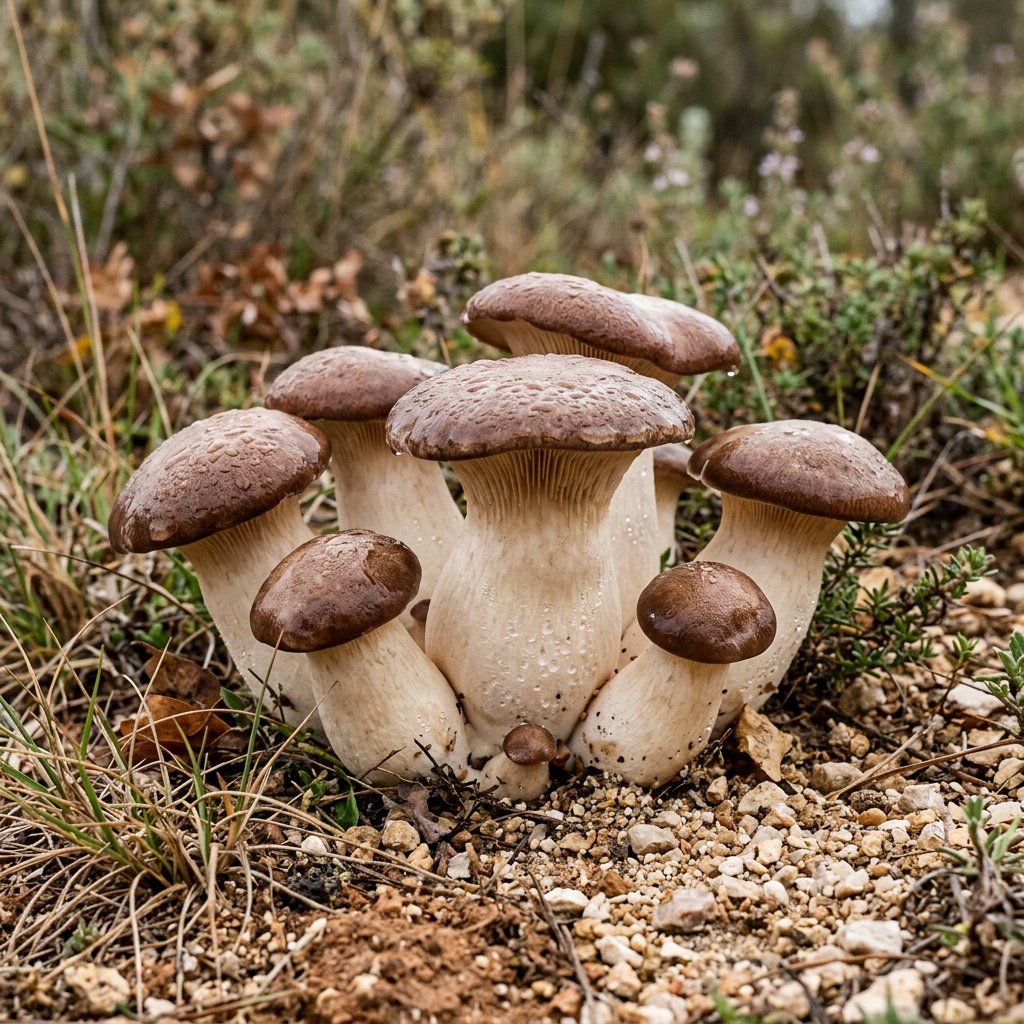
- 🍄 The Cap: Small, tan-to-brown, and usually convex when young, eventually flattening out or becoming slightly funnel-shaped as it matures.
- 🦴 The Stem: Exceptionally thick, meaty, and pearly white. It is central and stout, lacking the "woody" or fibrous texture found in the stems of other oyster varieties.
- 📉 The Gills: Pale, thin gills that are "decurrent," meaning they run partway down the top of the thick stem rather than stopping at the junction.
🌲 Habitat & Ecology
- 🌱 The Root Link: Its specific name, eryngii, comes from its unique habit of growing on the roots of the Eryngium plant (Sea Holly). Unlike most oyster mushrooms that eat dead wood, this one prefers the roots of herbaceous plants in open fields.
- 🌍 Native Range: While it grows naturally in the Mediterranean, North Africa, and Central Asia, it is most commonly seen in "grow kits" or grocery stores, as it thrives on supplemented sawdust or straw in controlled environments.
⚠️ Safety & Toxicity
- ✅ Status: Choice Edible. This is one of the safest and most delicious mushrooms for culinary use, prized for its firm, "umami" flavor.
- 🍽️ Preparation: WARNING: Never eat wild mushrooms raw. While the King Oyster is edible, it should always be cooked to break down chitin (the mushroom's cell walls), which can cause stomach upset if eaten raw.
- 🐱 Pets: Generally considered safe for dogs and cats if accidentally nibbled, though large amounts of any mushroom can cause digestive distress in animals.
✨ Fun Fact
- 🐚 The Vegan Scallop: When the thick stem is sliced into rounds and seared in butter or oil, it takes on a texture and appearance remarkably similar to sea scallops. It is widely considered the best plant-based substitute for seafood in the culinary world!
More Details