Info
Often called the "Pearl Oyster" or "Tree Oyster," Pleurotus ostreatus is one of the most beloved mushrooms for both foragers and chefs worldwide. Its name is derived from its shell-like appearance and ivory color, which often looks like a cluster of oysters clinging to a seabed. While it is a staple in gourmet cooking, it holds a hidden, predatory secret beneath its beautiful exterior.
🔍 How to Identify
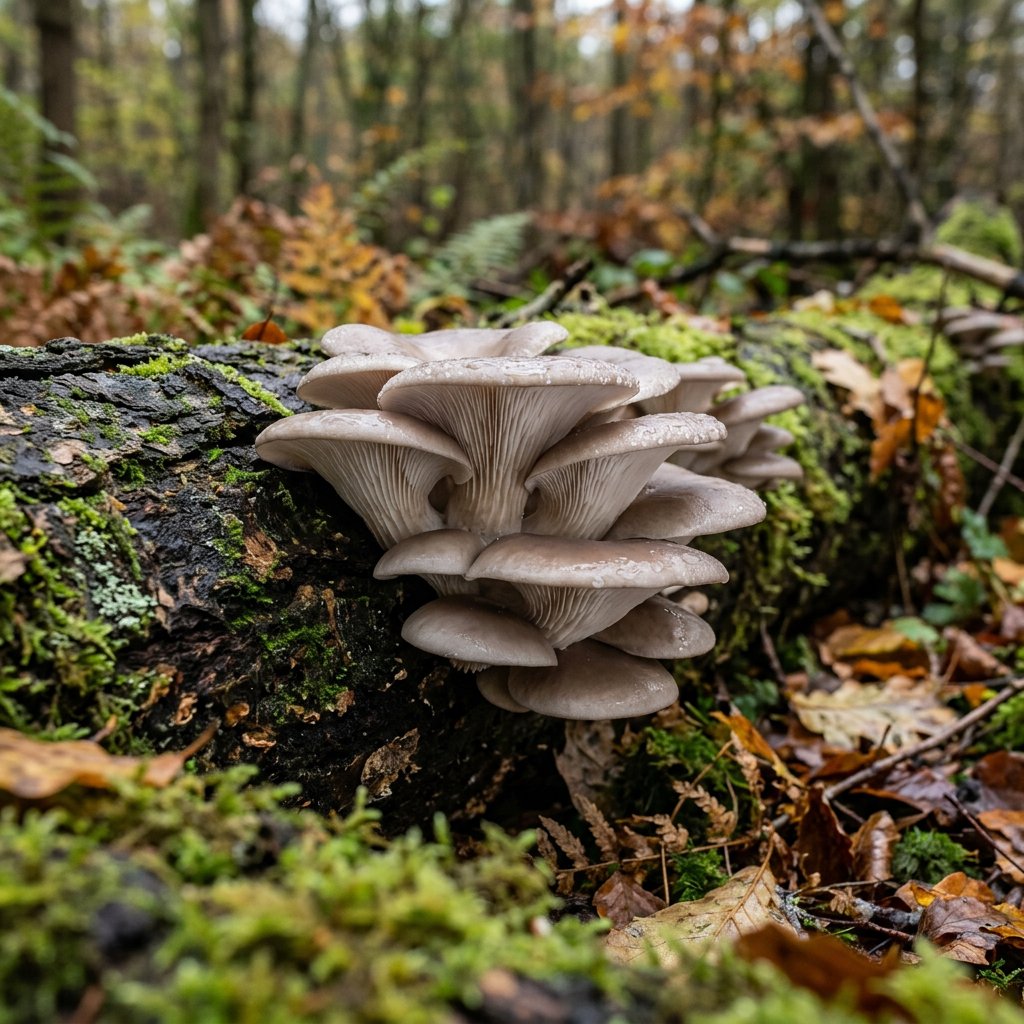
- 🍄 The Cap: Broad and fan-shaped, usually measuring 2 to 10 inches across. The color ranges from creamy white to a soft, steely gray or tan, with a smooth and slightly oily texture.
- 🧬 The Gills: The white-to-cream gills are "decurrent," meaning they run significantly down the stem. This is a key feature that distinguishes them from many other shelf-like fungi.
- 🪵 The Stem: The stem is usually very short and "eccentric," meaning it grows off-center or laterally from the wood. In many clusters, the stems are so short the caps appear to be growing directly out of the bark.
🌲 Habitat & Ecology
- 🌳 Hardwood Preferences: These mushrooms are primary decomposers, typically found growing in shelf-like layers on dying or fallen deciduous trees. They have a particular fondness for beech, oak, and maple logs.
- 🐛 The Secret Predator: Interestingly, the Oyster Mushroom is a "carnivorous" fungus. It secretes a chemical that paralyzes microscopic worms (nematodes) in the wood, then consumes them to supplement its nitrogen intake.
⚠️ Safety & Toxicity
- 🚨 WARNING: Never consume a wild mushroom unless its identity has been confirmed by a professional mycologist. Accurate identification is vital for safety.
- 🍄 The Look-Alikes: While the Oyster Mushroom is a choice edible, it can be confused with the "Ghost Fungus" (Omphalotus nidiformis) in some regions, which is toxic and causes severe vomiting.
- 🧼 Sensitivity: Some people may experience allergic reactions to the spores if the mushroom is grown in an enclosed space without proper ventilation.
✨ Fun Fact
✨ The Oyster Mushroom is a hero of "mycoremediation." It is so resilient and hungry that it can actually digest petroleum products and help clean up oil spills by breaking down the hydrocarbons into non-toxic wood sugars!
More Details
| Hymenium Type | Lamella |
| Stipe Character | Bare Stipe |
| Spore Print Color | White |
| Mushroom Cap Shape | Offset Mushroom Cap |
| Hymenium Attachment | Decurrent Hymenium Attachment |
| Mushroom Ecological Type | Saprobiont |