Info
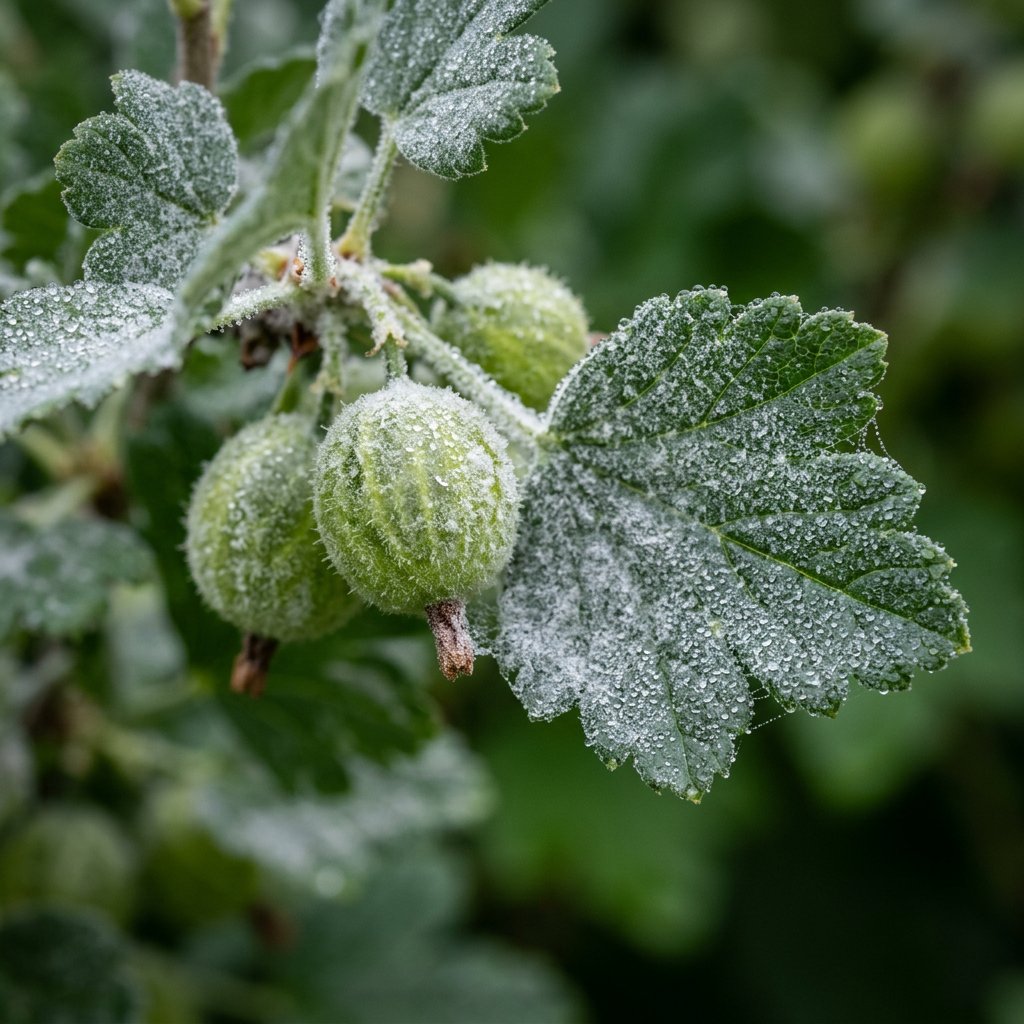
Often called the American Gooseberry Mildew, this fungus is the uninvited guest that changed the history of European gardening. Originally from North America, it hitched a ride across the Atlantic in the early 1900s, nearly collapsing the gooseberry industry. Unlike the mushrooms you see on the forest floor, this is a microscopic architect that wraps its host in a "fur coat" of spores.
🔍 How to Identify
- ❄️ White Frosting: Early in the season, it appears as a delicate, white, powdery coating on young leaves, succulent shoot tips, and developing berries.
- 🧥 Brown Felt: As the infection matures, the white powder transforms into a thick, dense, felt-like layer that turns cinnamon or dark brown.
- ⚫ Survival Dots: Within the brown felt, you may spot tiny black specks; these are the fruiting bodies (cleistothecia) that allow the fungus to survive the harsh winter.
🌲 Habitat & Ecology
- 🫐 The Ribes Specialist: This fungus specifically targets the Ribes genus, making life difficult for gooseberries and occasionally black or red currants.
- 🌬️ Humidity Lover: It thrives in stagnant, humid air. If your garden has poor air circulation or dense foliage, this fungus will likely set up camp on the tips of the newest, softest growth.
- 🍂 Winter Resilience: It doesn't disappear when the leaves fall; it overwinters on the stems and in fallen debris, waiting for the first warm breath of spring to release new spores.
⚠️ Safety & Toxicity
- 🚨 WARNING: While not "toxic" to humans in the traditional sense, this fungus is a severe plant pathogen.
- 🍽️ Edibility: Infested berries are usually stunted and covered in a tough, brown, unpleasant skin. While not known to be poisonous to humans if accidentally touched, they are unpalatable and should not be eaten or used in cooking.
- 🌿 Plant Health: If left unchecked, it can weaken the plant so severely that it stops producing fruit entirely or eventually dies.
✨ Fun Fact
When this fungus first arrived in Europe from America, it was so devastating that the UK passed the "Destructive Insects and Pests Act" of 1907 specifically to try and stop its spread—one of the first major pieces of legislation for plant biosecurity!
More Details







