Info
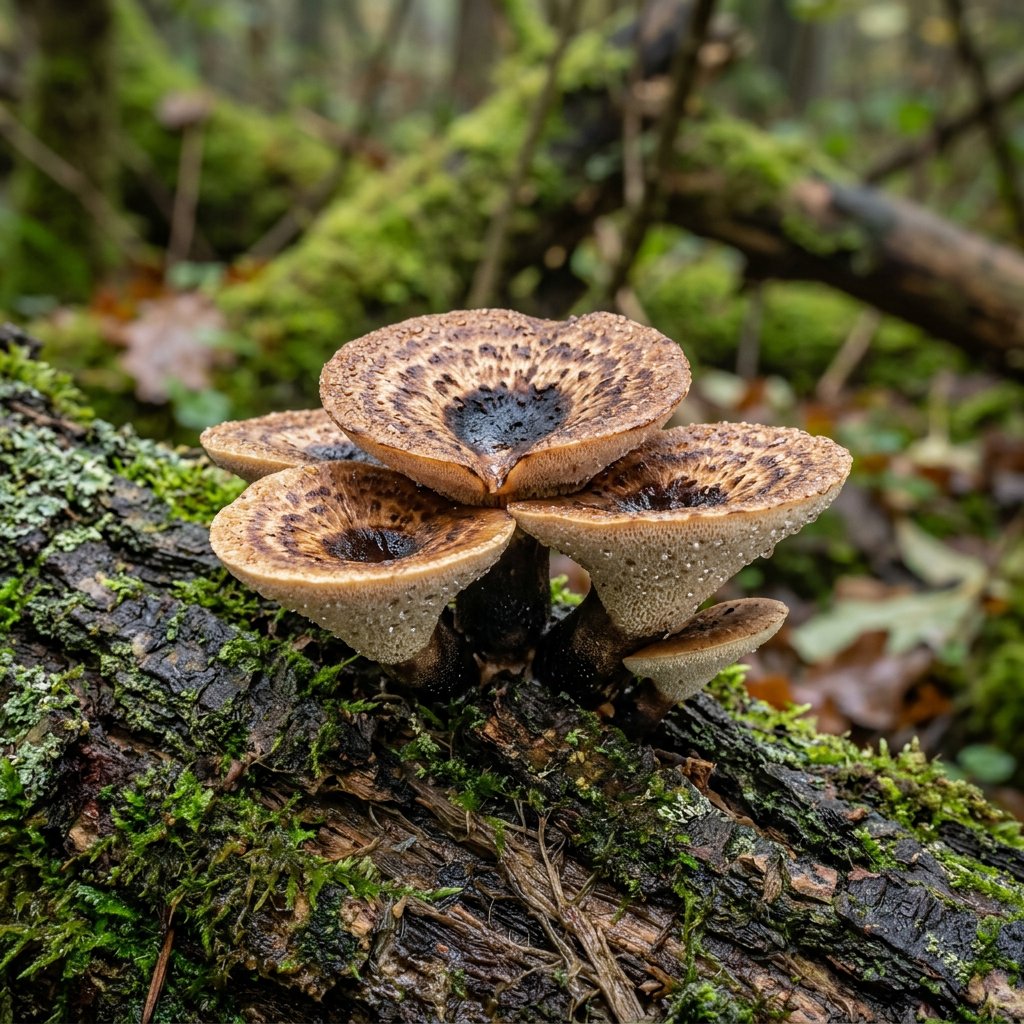
Known as the Elegant Polypore, this mushroom is a master of minimalist design. Often found decorating fallen hardwood branches, it looks more like a piece of polished, hand-carved wood than a soft fungus. In European folklore, these sturdy little brackets were often overlooked in favor of flashier mushrooms, but to the keen-eyed hiker, they are a reliable sign of a healthy, decomposing forest ecosystem.
🔍 How to Identify
- 🎨 The Cap: It features a smooth, leathery surface that ranges from pale ochre to a rich tan color. It is often kidney-shaped or circular, looking remarkably like a small, flat saucer.
- 🕳️ The Pores: Unlike "typical" mushrooms with gills, the underside is covered in tiny, microscopic white pores. These are so small they can be hard to see with the naked eye, giving the bottom a smooth, suede-like texture.
- 🧦 The Black Foot: This is the most iconic feature. The stem (stipe) is light-colored near the top but transitions into a distinct, velvety jet-black color at the base, looking as though the mushroom is wearing dark socks.
🌲 Habitat & Ecology
- 🪵 Woodland Recycler: You will almost always find the Elegant Polypore growing on dead or decaying deciduous wood. It has a particular fondness for beech, birch, and oak branches that have recently fallen to the forest floor.
- 🍂 White-Rot Specialist: It plays a vital role in the forest by breaking down lignin and cellulose. This process, known as "white rot," returns essential nutrients to the soil, paving the way for new plant growth.
⚠️ Safety & Toxicity
- 🚫 WARNING: While not considered deadly or traditionally toxic, the Elegant Polypore is strictly inedible.
- 🦷 Tough Texture: As the mushroom matures, it becomes incredibly tough and corky, similar to chewing on a piece of shoe leather. It is not a culinary mushroom and should never be consumed.
- 🐾 Pet Safety: While unlikely to tempt a dog due to its woody texture, it is best to keep pets away from any unidentified forest fungi to prevent digestive upset.
✨ Fun Fact
The species name varius comes from the Latin word for "variable." This refers to the mushroom's "chameleon" nature; depending on the moisture levels and the type of wood it grows on, it can drastically change its shape from a tiny funnel to a large, fan-like shelf!
More Details







