Info
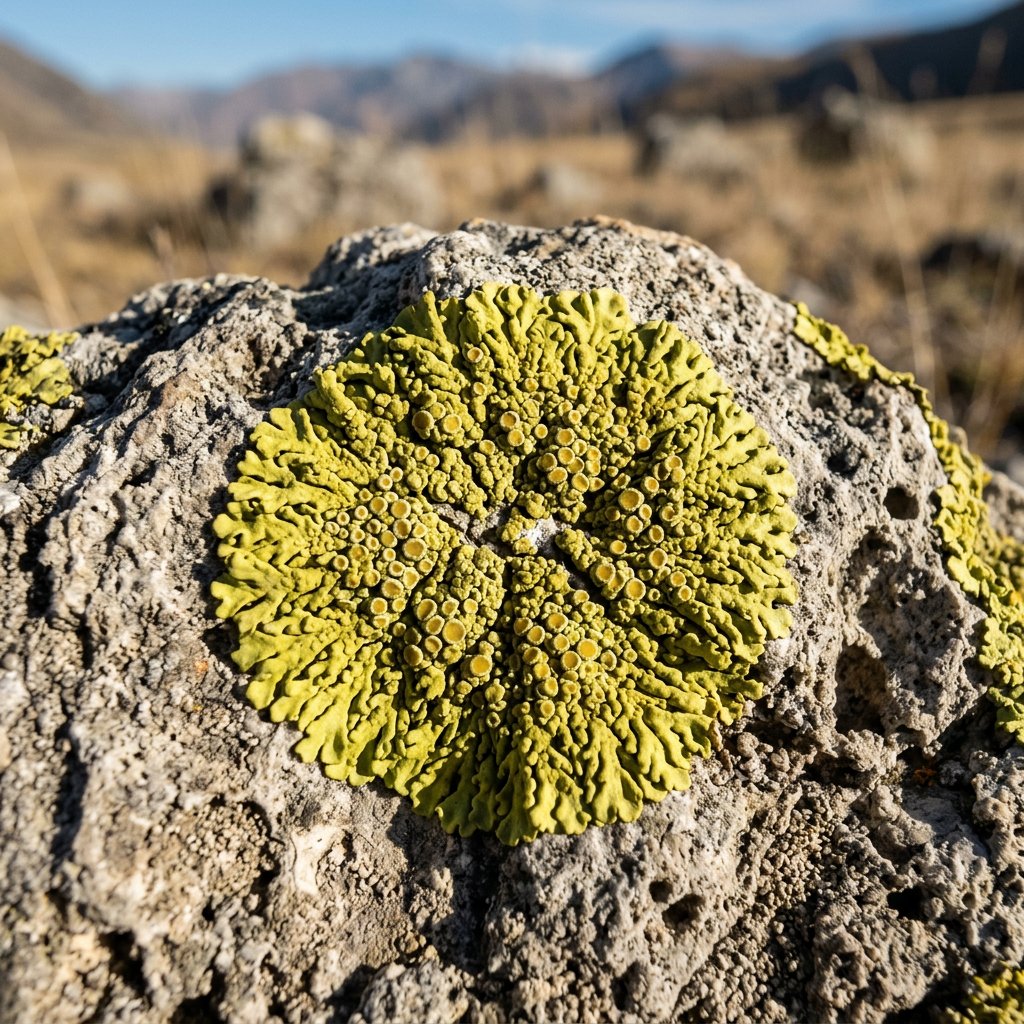
Often referred to as a "Greasy Rim Lichen," Protoparmeliopsis pinguis is a fascinating organism that blurs the line between fungus and algae. Rather than a soft, fleshy mushroom, this species forms a tough, waxy crust on sun-drenched rocks, particularly in coastal areas. It is a master of survival, thriving in salt-sprayed environments where most other life forms would wither.
🔍 How to Identify
- 🎨 The Thallus: The main body is "placodioid," meaning it forms a thick, circular crust that is tightly pressed to the rock, with distinct lobes radiating outward like tiny, flattened fingers.
- 🕯️ Waxy Texture: True to its name (pinguis means "fatty" or "greasy" in Latin), the surface often has a dull, waxy, or slightly oily appearance.
- 🍳 Apothecia: Look for small, disc-shaped structures (fruiting bodies) that resemble tiny jam tarts or fried eggs. These are usually crowded in the center and range from tan to pale pinkish-brown with a thick, raised rim.
- 🐘 Color Palette: The body is typically a pale cream, yellowish-grey, or "dirty" white, which helps it blend in with granite and volcanic rocks.
🌲 Habitat & Ecology
- 🌊 Coastal Specialist: This lichen is most commonly found in the "supralittoral zone"—the area just above the high-tide mark where it can soak up salt spray without being fully submerged.
- ☀️ Sun Worshiper: It requires high light intensity. You’ll rarely find it in deep forests; instead, it colonizes the most exposed, southern-facing rock faces.
- 🧱 Pioneer Species: Like a slow-motion sculptor, it uses organic acids to microscopiclly dissolve rock surfaces, eventually helping to create the very first layers of soil in barren environments.
⚠️ Safety & Toxicity
- 🚫 Non-Edible: While most lichens are not "deadly" in the way some mushrooms are, they are incredibly difficult to digest and often contain bitter secondary compounds.
- 🧪 Bio-Accumulator: Lichens act like sponges for the atmosphere. If they grow in an area with high pollution or heavy metals, they store those toxins in their tissues, making them hazardous to ingest.
- 🧤 Skin Sensitivity: Generally safe to touch, though some people with sensitive skin may experience mild irritation from the lichen acids if handled excessively.
✨ Fun Fact
Lichens like Protoparmeliopsis pinguis are among the longest-living organisms on Earth. Because they grow so slowly—sometimes only a few millimeters per decade—scientists can use the size of these "rock crusts" to estimate the age of the geological surfaces they inhabit!
More Details