Info
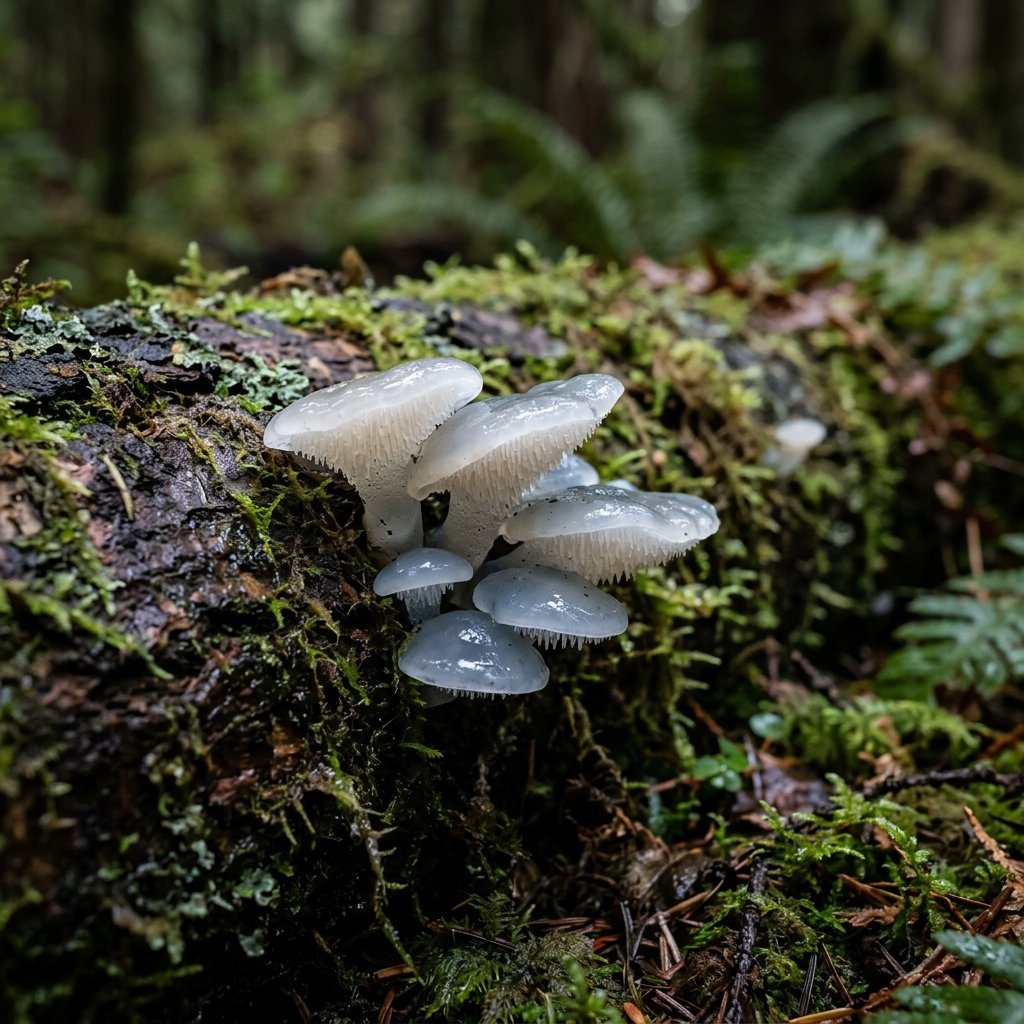
Often called the "Jelly Tooth" or the "False Hedgehog Mushroom," this translucent wonder looks more like a piece of sea glass or a gummy candy than a typical fungus. It is a favorite among forest foragers for its eerie, ghostly glow against the dark, rotting logs it calls home. In many cultures, its jelly-like texture makes it a curiosity, often appearing in "alien" or "fairytale" forest photography.
🔍 How to Identify
- ⚪ The Cap: Typically fan-shaped or tongue-shaped, the surface is smooth but can be slightly "frosty" or velvety. It ranges in color from stark white to a translucent brownish-grey.
- 🦷 The Spines (Teeth): On the underside, you will find tiny, soft, translucent white spines. Unlike the "Hedgehog Mushroom," which has firm teeth, these are squishy and gelatinous.
- 🍮 Texture: The entire body is rubbery and tremelloid—meaning it wobbles like jelly when touched but remains surprisingly resilient.
🌲 Habitat & Ecology
- 🪵 Woodland Diet: This mushroom is a saprobe, meaning it feeds on dead organic matter. Look for it growing directly out of very decayed coniferous wood, particularly spruce, fir, and hemlock.
- 💧 Moisture Lover: You are most likely to spot the Jelly Tooth during wet autumn months. It thrives in mossy, damp microclimates where the air stays humid enough to keep its "jelly" body from drying out.
⚠️ Safety & Toxicity
- 🚨 WARNING: While Pseudohydnum gelatinosum is widely listed as edible, it is considered "insubstantial" and largely tasteless. Never consume any wild mushroom unless you have had it verified in person by a local expert.
- 🤢 Digestive Context: While not known to be toxic, its unique texture can cause mild stomach upset in some individuals if eaten in large quantities. It is primarily valued for its aesthetic beauty rather than its culinary merit.
✨ Fun Fact
Because it has almost no flavor of its own, some adventurous foragers soak this mushroom in sugar syrup or fruit juice and then dehydrate it to create "forest gummy bears"—a translucent, sweet treat made entirely from fungi!
More Details
| Hymenium Type | Teeth |
| Stipe Character | Bare Stipe |
| Spore Print Color | White |
| Mushroom Cap Shape | Depressed Mushroom Cap |
| Hymenium Attachment | Decurrent Hymenium Attachment |
| Mushroom Ecological Type | Saprobiont |







