Info
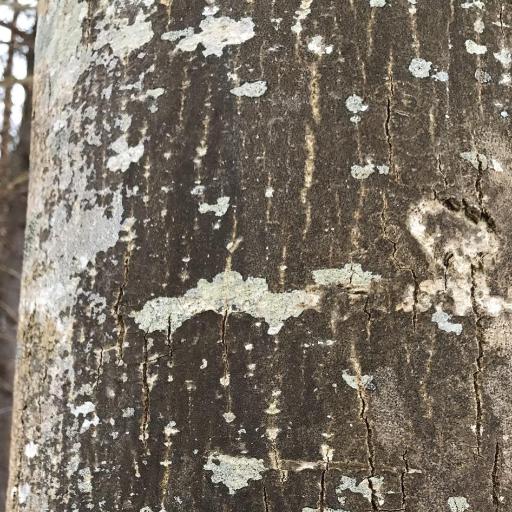
Known often as a "Bark-Painter" or a "Crustose Lichen," Pseudoschismatomma rufescens is a fascinating example of a lichenized fungus. Rather than a typical mushroom with a cap and gills, it lives as a living "skin" on the trunks of ancient trees, appearing like a weathered map or a splash of antique paint. Its name, rufescens, hints at the subtle reddish-brown hues found in its tiny fruiting bodies.
🔍 How to Identify
- 🎨 The Thallus (Body): It forms a thin, crust-like layer that grows flat against the bark. It is typically a pale, creamy-white to light ash-grey, often looking like a powdery smudge.
- 🔴 Apothecia (Fruiting Disks): The "flowers" of this fungus are tiny, circular disks that are dark reddish-brown to almost black. They are usually flat or slightly sunken into the crust.
- 💧 Wet Reaction: When it rains, the pale thallus may take on a slightly more translucent or greenish tint as the internal algae begin to photosynthesize, while the reddish disks become more prominent.
🌲 Habitat & Ecology
- 🌳 Ancient Woodlands: This species is an "old-growth" specialist. It is most frequently found on the bark of mature, broad-leaved trees like Oak, Ash, and Sycamore, especially in humid, sheltered environments.
- 🌬️ Air Quality Sentinel: It is highly sensitive to air pollution and changes in microclimates. Finding this lichen is often a certificate of "good health" for the forest, indicating clean air and long-term ecological stability.
⚠️ Safety & Toxicity
- 🍄 Warning: While it is not a "poisonous mushroom" in the traditional sense, it is strictly inedible. Lichens contain complex secondary metabolites (acids) that are very hard for the human stomach to process.
- 🐾 Pet Safety: It is generally safe for pets and children to be near, as it lacks the "fleshy" appeal of ground mushrooms, making it very unlikely to be ingested. It does not cause irritation upon skin contact.
✨ Fun Fact
Lichens like Pseudoschismatomma rufescens are effectively "two organisms in one." They are composed of a fungus that provides the structure and a microscopic alga that provides the food through photosynthesis. Because they grow so slowly—often just a few millimeters per year—a patch the size of your palm could be older than your house!
More Details