Info
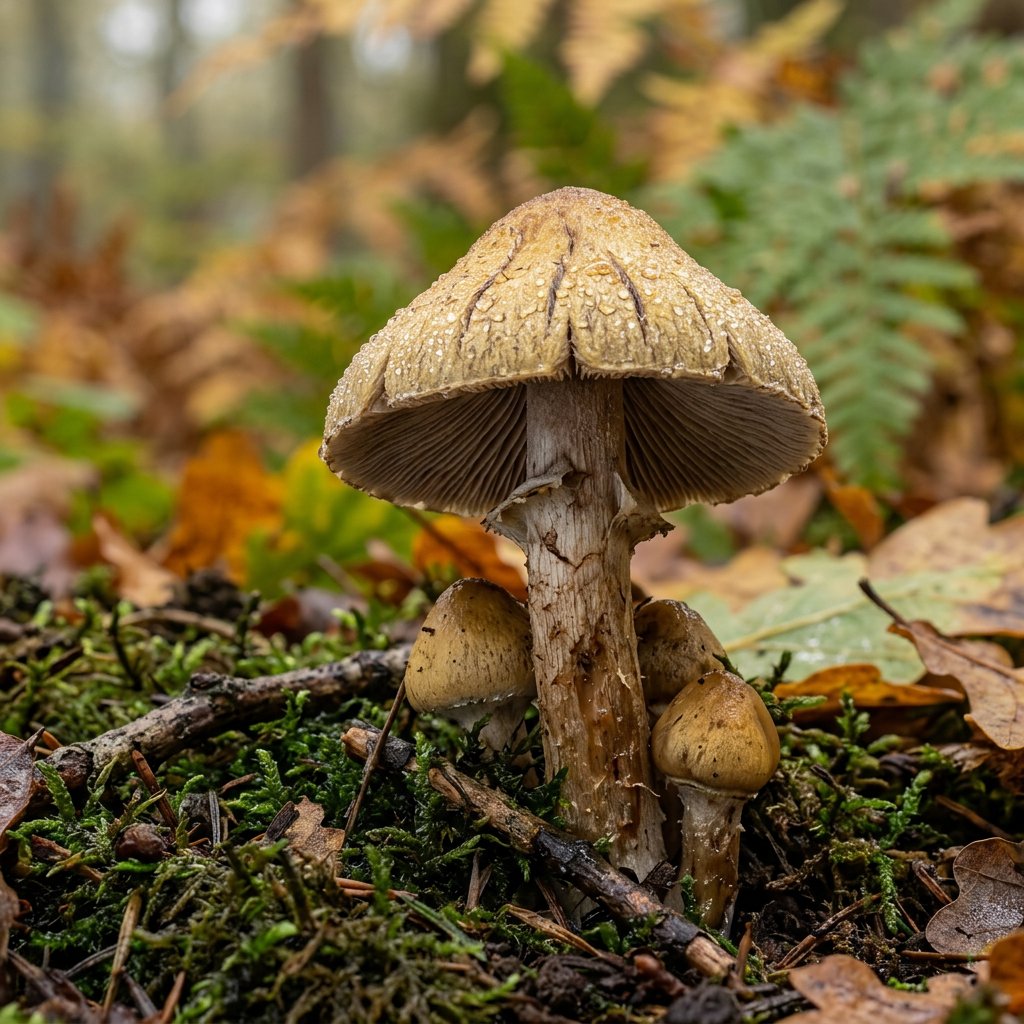
Often known as the Straw-colored Fiberhead or the Split-capped Inocybe, this mushroom is a master of disguise in the forest floor. With its golden, straw-like hues and a cap that looks like it’s bursting at the seams, it belongs to a notorious group of fungi known for their fibrous textures. While it may look humble, it carries a potent chemical punch that has earned it a "do not touch" reputation among foragers.
🔍 How to Identify
- 🌾 The Cap: Initially bell-shaped, it flattens as it matures. The surface is covered in fine, silky fibers that split radially from the center toward the edge, revealing the lighter flesh beneath.
- 🍂 The Gills: Tucked underneath, the gills start off a pale grayish-white before turning a dingy olive-brown as the spores mature. They are crowded closely together.
- 📏 The Stem: The stalk is generally cylindrical, firm, and pale. Unlike many other mushrooms, it lacks a ring (annulus) and typically has a slightly bulbous base that sits just at the soil line.
- 👃 The Scent: If you (carefully) catch a whiff, it often has a distinctively earthy or "spermatic" odor, which is a key identifying feature for many species in this family.
🌲 Habitat & Ecology
- 🌳 Tree Partners: This fungus is mycorrhizal, meaning it lives in a symbiotic "sugar-for-minerals" trade with trees. It is most commonly found under broadleaf trees like Beech and Oak, but it occasionally pops up near pines.
- 🏡 Unexpected Locations: While a woodland native, it is surprisingly common in urban environments. You might find it peeking out from the grass in local parks, cemeteries, or even shaded suburban lawns during the late summer and autumn.
⚠️ Safety & Toxicity
- 🚫 WARNING: This mushroom is highly toxic. It contains high concentrations of muscarine, a compound that attacks the nervous system.
- 🤮 The Symptoms: Ingestion leads to what mycologists call "PSL Syndrome"—extreme Perspiration, Salivation, and Lacrimation (crying/tearing). This is usually followed by severe stomach cramps, blurred vision, and labored breathing.
- 🐾 Pet Risk: Because it grows in common grassy areas, it is a significant danger to dogs. If you see this in your yard, it is best to remove it (using gloves) to prevent curious pets from taking a nibble.
✨ Fun Fact
The name Pseudosperma comes from the Greek words for "false seed," but for many years, this mushroom was the "poster child" for the genus Inocybe. It is so difficult to tell apart from its "Fiberhead" cousins that even professional mycologists often have to use a microscope to be 100% certain of which species they are looking at!
More Details