Info
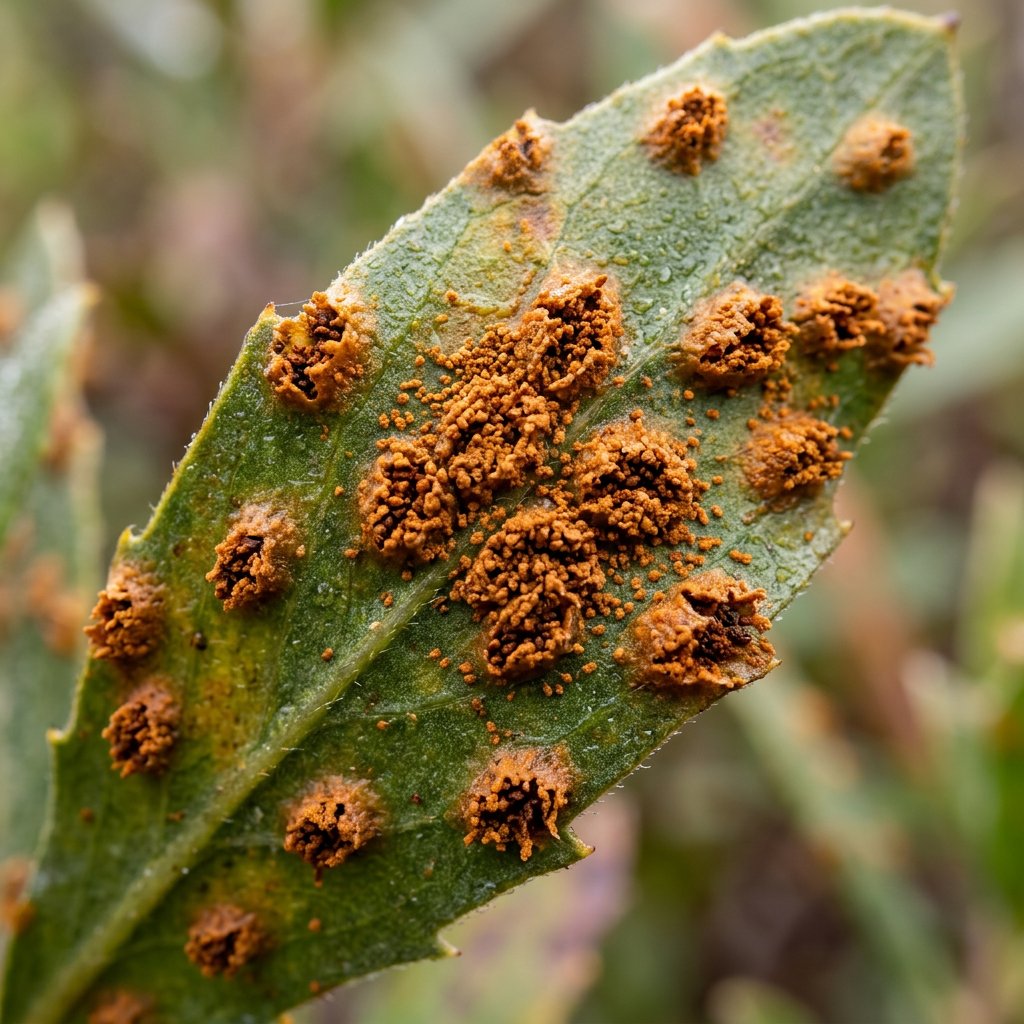
Commonly known as the Baccharis Rust, Puccinia evadens is a fascinating rust fungus that acts more like a biological sculptor than a typical forest mushroom. Instead of growing caps and stems, it transforms the branches of Groundsel bushes (Baccharis) into swollen, orange-dusted works of art. In some parts of the world, it is hailed as a tiny hero for its ability to naturally manage invasive plant species.
🔍 How to Identify
- 🧫 Galls and Swellings: Unlike flat leaf rusts, this species causes the host plant's stems to swell into thick, distorted "galls" or cankers that look like irregular knots.
- 🍊 Powdery Spores: During its active stages, the fungus erupts in bright orange to rusty-brown powdery masses (uredinia and telia) that cover the affected stems.
- 🌿 Host Specificity: You will almost exclusively find this fungus on species of Baccharis, particularly the Groundsel bush or Sea Myrtle.
- 🍂 Leaf Distortion: Infected leaves may turn yellow, curl prematurely, or drop off as the fungus siphons nutrients to produce its spores.
🌲 Habitat & Ecology
- 🌊 Coastal & Marshy Preferences: Because its host plants love damp, salty, or sandy soils, you’ll most often spot this rust in coastal plains, marshes, and abandoned fields.
- 🦠 Obligate Parasite: This fungus is a specialized "biotroph," meaning it cannot survive without a living host plant; it effectively "farms" the plant’s cells for energy without killing it immediately.
- 🌬️ Wind-Borne Travelers: The tiny orange spores are incredibly light and are designed to be carried by the wind to find new Baccharis plants to colonize.
⚠️ Safety & Toxicity
- 🍄 WARNING: While Puccinia evadens is not considered toxic to touch, it is a specialized plant pathogen and is not edible.
- 🐕 Pet Safety: There are no known reports of this rust being toxic to dogs or cats, but it is best to prevent pets from sniffing or licking the powdery spores, as they can cause mild respiratory irritation or sneezing.
- 🩺 Gardener’s Note: If you find this in your garden, be aware that while it won't hurt you, it can severely stunt or weaken your Baccharis shrubs.
✨ Fun Fact
Puccinia evadens was intentionally introduced to Australia in the late 20th century as a "biocontrol agent" to help stop the spread of invasive Groundsel bushes that were taking over native pastures!
More Details