Info
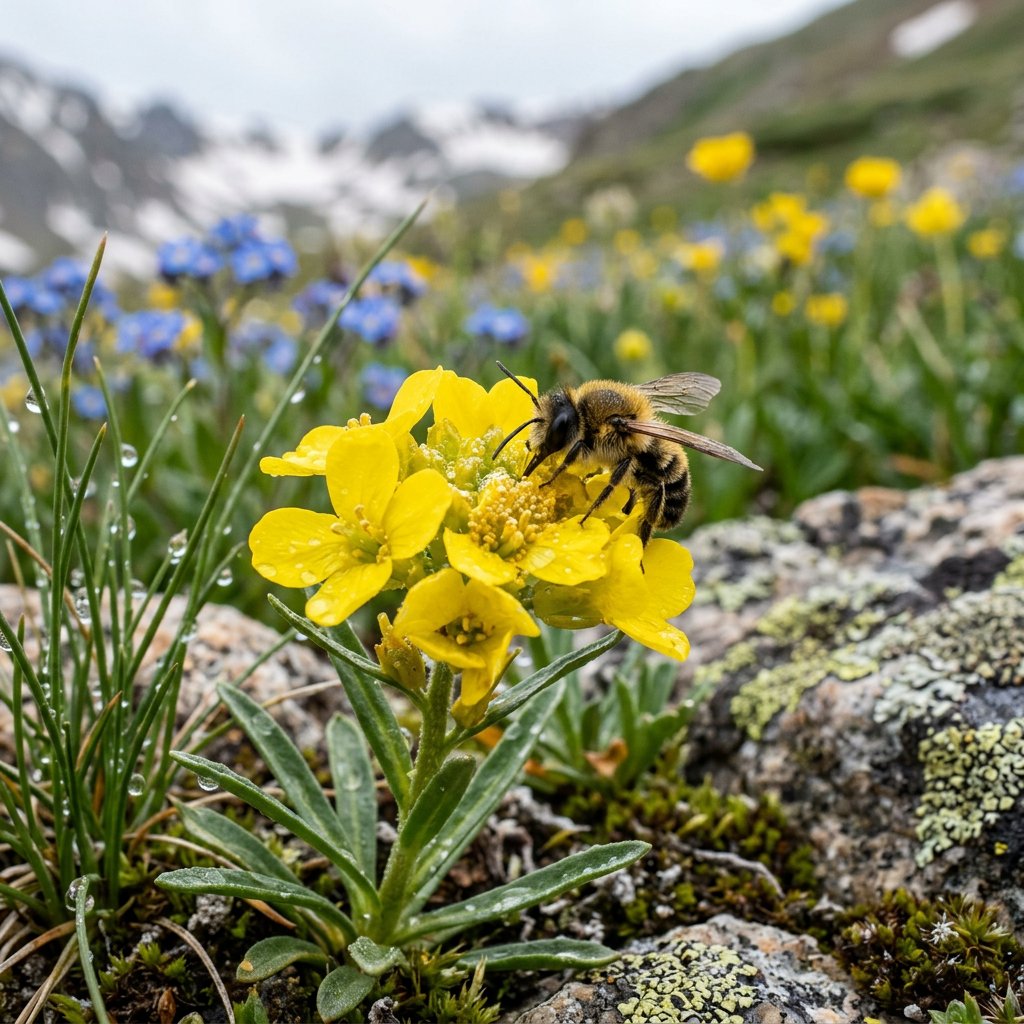
Often called the "Fake Flower Rust," Puccinia monoica is one of nature’s most clever biological tricksters. Instead of growing a traditional mushroom cap, this fungus hijacks the body of its host plant—usually Rockcress—to create a "pseudoflower." These bright yellow clusters are so convincing that they fool both the human eye and the local bees into thinking they are looking at a real wildflower.
🔍 How to Identify
- 🌼 Pseudoflowers: The most striking feature is a rosette of bright yellow "petals." These are actually the host plant's leaves that have been chemically altered by the fungus to change shape and color.
- ✨ Sticky Texture: The surface of these fake petals is often coated in a sweet, sticky substance containing fungal spores, designed to rub off on visiting insects.
- 🌱 Host Distortion: You can spot an infection if a Rockcress plant looks unnaturally tall and lacks its genuine small, white, or purple flowers, replaced instead by the vibrant yellow fungal clusters.
🌲 Habitat & Ecology
- 🏔️ Mountain Meadows: This fungus is most commonly found in high-altitude, rocky environments across North America where its primary hosts, the Arabis (Rockcress) species, grow.
- 🐝 Pollinator Deception: It plays a vital but deceptive role in the ecosystem. By mimicking the UV-reflectance and scent of yellow wildflowers, it steals the attention of bees and butterflies, forcing them to spread fungal "sperm" instead of plant pollen.
⚠️ Safety & Toxicity
- 🚫 WARNING: As a "rust" fungus, Puccinia monoica is not edible. While it is not categorized among the deadly forest mushrooms, it is a specialized parasite and should never be consumed.
- 🐾 Garden Health: If you find this in your garden, it is a sign that your Rockcress plants are being sterilized by the fungus. While not harmful to touch, it will prevent your plants from reproducing.
✨ Fun Fact
The mimicry is so perfect that the fungus even produces a floral scent and sugary nectar! Bees actually spend more time on these "fake flowers" than on some real ones because the fungus provides a high-energy sugar hit to ensure its spores are transported far and wide.
More Details







