Info
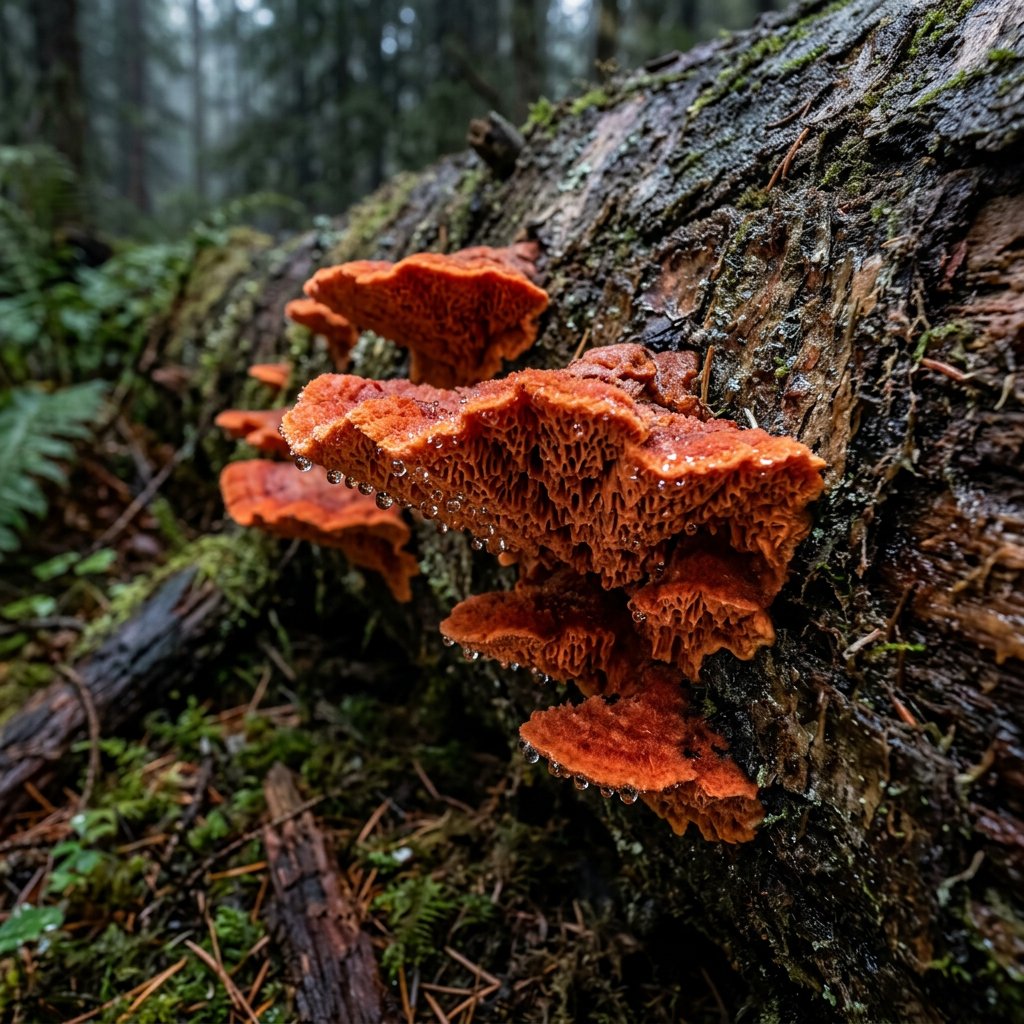
Imagine walking through a deep, shaded coniferous forest and spotting what looks like a glowing orange ember resting on a fallen log. Known commonly as the Orange Sponge Polypore, this fungus is a vibrant reminder of nature’s recycling power. It is a favorite among photographers for its "neon" appearance, which creates a stunning contrast against the dark, damp bark of the forest floor.
🔍 How to Identify
- 🧡 The Cap: Semicircular or fan-shaped, featuring a brilliant orange to reddish-orange color. The surface is distinctly velvety or "shaggy" with tiny hairs when the mushroom is young.
- 🦷 The Pores: Instead of gills, the underside features a pore surface. These pores are large, angular, and often look "torn" or jagged, almost resembling tiny teeth as the mushroom matures.
- 🪵 The Texture: The flesh is soft and spongy when fresh but becomes brittle, light, and corky as it dries out. It lacks a traditional stem, instead growing like a shelf directly from the wood.
🌲 Habitat & Ecology
- 🌲 The Conifer Connection: This species is a specialist, almost exclusively found on the decaying logs of spruce, pine, and fir trees. It plays a vital role in the ecosystem by causing "brown rot," breaking down the wood's cellulose.
- 🤝 The Succession Story: This mushroom is often a "second-wave" decomposer. It frequently moves into a log only after another fungus, like the Red-Belted Polypore (Fomitopsis pinicola), has already begun the decomposition process, essentially "inheriting" its home.
⚠️ Safety & Toxicity
- 🚫 Status: WARNING: INEDIBLE. While Pycnoporellus fulgens is not known to be a "deadly" poisonous mushroom, its texture is tough, woody, and entirely unpalatable for human consumption.
- 🐾 Pets & Kids: Because of its bright color, it may attract the curiosity of children or pets. While touching it is generally safe, ingestion should be avoided as it can cause digestive upset and offers no nutritional value.
✨ Fun Fact
🧪 Mycologists often use a "secret" chemical test to identify this mushroom. If you place a drop of potassium hydroxide (KOH) on the orange flesh, it will instantly flash a deep, dark red or violet color!
More Details







