Info
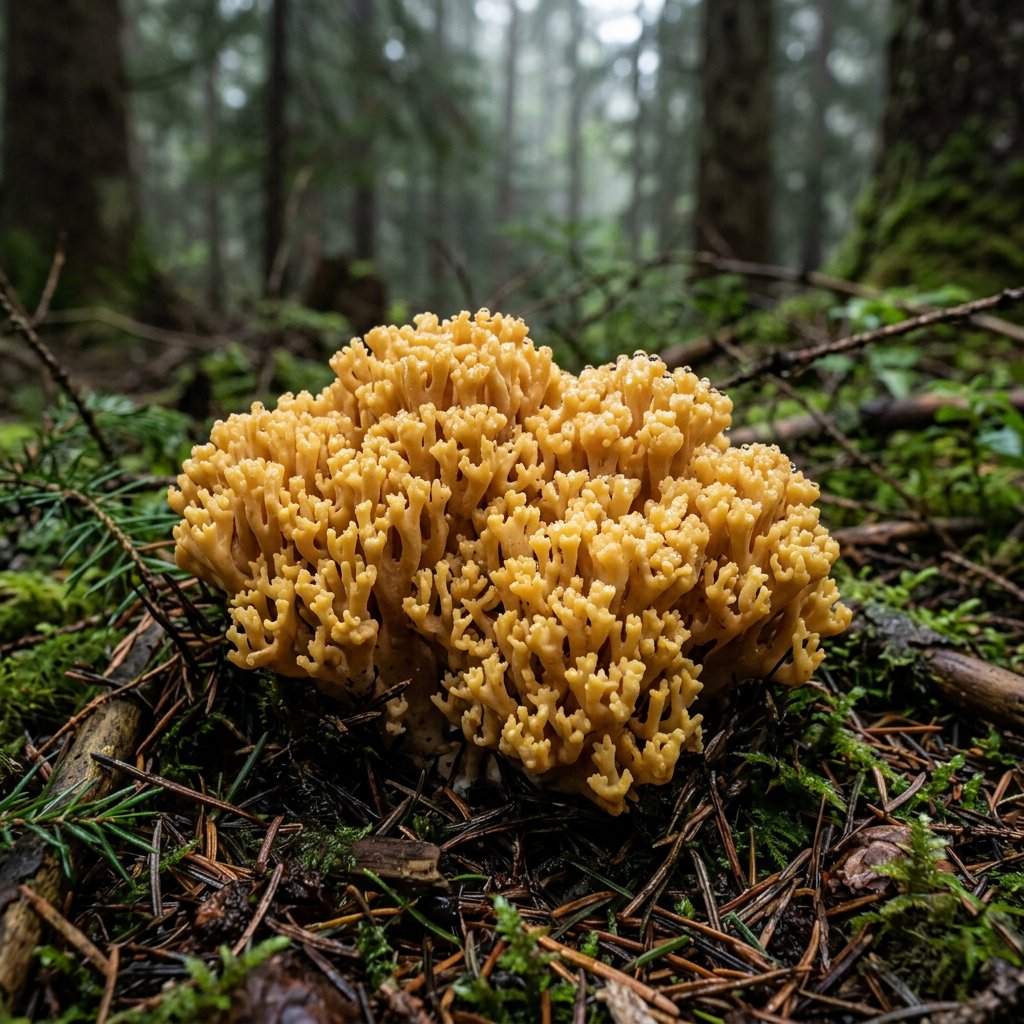
Known as the "Headed Coral Mushroom," this fungal masterpiece looks more like it belongs on a tropical reef than a damp forest floor. Often referred to by foragers as "Forest Broccoli," its dense, cauliflower-like structure is a marvel of natural architecture. In woodland folklore, these intricate growths were sometimes imagined as the miniature shrubbery of hidden forest spirits.
🔍 How to Identify
- 🥦 The "Head": Unlike other coral fungi with long, spindly branches, this species features tightly packed, lumpy branch tips that form a rounded, cauliflower-like mass.
- 🎨 Color Palette: The branches usually emerge in shades of pale yellow or creamy ivory, slowly maturing into a deeper ochre or tan as the spores develop.
- 🪵 The Base: It anchors to the ground with a very thick, fleshy, and solid white trunk-like base that can be surprisingly heavy.
🌲 Habitat & Ecology
- 🤝 The Hidden Handshake: This mushroom is mycorrhizal, meaning it lives in a symbiotic partnership with trees (particularly beech and conifers), swapping soil nutrients for tree sugars.
- 🍂 Forest Floor Preference: You will typically find it poking through deep leaf litter or mossy banks in old-growth forests during the cool, damp days of late summer and autumn.
⚠️ Safety & Toxicity
- 🛑 STRICT WARNING: While some members of the Ramaria genus are technically edible, many are indistinguishable from toxic species without a microscope.
- 🤮 Gastrointestinal Risk: Ingesting the wrong coral fungus often leads to "Ramaria syndrome," characterized by severe stomach cramps, nausea, and a laxative effect.
- 🚫 Verdict: Because Ramaria capitata has several poisonous "look-alikes" that look nearly identical to the untrained eye, it should be treated as toxic/unsafe for consumption.
✨ Fun Fact
The name capitata is derived from the Latin word for "headed." This refers to its unique growth habit where the branches terminate in dense, brain-like clusters rather than the sharp, finger-like points seen in most other coral mushrooms.
More Details







