Info
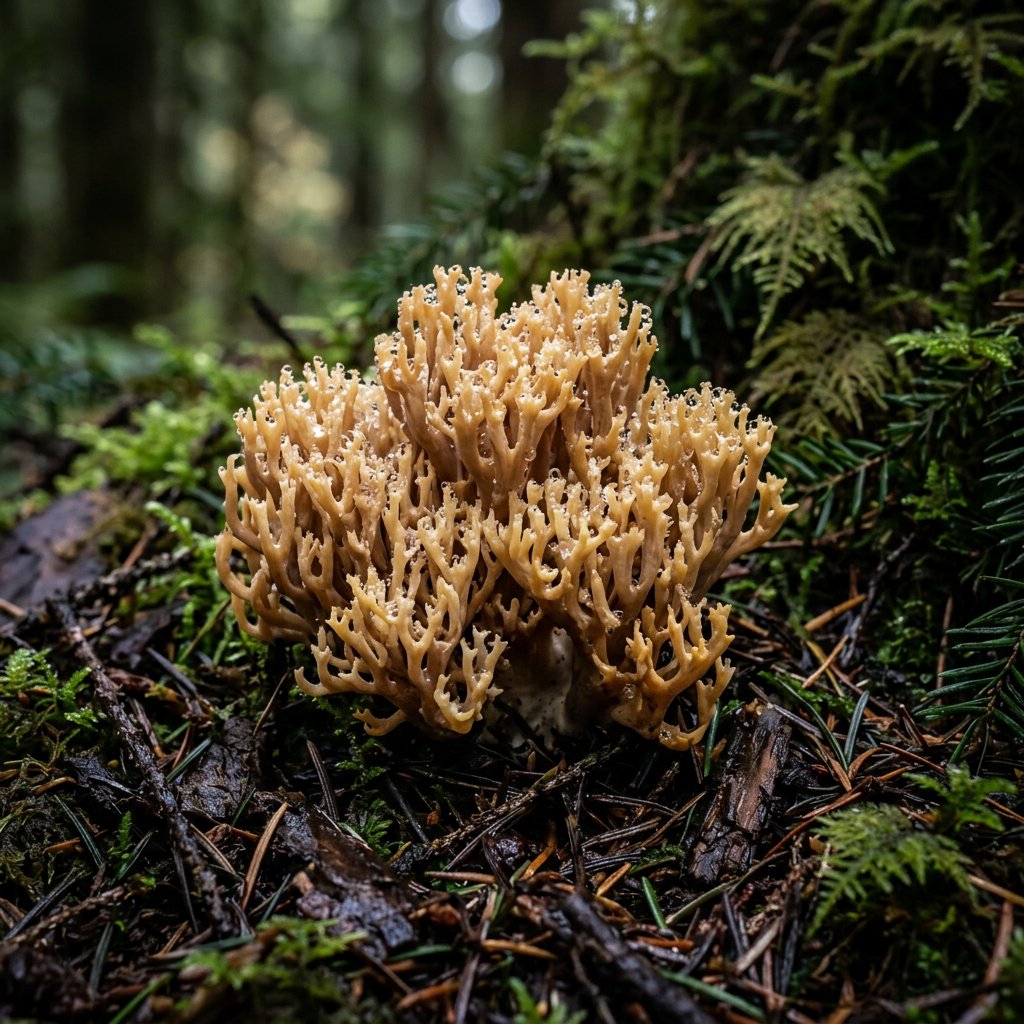
Known as the Pine Coral, Ramaria eumorpha looks like a stray piece of golden underwater reef that has somehow found its way onto the forest floor. Often appearing in dense "forests" of its own, this fungus adds a touch of architectural elegance to the shadows of coniferous woods, looking like miniature, branched sculptures pushing through the pine needles.
🔍 How to Identify
- 🔱 Branching Structure: It features many slender, upright branches that divide repeatedly. These branches are relatively straight and parallel, giving it a bushy, "broom-like" appearance.
- 🎨 Ocher Color: The entire fungus is typically a uniform pale yellow-brown or ocher. Unlike some other coral fungi, it doesn't usually have brightly contrasting tips, though they may darken slightly as the mushroom matures.
- 🌲 The Base: It grows from a central, short, and often tough stalk that is frequently hidden beneath a white, fuzzy layer of mycelium (fungal roots) tucked into the soil or needle litter.
🌲 Habitat & Ecology
- 🌲 Conifer Companion: This species is a specialist of the evergreen world. You will almost exclusively find it growing on the fallen needles of pine, spruce, or fir trees, where it helps break down organic matter.
- 🍂 Autumn Resident: It is most common during the damp months of late summer and autumn, often appearing in large groups or "fairy rings" hidden under the low-hanging branches of old-growth trees.
⚠️ Safety & Toxicity
- 🚫 WARNING: Do not consume. Ramaria eumorpha is generally considered inedible and can cause significant gastrointestinal distress (stomach cramps and nausea) if eaten.
- 🧪 Look-alike Danger: Coral fungi are notoriously difficult to tell apart without a microscope. Several species in the Ramaria genus are toxic or act as powerful laxatives, making them a very "high-risk" group for foragers. Always enjoy these with your eyes, not your plate.
✨ Fun Fact
If you gently bruise the branches of Ramaria eumorpha or wait for it to age, the flesh can sometimes take on a faint greenish or olive tint—a chemical reaction that helps mycologists distinguish it from its many look-alike cousins!
More Details







