Info
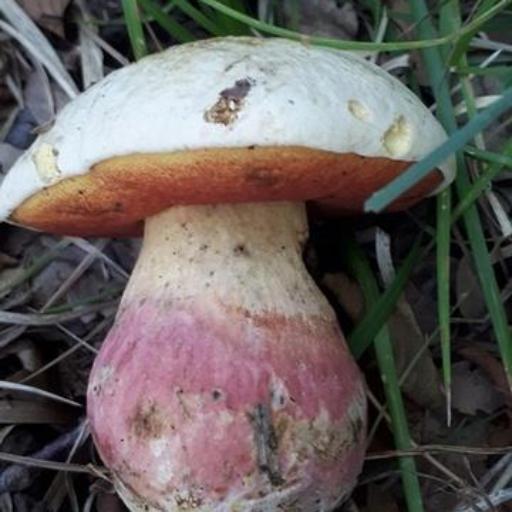
Known as the "Devil’s Mushroom" or Satan’s Bolete, this fungus is as imposing as its name suggests. With a ghostly, chalk-white cap and a bulbous stem stained the color of blood, it looks like something plucked straight from a dark fairy tale. It is one of the few members of the bolete family that is truly toxic, earning its sinister reputation among foragers across Europe.
🔍 How to Identify
- 🎨 The Ghostly Cap: The cap is massive, thick, and suede-like, usually colored a pale silvery-grey or dirty white, looking almost like a smooth stone on the forest floor.
- 🩸 Blood-Red Pores: Instead of gills, the underside features tiny pores that start yellow but quickly turn a deep, ominous crimson-red as the mushroom matures.
- 🧪 The Blue Bruise: If you press the stem or cut the flesh, it will slowly oxidize, changing from pale yellow to a haunting, dusky blue.
- 🧅 Bulbous Stem: The stalk is incredibly thick and "fat," often wider than it is tall, covered in a delicate red mesh pattern (reticulation).
🌲 Habitat & Ecology
- 🌳 The Oak Companion: This mushroom is mycorrhizal, meaning it lives in a symbiotic relationship with trees. It is most commonly found huddled beneath the roots of ancient Oaks and Beeches.
- ⛰️ Chalk Lover: Unlike many fungi that prefer acidic pine needles, the Satan’s Bolete is a "calciphile," meaning it strictly thrives in warm, sun-drenched forests with lime-rich or chalky soil.
⚠️ Safety & Toxicity
- 🚫 WARNING: Toxic. Rubroboletus satanas is not a mushroom for the frying pan. It is a potent gastric irritant that causes violent, persistent vomiting and severe abdominal pain.
- 🤢 The Sickness: While fatalities are extremely rare, the "Satanic" experience involves hours of intense gastrointestinal distress. It should never be tasted, even in small amounts.
- 🐾 Pet Safety: Because of its large size and bright colors, it can attract curious dogs; ensure pets are kept on a leash in chalky woodland areas during the late summer.
✨ Fun Fact
The older this mushroom gets, the more "evil" it smells. While young specimens have a faint, pleasant nutty aroma, mature ones begin to smell like rotting meat or carrion to ward off anything that might try to eat it!
More Details