Info
Known as the "Floury-stemmed Brittlegill," this mushroom is a subtle beauty found tucked away in broadleaf forests. While it doesn't boast the neon reds or deep purples of some of its cousins, it is a fascinating find for foragers due to its unique texture. Its name comes from the fine, powdery coating on its stem, making it look as though it was dusted with flour by a woodland baker.
🔍 How to Identify
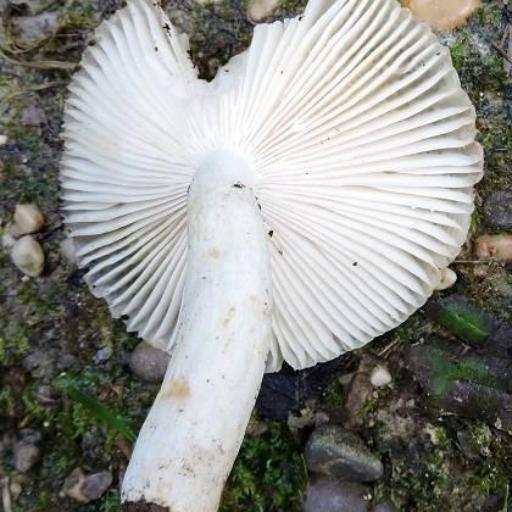
- 🍄 The Cap: Usually 5–10 cm wide, the cap is a pale ochre or straw-yellow color. As it matures, it develops a deep central depression, and the edges become "pectinate"—showing deep, comb-like grooves.
- 🦴 The Gills: The gills are crowded and pale cream. Like all mushrooms in the Russula family, they are extremely brittle; if you run your finger across them, they will shatter like glass or dry crackers.
- 🧂 The Stem: The most defining feature is the "farinose" texture. The white stem is covered in tiny, mealy granules that feel slightly velvety or powdery to the touch.
🌲 Habitat & Ecology
- 🌳 Tree Partners: This mushroom forms a symbiotic mycorrhizal relationship with broadleaf trees. It is most commonly found growing near Beech and Oak trees, where it helps the tree absorb water in exchange for sugars.
- 🍂 Seasonal Scavenger: Look for them between late summer and late autumn. They prefer damp soil and are often found peeking through thick layers of fallen leaf litter after a heavy rain.
⚠️ Safety & Toxicity
- 🚫 WARNING: Never eat a wild mushroom unless you have confirmed the ID with a local expert in person.
- 👅 Inedible: The Floury-stemmed Brittlegill is generally considered inedible. If tasted (though not swallowed), the flesh is notably acrid and peppery, which is a common defense mechanism in many Russula species to deter hungry animals.
- 🤢 Digestive Warning: Consuming this mushroom can lead to mild to moderate gastrointestinal upset, including nausea and stomach cramps.
✨ Fun Fact
The specific epithet farinipes is derived from the Latin words "farina" (flour) and "pes" (foot). It literally translates to "flour-foot," perfectly describing its distinctively dusty stem!
More Details