Info
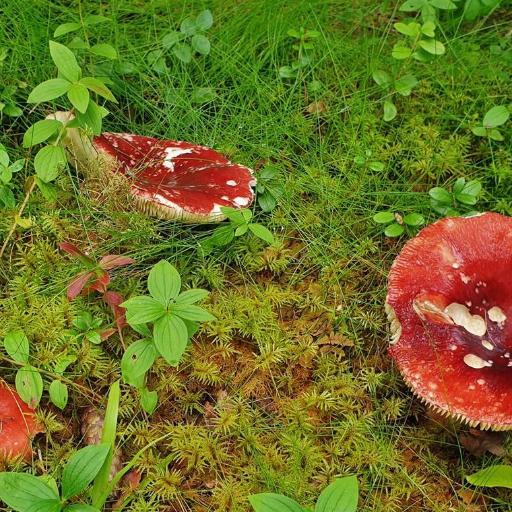
Meet the Swamp Russula, a vibrant highlight of the dampest parts of the forest. Often called the "Marsh King" by foragers, this mushroom is famous for its striking blood-red cap that stands out brilliantly against the green sphagnum moss of its favorite peatlands. While many red-capped mushrooms signal danger, this species is a prized find in Eastern Europe, though it demands a very keen eye to distinguish it from its "sickening" lookalikes.
🔍 How to Identify
- 🍎 The Cap: Usually 5–15 cm wide, the cap is a deep cherry red or orange-red. It starts convex and flattens out with age, often developing a slight depression in the center. The skin can be peeled away about halfway to the middle.
- ☁️ The Gills: The gills are crowded, white, and brittle. As the mushroom matures, they may turn a pale creamy yellow as the spores develop.
- 🍦 The Stem: The stem is thick, cylindrical, and solid. While mostly white, it often features a delicate, misty-pink or rose-colored flush, especially near the base.
- 💎 The Texture: Like all Russulas, the flesh is "chalky" or brittle. If you try to bend the stem, it will snap cleanly like a piece of chalk rather than snapping with fibers.
🌲 Habitat & Ecology
- 💧 The Bog Specialist: True to its name (paludosa meaning "marshy"), this mushroom loves acidic, waterlogged soils. You will almost always find it near sphagnum moss in bogs or damp coniferous forests.
- 🌲 Tree Partners: It forms a symbiotic (mycorrhizal) relationship primarily with Pine trees. It helps the tree absorb nutrients while receiving sugars in return, making it a vital part of the forest's underground network.
⚠️ Safety & Toxicity
- 🛑 WARNING: Never consume any red-capped mushroom unless identified by an expert. The Swamp Russula has a "deadly double" called Russula emetica (The Sickener), which causes severe gastrointestinal distress.
- 👅 The Taste Test: Expert foragers often use a "nibble and spit" test—the Swamp Russula is mild and nutty, while its toxic lookalikes are burning and acrid (peppery). However, this is not recommended for beginners as some toxic species can cause reactions even in small amounts.
- 🐾 Pets and Kids: Keep curious dogs and children away. While the Swamp Russula is considered edible by some, the risk of misidentification is high, and raw mushrooms can cause upset stomachs in pets.
✨ Fun Fact
In Russia and Ukraine, Russulas are known as Syroyyezhka, which literally translates to "eat raw." While this name suggests they can be eaten without cooking, it actually refers to the fact that they are much quicker to salt and pickle than other mushrooms!
More Details
| Hymenium Type | Lamella |
| Stipe Character | Bare Stipe |
| Spore Print Color | Ochre |
| Mushroom Cap Shape | Convex Mushroom Cap |
| Hymenium Attachment | Decurrent Hymenium Attachment |
| Mushroom Ecological Type | Mycorrhiza |